

Maha Gorton, Head of the Women’s Pavilion at Expo City Dubai, on why returning to work is one of the biggest challenges facing women today
Lindsay Judge
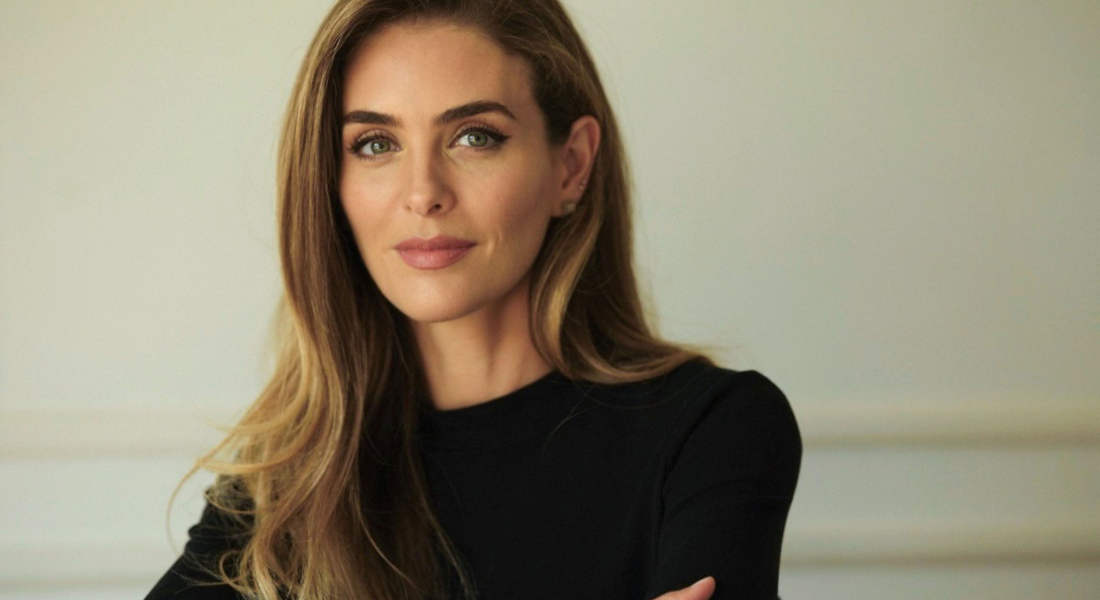
Expo City Dubai has launched a Return-to-Work Programme to combat these struggles
Across global workforces, one of the most persistent and least addressed issues is women returning to work after a career break. According to McKinsey’s 2025 Women in the Workplace report, women remain far more likely than men to step away from paid work due to life transitions, and significantly less likely to re-enter at a level that reflects their experience. The data shows a steady erosion of senior female talent over time, driven not by lack of ambition or capability, but by structural barriers, outdated hiring practices, and the cumulative impact of confidence loss after repeated rejection.
In fast-moving economies, this disconnect carries real consequences. When experienced women struggle to re-enter the workforce, organisations lose institutional knowledge, leadership potential, and diversity of thought. It represents a missed economic opportunity, particularly at a time when adaptability, cross-cultural intelligence, and resilience are increasingly valuable skills.
In the UAE, this challenge is particularly prominent. e. The country has a highly transient population, with many professionals relocating multiple times. Career pauses linked to family life are also common. At the same time, the job market is competitive and often prioritises linear career paths or local experience. Together, these factors have created a large pool of highly qualified women who are ready to return to work but are unsure how to navigate the system. Many are mid-career professionals who stepped away temporarily, only to find the rules of re-entry have shifted beneath them.

It is within this that inspired Expo City Dubai’s Women’s Pavilion to launch its Return to Work Programme; a targeted, fast-track initiative designed to bridge the gap between experience and opportunity. Developed in partnership with HSBC, supported by the Expo City Dubai Foundation, and delivered by C3 (Companies Creating Change), the programme recognises career breaks not as setbacks but as pauses in long professional journeys.
After its first phase launch last year, the programme is now entering its second cohort. The programme brings together a small group of women for an intensive hybrid experience that combines practical skills, mindset work, mentorship, and peer connection. More than a training initiative, it reflects a broader shift in how work, value, and leadership are being redefined.
Ahead of the launch of the second chapter of the programme, MADAME Arabia talked to Maha Gorton, Head of the Women’s Pavilion at Expo City Dubai, to understand what inspired the programme, what was learned from its first phase, and why supporting women back into the workforce is no longer just a diversity issue, but an economic and cultural imperative.
What inspired the Return to Work programme?
It was very much inspired by my own journey. I took a significant career break, and getting back into work wasn’t easy at all. What really struck me was realising how common this experience is. There’s a growing disconnect between highly experienced women who are ready to return and systems that no longer seem to recognise their value. Many women haven’t opted out of working, they’ve stepped away temporarily because of life transitions like motherhood, relocation, or caregiving. The gap isn’t a lack of ambition. It’s access, confidence erosion, and outdated hiring norms. I wanted to create something that recognises women as experienced professionals, not people who need to start again from scratch.
Why does this feel especially relevant in the UAE?
It’s incredibly relevant here. Many women move to the UAE because their partner has taken a role, or at a stage of life when they’re also having children or settling into a new environment. When we looked at registrations for phase one, relocation was just as common a reason for career breaks as motherhood. What surprised me most was that women who relocated without children were often even more isolated, as they weren’t plugged into school networks and had fewer natural entry points into the community. That isolation really affects confidence and momentum.

What were your biggest learnings from the first phase?
Confidence erosion, without question. It’s the biggest barrier, and it has nothing to do with capability. Repeated rejection without feedback takes a huge toll on women. Another powerful learning was the strength of peer connection. After the very first session, the women created their own WhatsApp group, which now has around 200 members. There was one moment that really stayed with me: A woman joined a session with her baby on her shoulder, asked a question during the Q&A, and when we responded, she broke down and said, “For the first time in a very long time, I feel seen.” That says everything.
How does the programme help rebuild confidence?
Confidence and mindset aren’t treated as a one-off topic; they’re woven throughout the programme. Our very first masterclass focused on this, and it continues through mentoring and what we call ‘ally circles’. These are led by women who’ve been through career breaks themselves, so there’s a deep understanding of the emotional side of returning to work. Confidence builds gradually, often through capability reinforcement, and once women start seeing what they can do, things shift.
What kind of practical support do participants receive?
We start with refreshed headshots, then move into CV workshops and LinkedIn profile optimisation. Many women were applying for jobs before AI screening systems existed, so understanding how CVs are now read is critical. We also have Oracle coming in to cover digital literacy and AI, networking coaches, and mock interviews for real roles. Women receive feedback directly from recruiters and hiring managers, then get the chance to refine and try again. These are things many professionals never get, even without a career break.
What would you like employers to understand about women returning to work?
We need to stop equating presenteeism with performance and start judging capability based on outcomes. Career continuity isn’t the same as competence. Career breaks often build transferable skills such as adaptability, resilience, and cultural awareness, especially in cases of relocation. Excluding this talent pool isn’t just unfair, it’s inefficient, particularly in a fast-growing market like the UAE.
Have there been success stories so far?
Yes, and they’re incredibly moving for me. One woman ran up to me at an event in Abu Dhabi and hugged me recently. She’d applied for her dream role using what she learned and got it. Another participant said what she thought would be her biggest weakness (a non-linear career), was actually why she was hired. Beyond jobs, the community itself has been a huge success. Women with over ten years of experience are now mentoring others, hosting workshops, and supporting one another. That sense of collective momentum is powerful.
Tell us about the application process
Phase one was open to everyone, but phase two was application-based. We received around 200 applications and selected 20 women so we could give them the depth of coaching they deserved. While this cohort is full, the programme is now expanding into an ongoing platform. We’ll be working more closely with employers, hosting regular open clinics, and continuing to support women across different stages of their return-to-work journey.
For more information about the programme, visit: https://expocitydubai.com/en/womens-pavilion-initiative/return-to-work-programme/
Follow Us

The Latest
-

Wellness
The science behind peptide injections
All the risks behind the so-called miracle treatments
-

Travel
Detox hotels to book for your next getaway
Check in, to check out at these beautiful resorts
-

Travel
Discovering Singapore’s green allure
Exotic, diverse, lush. The garden city of Singapore nurtures culture, fine dining, and an environmentally oriented plan for the future
-
Travel
Inside The Royal Diriyah Opera House in Riyadh
Saudi Arabia’s first dedicated opera house opening soon
Subscribe to our newsletter and receive a selection of cool articles every weeks
You can unsubscribe at any time. To find out more, please visit our privacy policy.