

Modesty Now: The Future of Covered Dressing
Lindsay Judge
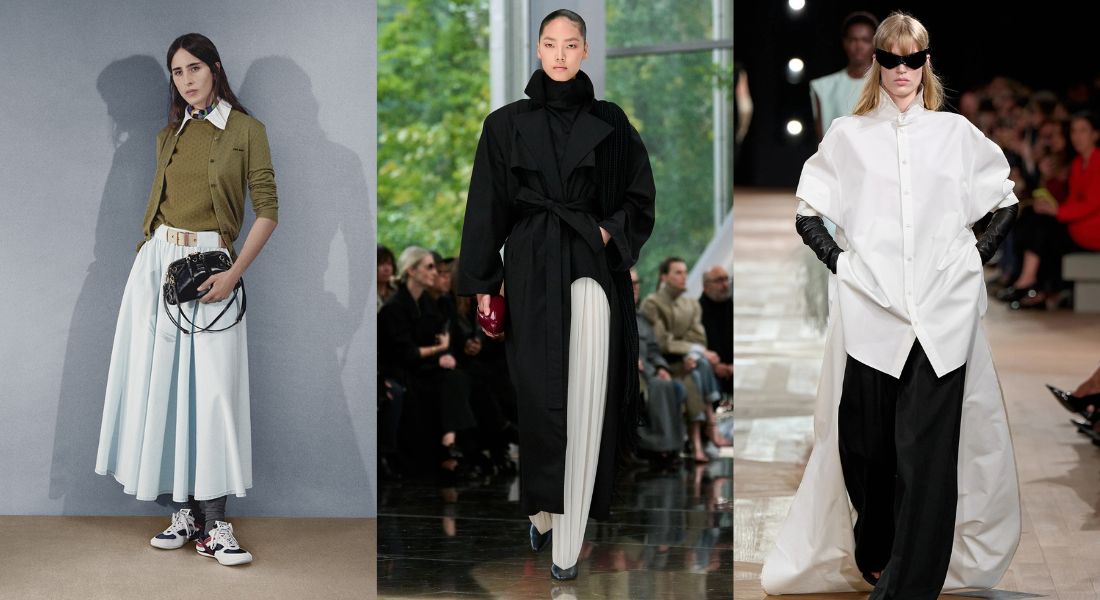
As the concept of modest fashion continues to evolve, MADAME Arabia explores how more covered silhouettes are increasingly being woven into major brands’ global collections.
As Ramadan approaches, the fashion conversation around modest dressing once again comes into sharper focus. Yet what feels different today is how far modest fashion has moved beyond seasonal relevance. No longer defined solely by coverage or tradition, modest wear has evolved into a global design language in which architecture, texture, proportion and identity lead the narrative. What was once niche is now influential, shaping collections across regions and runways alike.

For many women navigating this space, modest dressing is constantly evolving. Dubai-based content creator Zeyaanah El Guthmy clearly reflects this. “I would describe my style today as the evolution of my relationship with modesty, shaped by my growing understanding of how I exist within the fashion space,” she explains. “Style has always been so personal to me that with every era I enter in my life, it grows with me. I like to be playful with what I wear, but most importantly, it has to be authentic.”
In the Middle East, modest fashion has long centred on elegance, intention, and refinement. Regional designers have been instrumental in reframing modesty as a personal choice rather than a cultural obligation, developing aesthetics that feel modern, confident, and globally resonant. Brands such as Bouguessa, Dima Ayad and Taller Marmo, who began their lives in the region but have since expanded beyond, have each approached modest dressing through their own lens, building signatures that balance structure with fluidity.

Bouguessa, for example, is often associated with architectural restraint. Clean lines, neutral palettes and deliberate silhouettes define its approach, offering pieces that feel quietly powerful. Dima Ayad leans into colour and movement, presenting modest dressing as expressive and celebratory, without losing sophistication. Taller Marmo’s kaftan-inspired cuts have become a go-to for women seeking coverage with a dramatic touch.

Beyond these established names, a new generation of smaller regional brands is introducing fresh perspectives on traditional styles. Labels such as ONORI, SALFA, 1309 Studio, and Serrb are exploring how modest silhouettes can evolve through material innovation, subtle construction and everyday wearability. Rather than relying solely on embellishment, these brands focus on new proportions, textures, and versatility, offering pieces that move seamlessly between daily life and special occasions. This shift reflects a broader desire for longevity and pieces that can be worn in many different scenarios.

That sense of intention becomes especially pronounced during the holy month. “My Ramadan wardrobe is the same as my everyday wardrobe,” El Guthmy notes. “I often wear my prayer dress because I feel like it’s a month of quiet and solitude, so I don’t leave my house much. On days that I do leave, I want what I wear to be intentional with what I’m wearing.” Her approach mirrors a wider movement toward thoughtful dressing during Ramadan.
At the same time, modest elements are appearing on international runways with increasing naturalness. Longer hemlines, relaxed tailoring, high necklines and layered looks have become integral to recent collections. Oversized coats, fluid trousers, structured capes and full-length dresses are now staples across global fashion houses’ collections, aligning organically with modest dressing principles. This convergence has blurred the lines between modest wear and mainstream fashion. Yet El Guthmy cautions against isolating modest fashion as a separate category altogether. “I don’t think there is much representation in modest fashion in the direct sense; however, seeing it as a separate category is what’s stopping many people from dressing modestly,” she says. “The reality is that it actually encourages experimentation and finding yourself.”

The growing number of international fashion houses creating dedicated Ramadan collections further underscores the Middle East’s influence on the global fashion map. Brands such as Dior, Valentino, Prada, Max Mara and Brunello Cucinelli now release Ramadan capsules annually, designed with the region’s cultural rhythms, climate and aesthetic preferences in mind. These collections are not simply commercially driven; they signal recognition of the Middle East as a key fashion market with its own design sensibilities and purchasing power.
For the industry, this shift is significant. Ramadan collections require brands to think differently about silhouette, fabric and function, often resulting in pieces that later influence mainline collections. The exchange is no longer one-directional. Instead, modest fashion is shaping global trends, proving that regional demand can drive international creativity.

Still, progress within the region itself remains uneven. “I don’t think brands in the Middle East have shifted their approach to modest fashion,” El Guthmy reflects. “I still think there’s a long way to go, but I think a few voices here and there have started to grow the perspectives of people who once never saw themselves dressing modestly.” A new wave of content creators is certainly approaching modesty as a form of personal style rather than a fixed formula. We are seeing layered tailoring paired with sneakers, abayas styled over denim, and flowing dresses grounded with structured accessories. The emphasis is on individuality, comfort and confidence, reflecting how modest fashion is becoming part of everyday style.
Follow Us

The Latest
-

Wellness
The science behind peptide injections
All the risks behind the so-called miracle treatments
-

Travel
Detox hotels to book for your next getaway
Check in, to check out at these beautiful resorts
-

Travel
Discovering Singapore’s green allure
Exotic, diverse, lush. The garden city of Singapore nurtures culture, fine dining, and an environmentally oriented plan for the future
-
Travel
Inside The Royal Diriyah Opera House in Riyadh
Saudi Arabia’s first dedicated opera house opening soon
Subscribe to our newsletter and receive a selection of cool articles every weeks
You can unsubscribe at any time. To find out more, please visit our privacy policy.