

Meaning in Melodies
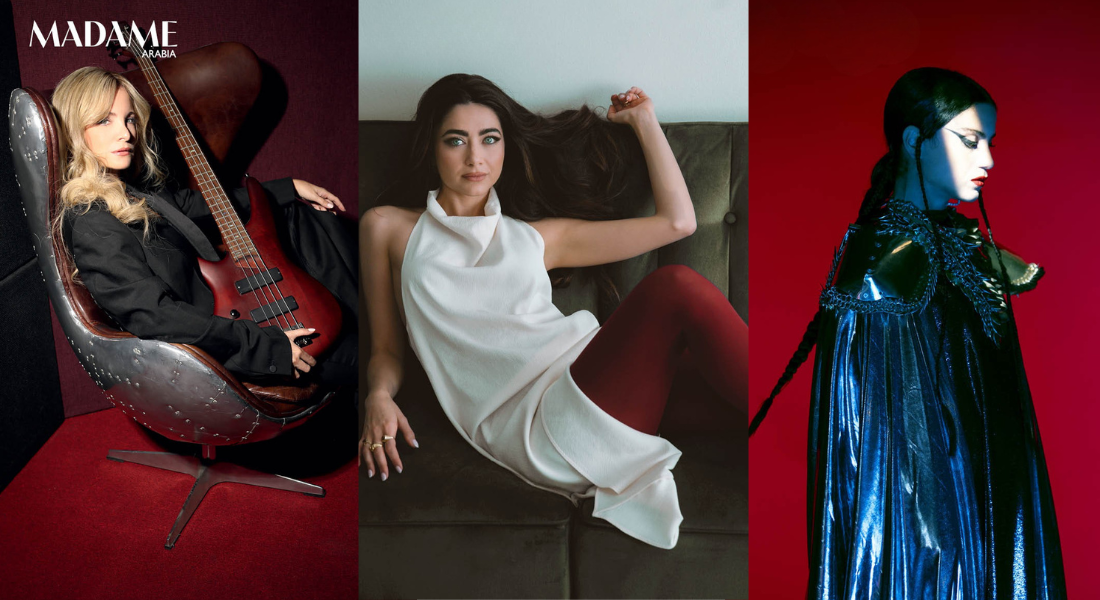
For some artists, music becomes a language through which messages can be shared. Across cultures and continents, women are using their lyrics to impact wider social, political and cultural conversations, inspiring change, hope and progress. Here, we meet
four women from different walks of life, whose work carries impact beyond their tunes.
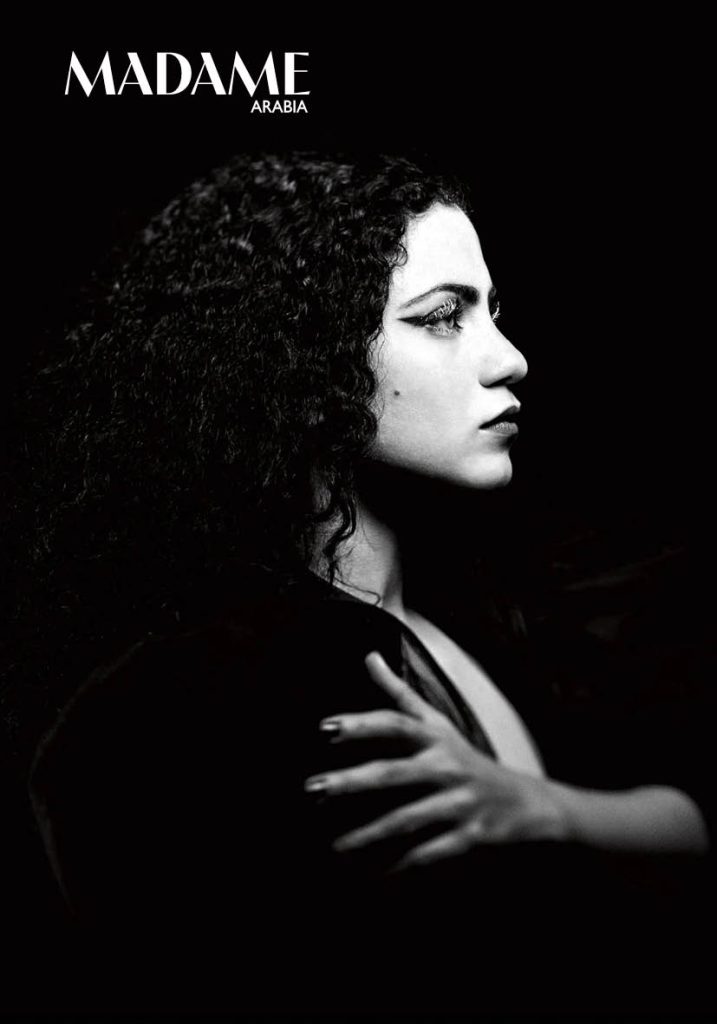
Emel Mathlouthi
Tunisian American singer-songwriter Emel Mathlouthi blends powerful, ethereal vocals with experimental electronic soundscapes. After gaining international recognition for her song Kelmti Horra, she has established herself as a voice of defiance and freedom. Now based between the US and Europe, her music is deeply emotive and meaningful.
Tunisian American singer-songwriter Emel Mathlouthi creates music without compromise. As someone for whom music has always been a form of expression, she has built a career on sharing deep messages through her words, bringing movements
together and giving her audience hope.
In 2012, her breakthrough track Kelmti Horra attained anthemic status in Tunisia. “It was very humbling to witness that a song can really change so much,” she says. “It can give people strength, give them hope, and inspire them to make change.” In that moment, she realised her music could be a force capable of shaping collective experiences.
“As a child growing up in Tunisia, very early on, I realised the best way for me to contribute was to use whatever I was good at,” she explains. “And I happened to be good at singing.” With this in mind, a young Mathlouthi began using music to reimagine the world around her, transforming school songs, layering performance with choreography and theatre. Even then, music was a 360-degree experience for her.
Inspired by watching videos of Celine Dion, Mathlouthi began writing her own songs, singing the lyrics in her bedroom, developing her voice without formal training. “I often say Celine Dion was my teacher,” she shares. “I learned everything from listening, practising, and immersing myself in her music.”
She eventually moved to Paris in 2008 to pursue a professional music career. As her profile grew, Mathlouthi continued to use her platform to share messages with political and social themes.
“I’m rooting for a very deep, meaningful art expression,” the musician says. “I don’t create just to please or to reach numbers. I don’t even know how to do that.” Instead, her work represents a deliberate rejection of superficiality, prioritising depth over commercially driven targets. This has not come without its challenges, however.
As an Arab African woman navigating a global music industry, she speaks candidly about the limitations imposed on artists who exist outside leading markets. “We are not given the space to define ourselves on our own terms,” she notes. “We’re often viewed through one lens, whether exotic or political.”
Fluent in multiple languages and performing across cultures, Mathlouthi, however, sees music as borderless. “To me, what a
musician has to master is how to combine cultures from everywhere and create something universal,” she says. “I take a lot of pride in seeing how diverse my audience is – people from different cultures, beliefs, and backgrounds all connecting through music.”
Beyond the stage, being a mother has added another dimension to her perspective. “It has taught me humility, patience and resilience,” she says.
Balancing motherhood with an uncompromising creative life is not without its challenges, but she has embraced it fully. “I’ve always tried to be as present as possible,” the musician notes. “When I couldn’t leave my children, I brought them on tour
with me.”
Looking ahead, Mathlouthi’s vision continues to expand beyond music. She is currently developing an opera adaptation of her latest work, transforming it into a larger, immersive performance piece. “I want my work to create movements,” she says.
Alongside this, she is working on a multi-episode music film dedicated to influential women throughout history, reinforcing her, commitment to storytelling. “I still have a lot to say,” she reflects.
“And I believe my music is here to stay. That’s what matters to me the most.”
“To me, what a musician has to master is how to combine cultures from everywhere and create something universal. I take a lot of pride in seeing how diverse my audience is.”
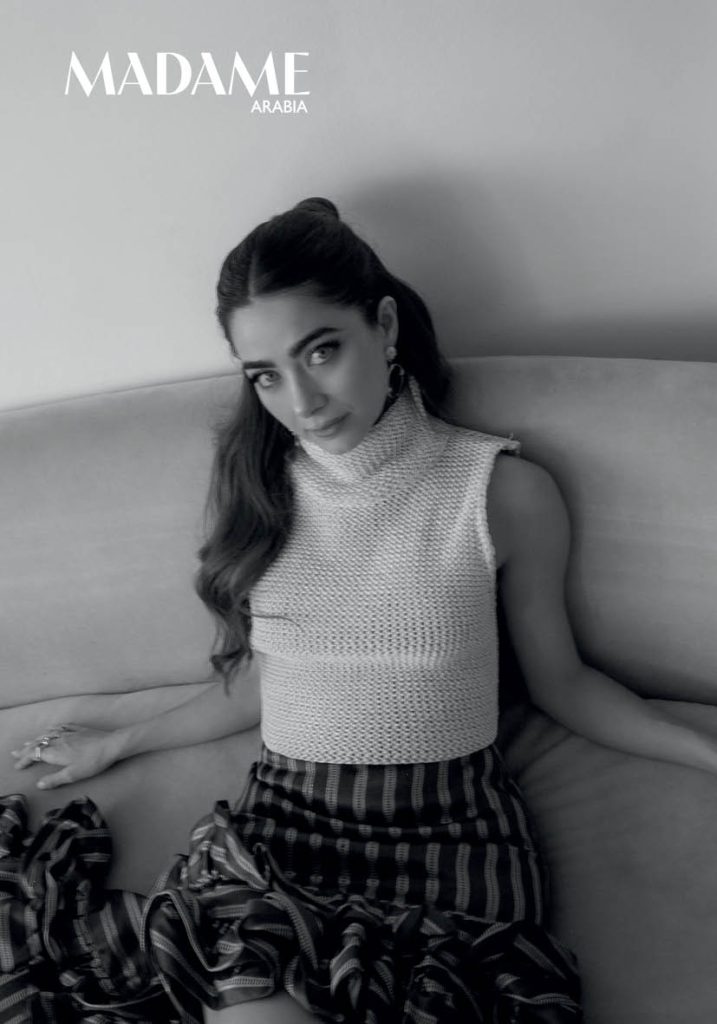
Dana Salah
Palestinian Jordanian artist Dana Salah found her voice through Arabic music. Blending contemporary sounds with traditional influences, her work draws on her heritage while reflecting a distinctly modern perspective. After years spent between the Middle East and the United States, Dana developed a sound that bridges cultures, combining elements of R&B, pop and alternative Arabic music. Her lyrics explore themes of identity, belonging and self-expression.
Dana Salah’s music career has seen her travel across cities and cultures, moving between Amman, New York, and now
Dubai. Her work reflects a shift in how stories are told through music. “Music was always an outlet for me growing up – something I naturally gravitated towards, but of course, there were challenges around this,” she explains.
Raised in Jordan, where education and traditional careers are often prioritised, Salah initially followed a more conventional route, studying economics at Duke University before moving to New York to pursue music full-time. “My parents were surprised and initially pushed back, but I stayed for seven years and built my career,” she explains.
Working in the music industry, however, wasn’t always as equal as she would have liked it to be. As a woman, she soon encountered double standards. “Sometimes I would share an idea in the studio, and it would be dismissed, only for a male
collaborator to say the same thing and be praised,” she says.
The experience pushed her to become more defined and determined in her approach. A turning point came when she returned to the Middle East in 2021 and began writing in Arabic. After nearly a decade of producing music in English, the shift allowed her
to access a different kind of expression. “When I began creating music in Arabic, it felt like a voice that had been waiting to emerge,” she says. “Suddenly, I was able to share stories rooted in my heritage and identity.”
That decision reshaped her sound and opened her to a new audience, allowing her to explore more complex themes. Songs such as Weino explored relationships and expectations through a more culturally specific lens, while her upcoming single Dori Dorak addresses gender dynamics more directly.
“It explores the double standards women face and challenges listeners to imagine roles being reversed,” she explains. Salah’s perspective has also been informed by her time working between regions. While the Western music industry offered early exposure, it also revealed structural imbalances, particularly around ownership and royalties. In contrast, she points to the Middle East’s emphasis on storytelling as a defining strength. “The region has a deep tradition of poetry and lyricism, and that influences how music is created,” the musician shares.
Like many artists, Salah has had to adapt to shifting circumstances. The instability in the region disrupted plans and delayed releases, but it also led to new ways of working. Remote collaborations have become part of her process, allowing her to continue producing and refining her sound during a period of uncertainty.
Now, she is preparing to release a new body of work. With an album release set for June and a series of singles leading up
to it, the focus is on developing a more cohesive narrative across both music and visuals. Collaborations with female creatives form a key part of this next phase, reflecting a broader interest in building community within the industry.
“Ultimately, I want my music to spark conversations, create connections, and give people a sense that their experiences are
understood,” Salah says.
“When I began creating music in Arabic, it felt like a voice that had been waiting to emerge. Suddenly, I was able to share stories rooted in my heritage and identity.”
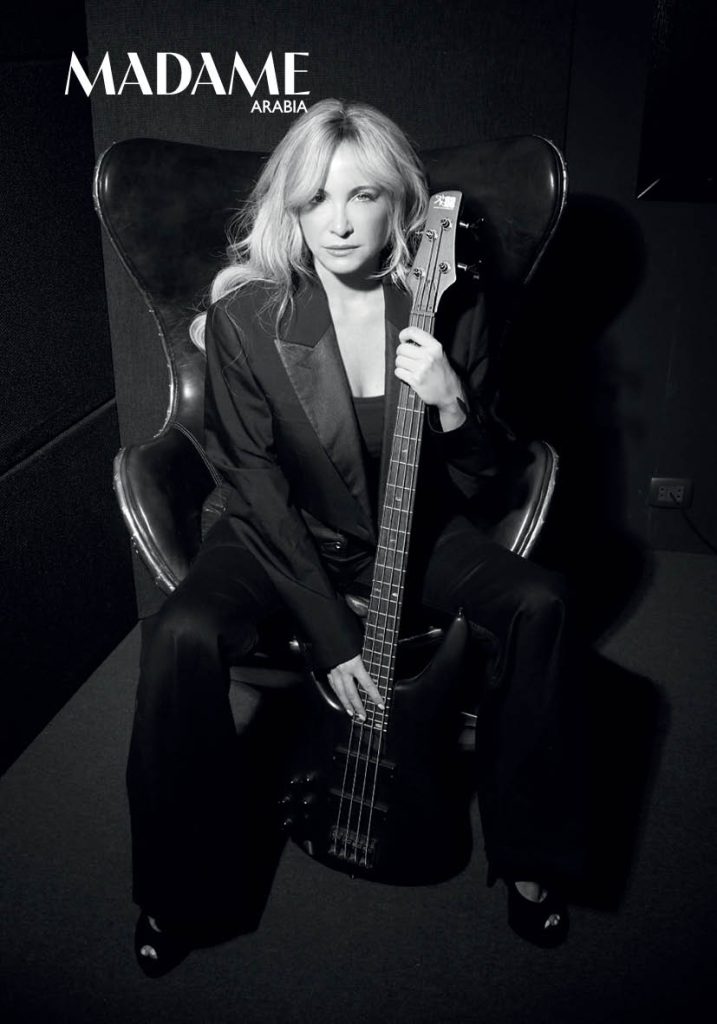
Tania Kassis
French Lebanese singer and producer Tania Kassis has built a decades-long career defined by music with a clear message. Known for blending classical, operatic, and contemporary styles, she has performed on international stages while remaining closely connected to her Middle Eastern roots. Her work often centres on themes of unity, identity, and coexistence, reflecting her commitment to using music as a platform for dialogue.
From Lebanon to international stages, French Lebanese singer and producer Tania Kassis uses music as a message of unity. She has built her decades-long career on creating music grounded in purpose. With a global audience but messages deeply rooted in the
Middle East, her work transcends cultures and languages, using her platform to explore themes of unity, identity, human connection.
For Kassis, music is much more than just beautiful melodies. “I hope people feel truth,” she says. “Whether it’s love, pain, or hope, I want my music to touch something real inside them.” Central to her musical approach is a commitment to hope.
“It’s essential” to share messages of peace, she says. “In a world that often feels divided, I believe it’s my responsibility as an artist to remind people that we are one humanity.”
These guiding principles inform both her music and the way she engages with audiences across different cultures. Her connection to Lebanon, however, is always with her. “Lebanon is not just my country – it is my soul,” she explains. “It’s pain and beauty at the same time…vibrant, emotional, complex, and full of contrasts.”
That duality is reflected in her music, which moves between powerful, emotive ballads and lighter compositions, each carrying a sense of place and identity. “Wherever I go, I carry my heritage with me,” she says. This perspective allows her to connect with audiences globally while maintaining a clear sense of identity. That connection is perhaps most visible in her live performances, which have included global stages such as Expo 2020 Dubai and always carry a strong emotional charge.
“Emotion comes before language – every performance has its own spirit,” she says. “Preparation is about understanding that
moment and delivering it fully.”
Despite performing across languages and cultures, her approach to connection remains simple. “When you sing with honesty, people feel it regardless of the words,” she says.
Like many artists in the region, Kassis has also had to navigate expectations within the industry. “I’ve faced moments where I had to prove my credibility beyond appearances,” she says. Her response has been to remain consistent in her vision, resisting limitations by embracing versatility and maintaining control over her artistic direction.
And in times of uncertainty, her sense of purpose becomes even more pronounced. “In darkness, the role of the artist becomes even more important,” she says. “Music becomes a form of resistance, a form of hope… I create because I must, because silence is not an option.” This perspective positions music as a means of response to the world around her.
Looking ahead, Kassis remains focused on creating work that carries meaning. “I would like to leave a legacy of meaning,” she says. “Music that stood for something – love, unity and dignity.”
“I hope people feel truth…Whether it’s love, pain, or hope, I want my music to touch something real inside them."
Follow Us

The Latest
-

Wellness
The science behind peptide injections
All the risks behind the so-called miracle treatments
-

Travel
Detox hotels to book for your next getaway
Check in, to check out at these beautiful resorts
-

Travel
Discovering Singapore’s green allure
Exotic, diverse, lush. The garden city of Singapore nurtures culture, fine dining, and an environmentally oriented plan for the future
-
Travel
Inside The Royal Diriyah Opera House in Riyadh
Saudi Arabia’s first dedicated opera house opening soon
Subscribe to our newsletter and receive a selection of cool articles every weeks
You can unsubscribe at any time. To find out more, please visit our privacy policy.