

THINK PINK!
WORDS BY PATRICIA ENGELHORN
No one needs rose-tinted glasses in the Pink City – Jaipur is the highlight of any Rajasthan journey, with its historic palaces and hotels straight out of a Bollywood fairytale. Drama, baby!
For lovers of precious gemstones, there is a distant paradise – Gem Palace, India’s Mecca of glamorous jewels. You enter through a dim little anteroom, where a few men usually squat on the worn carpet – drivers, guides, or other attendants quietly conversing in the half-light. Beyond this chamber, it is hushed and cool.
The rooms seem like they’re from another era – shadowy, with thick carpets, silk wallpaper. In the air lingers an unmistakable blend of cigarette smoke, wood polish, perfume, and history.
Gem Palace is the realm of the Kasliwal family – a close-knit clan of brothers and cousins who run the jewellery house in its ninth generation, and have established themselves as “the Cartiers of India.”
On one wall hangs a photograph of Susan Sarandon, beaming with an opulent necklace around her neck. Beside her, Lady Di, Jacqueline Kennedy, Nicole Kidman, the Japanese Imperial couple, and the last Maharani of Jaipur gaze contentedly into the camera.
They likely chatted with one of the Kasliwals, were served a spiced masala chai, and admired the diamond-and-enamel turban crafted by the family’s ancestors – said to be worth seven million dollars.
They would have been invited to reach into drawers brimming with glittering necklaces and let individual gemstones trickle through their fingers like marbles. It’s unlikely that any of them left empty-handed.
And yet, one should not be deceived – Jaipur is anything but a jewel box. Along the central Mirza Ismail Road, cycle rickshaws, buses, cars, and donkey carts inch forward metre by metre.
The chorus of honking never ceases. Those not traveling in an air-conditioned car with driver and guide, but venturing out independently on foot, will find little of what Western visitors take for granted – taxis, toilets, banks, cafés. The four-million-strong metropolis is demanding – crowded, loud, dusty, hot, and when it rains, the streets flood in an instant. Still, the Pink City is worth every strain.
Jaipur was founded nearly 300 years ago by an enlightened maharaja with a keen sense of architecture and a fondness for jewels, built into the dry hills of Rajasthan. Named after its founder, Sawai Jai Singh II, the city follows a grid plan with ruler-straight streets, shaded arcades for pedestrians, magnificent palaces for the nobility, and quarters designated for the many craftsmen who were to establish a new trading centre here – a modern metropolis.
With its iconic reddish-pink façades, the Rajasthani capital is regularly voted India’s most beautiful city. Since 2019, it has been a UNESCO World Heritage Site, and there are a thousand and one reasons why more than 600,000 foreign tourists visited last year.
From an urban planning perspective alone, Jaipur is unique. Its centre is spacious and expansive – nowhere else in India does one find an old town of such scale.
Thousands of traders have settled here, many in tiny shops with lavish displays spilling out onto the streets. Indeed, the walled city is one vast marketplace.
Even the street names reveal this – Nehru Bazaar, Bapu Bazaar, and Johari Bazaar offer everything for which Jaipur is famous.
This includes colourfully printed textiles, blue pottery, carpets, fine enamel work, miniature paintings, exotic perfumes. Among the most popular souvenirs are traditional hand-embroidered shoes (‘jootis’) and soft, flexible camel-leather sandals (‘chappals’). A fine selection can be found at Rishi Shoes, perhaps the most beautiful shoe shop in the old town.
Around the flower market, where fragrant blossoms are woven into garlands and ritual offerings, you will find spice merchants. Alongside classic blends such as garam masala or allspice, they offer fine saffron from Kashmir, sweet cinnamon, dried roses, nutmeg, cardamom roots, coriander, honey, and small bottles of sacred Ganges water.
Jewellery and silverware, meanwhile, can be found in nearby Ramganj Bazaar, while the finest cotton fabrics with unusual patterns and luminous colours await in Johari Bazaar.
At the heart of the old town stands the City Palace, with classical Mughal architecture featuring colonnades, gardens, and courtyards. Here, a ticket for 500 rupees (just under five euros) grants access to the Maharaja Sawai Man Singh II Museum, where past luxuries reappear in collections of carpets, textiles, enamel work, and weapons.
With a “Royal Grandeur” ticket for 2,500 rupees, visitors may also explore the monarchs’ private apartments, including the opulent dining hall, whose chairs feature armrests shaped like silver lions, and whose walls are painted with gold dust and pigments made from rubies and emeralds.
To this day, Jaipur’s rulers inhabit part of the complex – including the reigning maharaja, Padmanabh Singh. Barely 30 years old, he is considered India’s most eligible bachelor – a style icon, talented polo player, and globally connected celebrity.
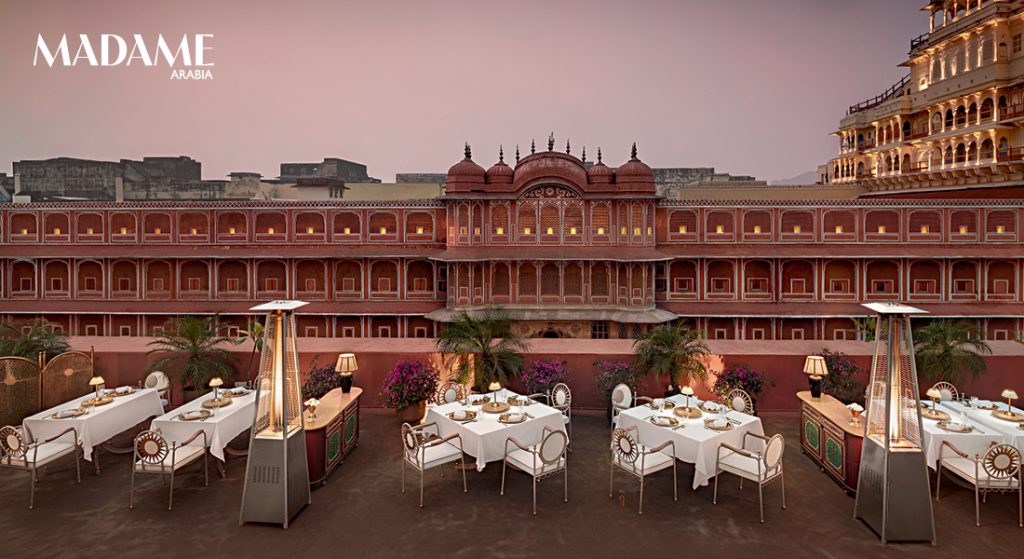
To encounter him in the publicly accessible corridors? Unlikely. Better odds await at The Sarvato, the lounge he opened on one of the palace rooftops with restaurateur Abhishek Honawar – his aim was “to combine the grandeur of our forefathers with modern luxury”. Mission accomplished.
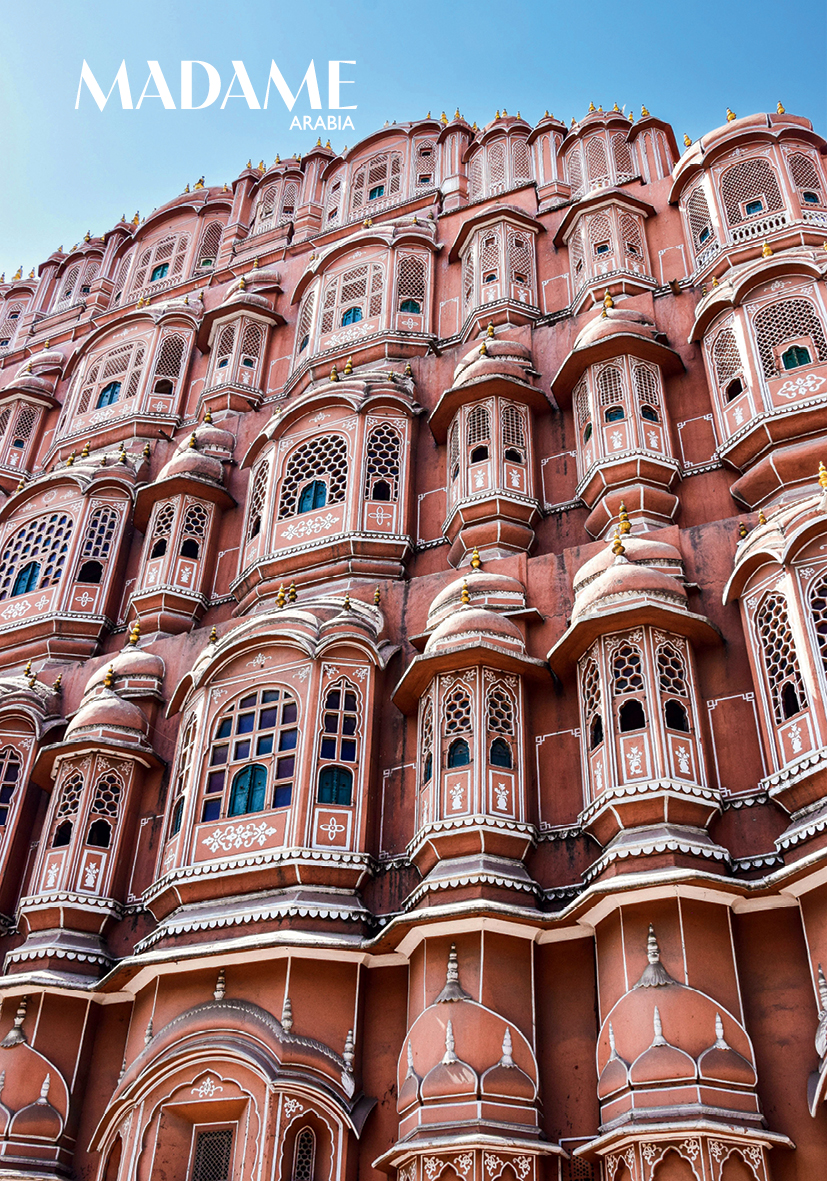
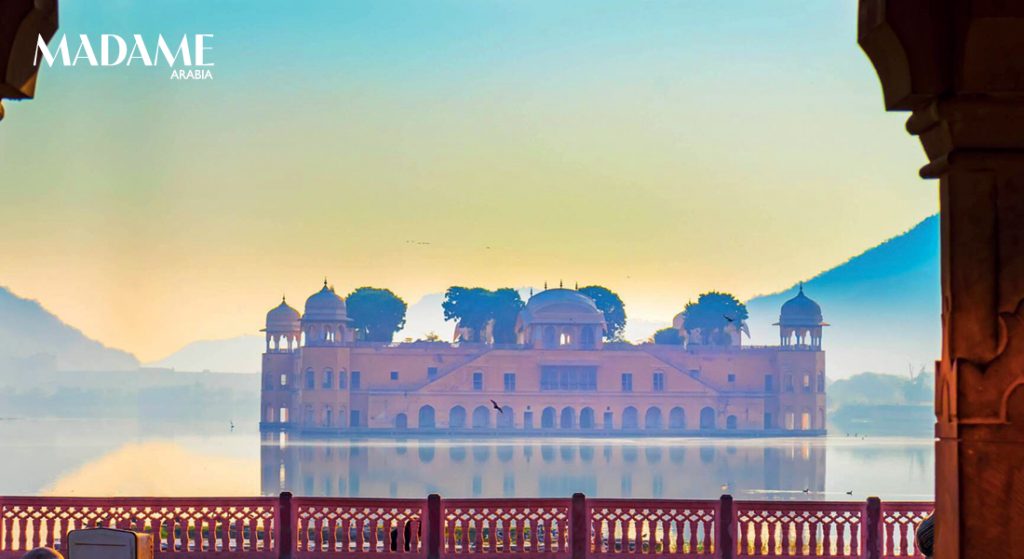
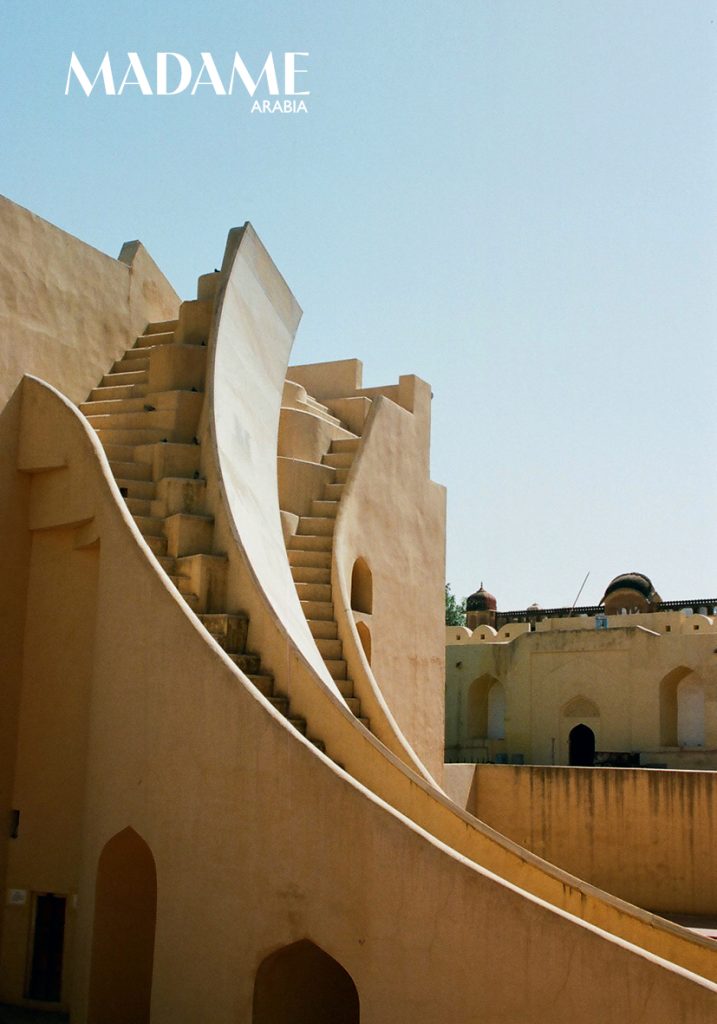
Other historic landmarks include the idyllic Jal Mahal, floating on a lake; Jantar Mantar, the early 18th-century astronomical observatory; and, of course, the famous Hawa Mahal, the Palace of Winds, with its countless bay windows and balconies from which the kings’ wives and their all-female entourage once observed street life unseen.
Rather than merely photographing its imposing pale-red façade, visitors should venture inside Hawa Mahal – with its expansive courtyards, intricate latticework, and 953 jharokhas offering extraordinary views over the city, it deserves an unhurried visit.
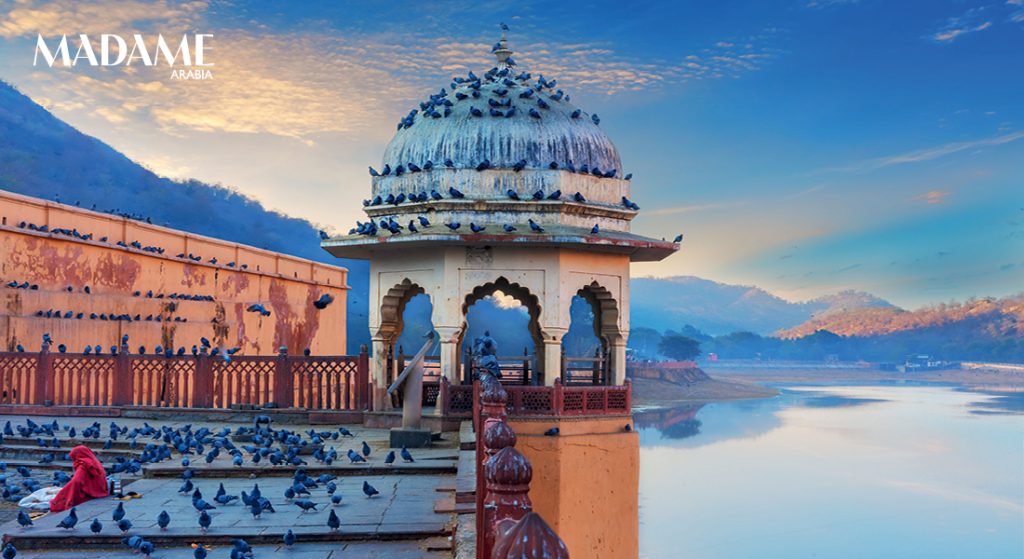
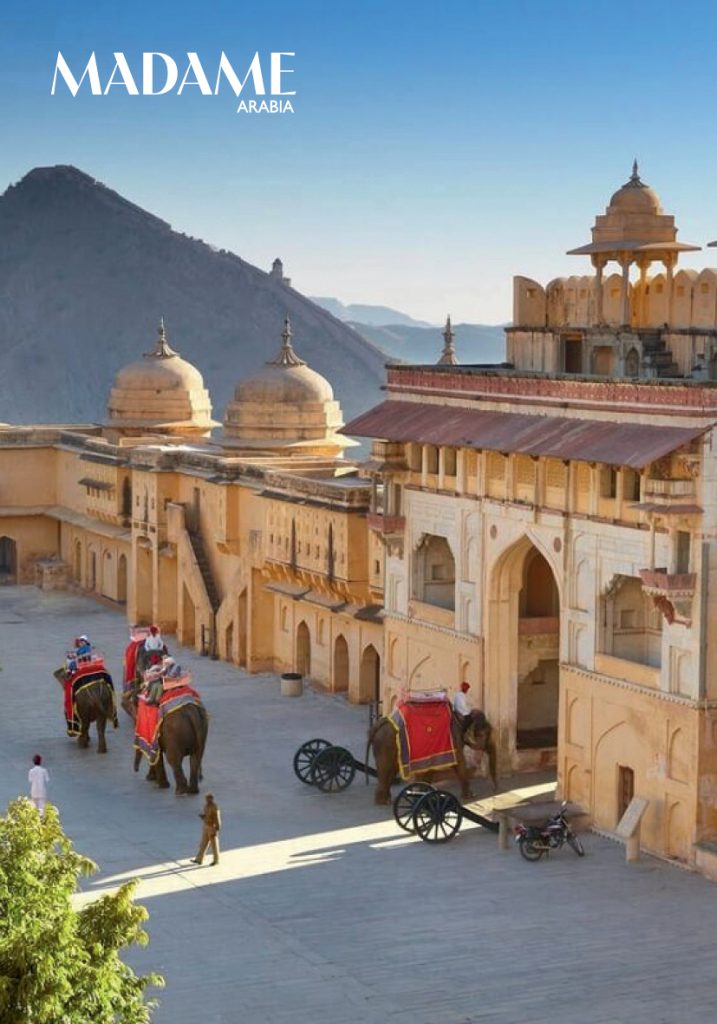
Jaipur’s greatest attraction, however, is Amber Fort, proudly and indestructibly perched on a ridge of the Aravalli hills. Built of red sandstone and white marble in the 16th century, this fortress-palace once guarded Rajasthan’s former capital, Amber.
A gentle breeze always moves through the open pillared audience hall, and the view of the hills and the green Maota Lake is spectacular.
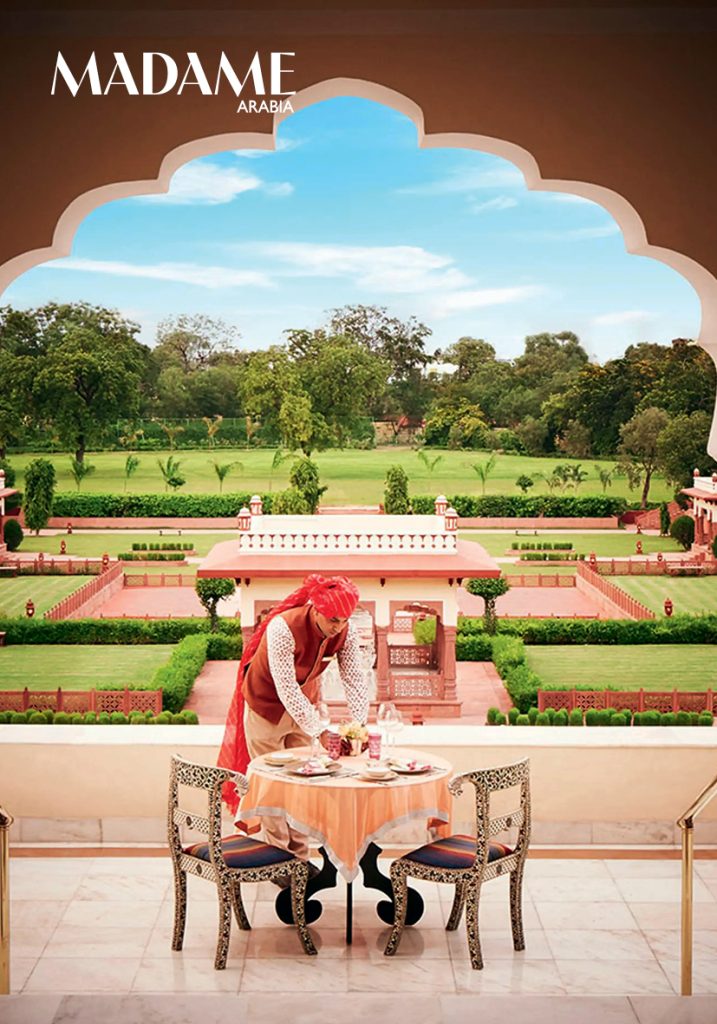
In the fairytale-like Sheesh Mahal, the Hall of Mirrors, walls and ceilings are adorned with geometric and floral patterns inlaid with thousands of mirrored tiles and mosaics, creating a kaleidoscopic sparkle. At the restaurant 1135 AD, diners can sit on a terrace with candlelit tables and savour the many small dishes of a classic North Indian thali, served in silver bowls.
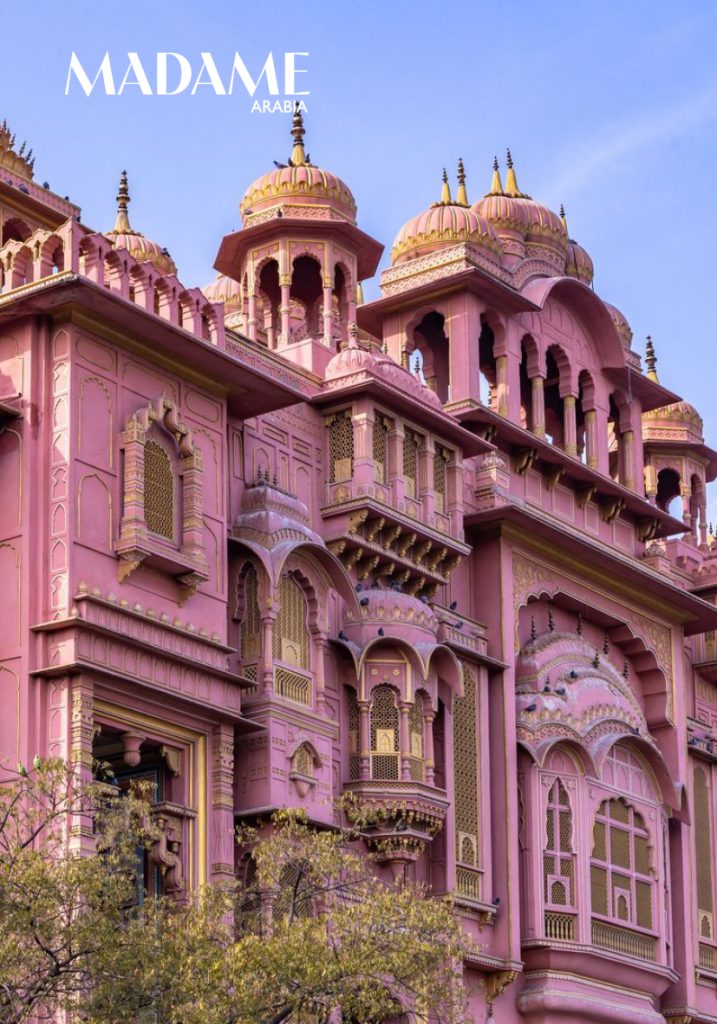
What else? It seems that every hundred metres a Hindu temple rises along the roadside – Hinduism, with its colourful gods and goddesses, is omnipresent in Rajasthan. Particularly striking is the modern Birla Temple, built of white marble and 3 dedicated to the god Vishnu and his consort Lakshmi. Constructed in 1988 by the industrialist Birla family, it features magnificent stained-glass windows depicting Hindu myths.
From here, it is a 20-minute taxi ride to the Govind Dev Ji Temple, built to align with the windows of the City Palace. Insiders know to arrive in the early evening, when priests in saffron robes draw back the curtains to reveal Lord Krishna playing his flute beneath golden canopies.
Jaipur also boasts a wealth of elegant boutiques that will delight even the most seasoned fashionistas. At Rasa, reinterpreted Mughal textiles, exquisite dresses, scarves, and bedding in silk, cotton, and linen await. At Anokhi, beautiful tunics, bags, and scarves are printed using the Pink City’s world-famous block print technique.
In the enchanting boutique Hot Pink, founded by Parisian jeweller Marie-Hélène de Taillac, candy-coloured cotton dresses and silk tunics by Indian and French designers hang side by side.
At Idli, one finds fantastically patterned womenswear and menswear, cushions, bedding, and fabrics by the metre – all designed by French interior architect and fashion designer Thierry Journo, who lives and works in Jaipur. Meanwhile, Satayam offers cotton scarves printed with Mughal motifs in gold leaf so fine they are almost transparent, while Andraab specialises in exquisitely soft cashmere scarves, shawls, and bed covers.
A true insider tip is The Trunks Company, hidden on the second floor of an unnamed building in Jaipur’s industrial district. The trunks and suitcases displayed here are custom-made on site from the finest Italian leather. A suitcase from Jaipur – why not?
And yet, it’s the memories of the Pink City that are more enchanting than any souvenir.
HOTELS
THE JOHRI
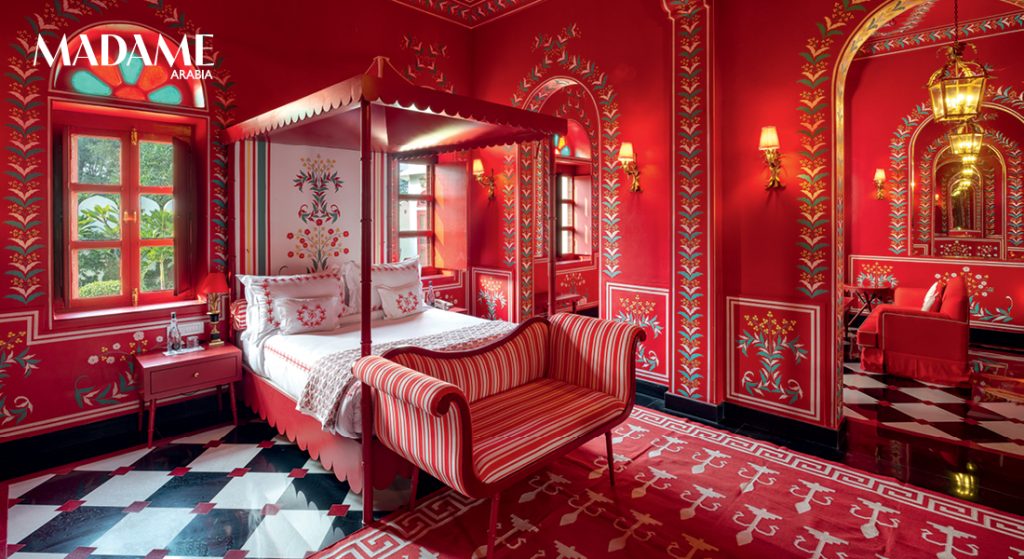
This spectacular building was once known as Lal Haveli and served as the private residence of an influential family. Located in the heart of Johari Bazaar, famous for its jewellery, each of the Johri’s five glamorous suites is named after a gemstone and decorated in its corresponding colour. thejohrijaipur.com, doubles from 380 euros
VILLA PALLADIO
Swiss entrepreneur Barbara Miolini has already found success with her trendy Bar Palladio. Now, she has added a playful nine-room boutique hotel with landscaped gardens that feels like an elegant fusion of a maharaja’s palace, exuberant Rococo, and Italian dolce vita. villa-palladio-jaipur.com, doubles from 307 euros
RAJMAHAL PALACE RAAS
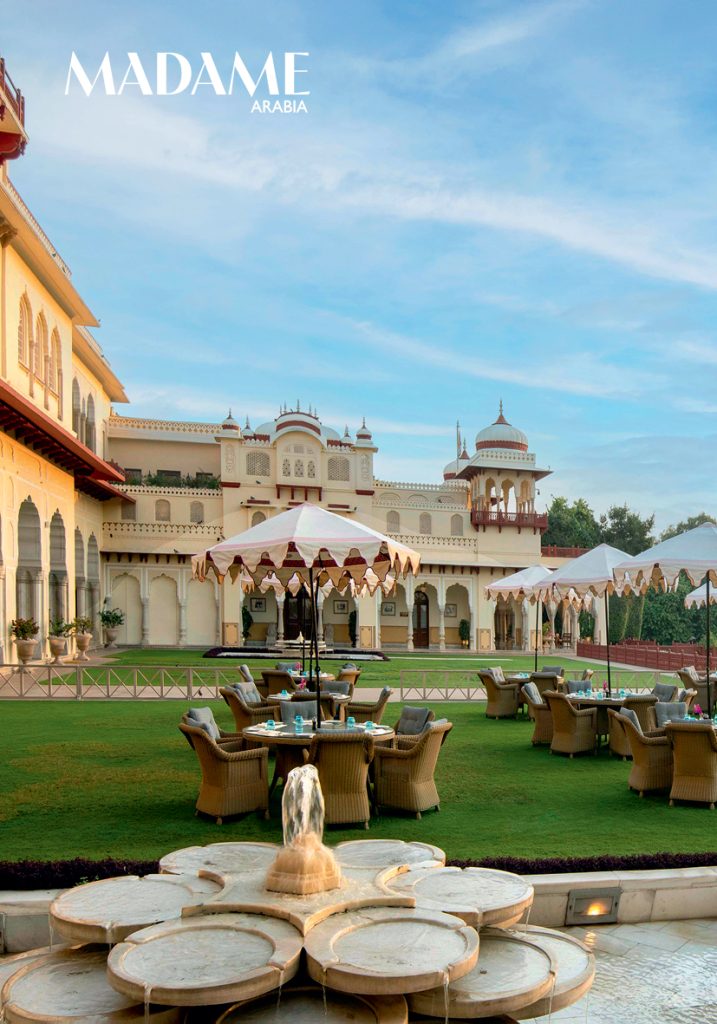
Before being transformed into a hotel, this palace, built in 1729, served as a royal guest house – hosting luminaries such as Jackie Kennedy, Lord Mountbatten, and Queen Elizabeth. Today, the hotel offers just 13 rooms and suites all decorated in beautiful Indian Art Deco style, along with an enchanting garden and pool. raashotels.com, doubles from 390 euros
OBEROI RAJVILAS
The hotel’s landscaped gardens and elegant residential pavilions, its serene setting between pool, temple, and spa, and its restaurant with a patio, serving Indian and Mediterranean cuisine, are in a class of their own. Guests can enjoy heavenly tranquillity just outside the city while remaining close to the centre. oberoihotels.com, doubles from 440 euros
JAI MAHAL PALACE
Presenting royal living with colonial accents and modern comfort, this palace was built in the 18th century for a military commander. It sits in expansive gardens in the heart of Jaipur with 100 rooms and suites, the finest of which feature private terraces with garden and pool access. tajhotels.com, doubles from 200 euros
RAFFLES JAIPUR
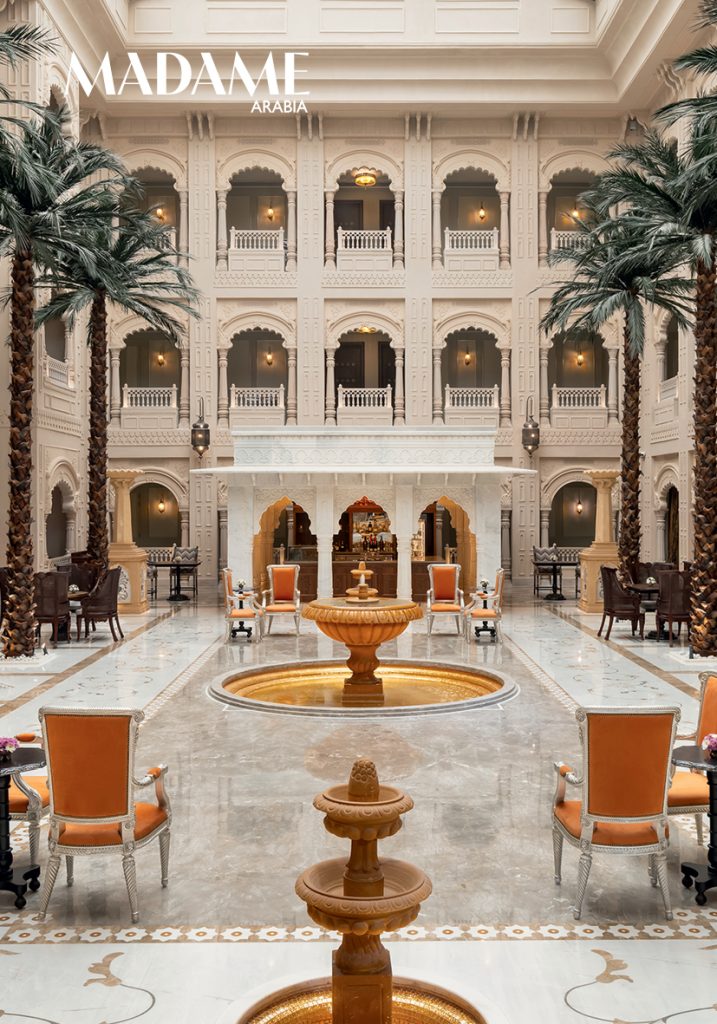
This sand-coloured marble palace offers a modern interpretation of royal living. Opulent furnishings and patterned floors adorn the lobby as well as the 50 rooms and suites, while hidden mirrored doors lead to a light-filled atrium. raffles.com, doubles from 486 euros
SAMODE HAVELI
Located in a quiet, old-town neighbourhood, this renovated noble palace charms with its slightly faded grandeur. Behind ornate doors lie courtyards blooming with bougainvillaea, opulent salons, and 50 individually designed rooms and suites. samode.com, doubles from 340 euros
RESTAURANTS
JAIPUR MODERN STORE & KITCHEN
A popular café with contemporary design and healthy cuisine in the chic C-Scheme district. Expect salads, sandwiches – a must-try is the highly recommended Desi omelet sandwich – a combination of spicy masala omelet, coriander, green chillies, turmeric, and mango. It doubles as a stylish spot for shopping, too. Tel. +91 773 773 5806
THE SARVATO
An incomparable setting on a terrace within the City Palace. Chef Sonu Kumar Singh serves traditional dishes with an innovative twist. The six-course tasting menu explores Rajasthan’s culinary landscape, blending royal recipes with down-to-earth regional cuisine. thesarvatojaipur.com
PARO
A chic rooftop lounge where Jaipur’s party crowd gathers. Expect forward-fashion guests, groovy music, and an Indian menu with creative and exotic variations. Tel. +91 977 332 1730
MERAAKI KITCHEN
Entrepreneur Shivika Kothari and chef Neha Deepak Shah serve flawlessly prepared global dishes such as pumpkin-coconut soup and watermelon-feta salad, alongside Indian street-food favourites like vada pav, pani puri, and a selection of chaat – all in an ultra-chic setting. meraakikitchen.com
BAR PALLADIO
This enchanting peacock-blue restaurant is conceived as an homage to European café culture. A picturesque spot for excellent spaghetti carbonara, with a glamorous living room where the party set winds down the day – or night. bar-palladio.com
VERANDAH CAFÉ
Part of the luxury hotel Taj Rambagh Palace, this is the place to be for an elegant dinner or traditional Sunday brunch. Dine under arcades or garden parasols while savouring Indian dishes such as potato mille-feuille with daal. tajhotels.com
CAFÉ KOTHI
A stylish venue offering vegetarian, light, and delicious farm-to-table cuisine that combines Indian flavours with international dishes – Jaipur Caprese with local burrata and olive oil, cauliflower biryani, or vegetable fritto misto with Jaipur pesto. 28kothi.com
Follow Us

The Latest
-

Wellness
The science behind peptide injections
All the risks behind the so-called miracle treatments
-

Travel
Detox hotels to book for your next getaway
Check in, to check out at these beautiful resorts
-

Travel
Discovering Singapore’s green allure
Exotic, diverse, lush. The garden city of Singapore nurtures culture, fine dining, and an environmentally oriented plan for the future
-
Travel
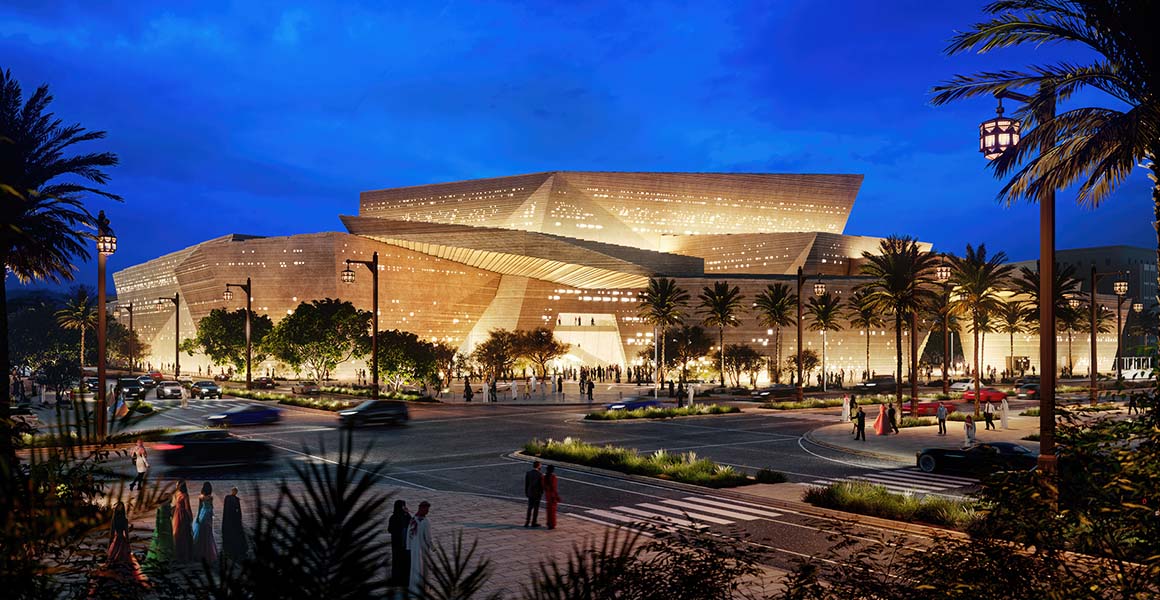
Inside The Royal Diriyah Opera House in Riyadh
Saudi Arabia’s first dedicated opera house opening soon
Subscribe to our newsletter and receive a selection of cool articles every weeks
You can unsubscribe at any time. To find out more, please visit our privacy policy.