

Meet Mona Ross, the Lebanese model who bridged Beirut’s golden age and the rise of Gulf fashion
Joe Challita
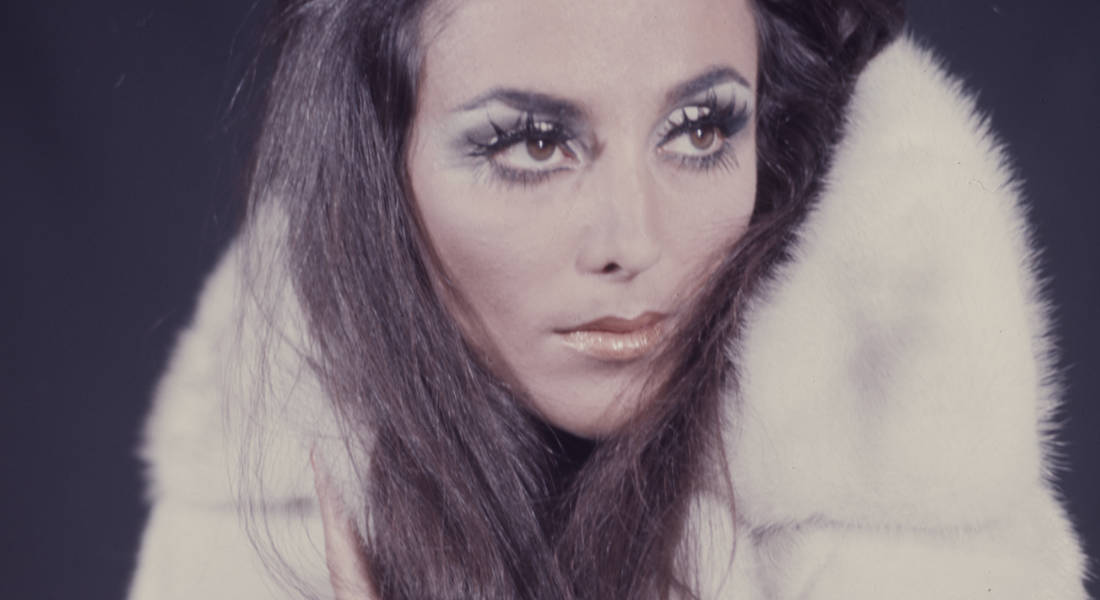
Before the Middle East’s fashion boom, there was Mona Yammine Ross – the Lebanese supermodel who rose from Beirut to Paris
Born in 1942 in the picturesque Lebanese resort town of Aley, Mona Ross came from humble beginnings. An only child, she was raised in an ordinary household far removed from the glamorous world she’d enter later.
After completing her studies in shorthand and secretarial work, she held various jobs before spreading her wings and becoming a flight attendant with Kuwait Airways. It was during her time as a stewardess that she met her first husband, American diplomat Tom Ross. Their marriage would soon open new horizons and, in 1967, she relocated to London – a move that would quietly reshape the Arab world’s relationship with fashion.
In London, Ross enrolled in a modelling school, a decision she once recalled with amused disbelief when I met her in Beirut. “I was very shy, but I was shocked when I got the top marks among all the girls at the school,” she said. From that moment, the bookings came fast, and her career began to accelerate.
Modelling was no longer a hobby – it was a calling. Work was “non-stop”, according to Ross, and soon she was poised for international attention. By the early 1970s, Ross and her husband moved to Beirut just as the city was hitting its stride as the “Paris of the Middle East”. Lebanon at the time was enjoying a cultural renaissance, bursting with music, cinema, architecture, and, most importantly, fashion.
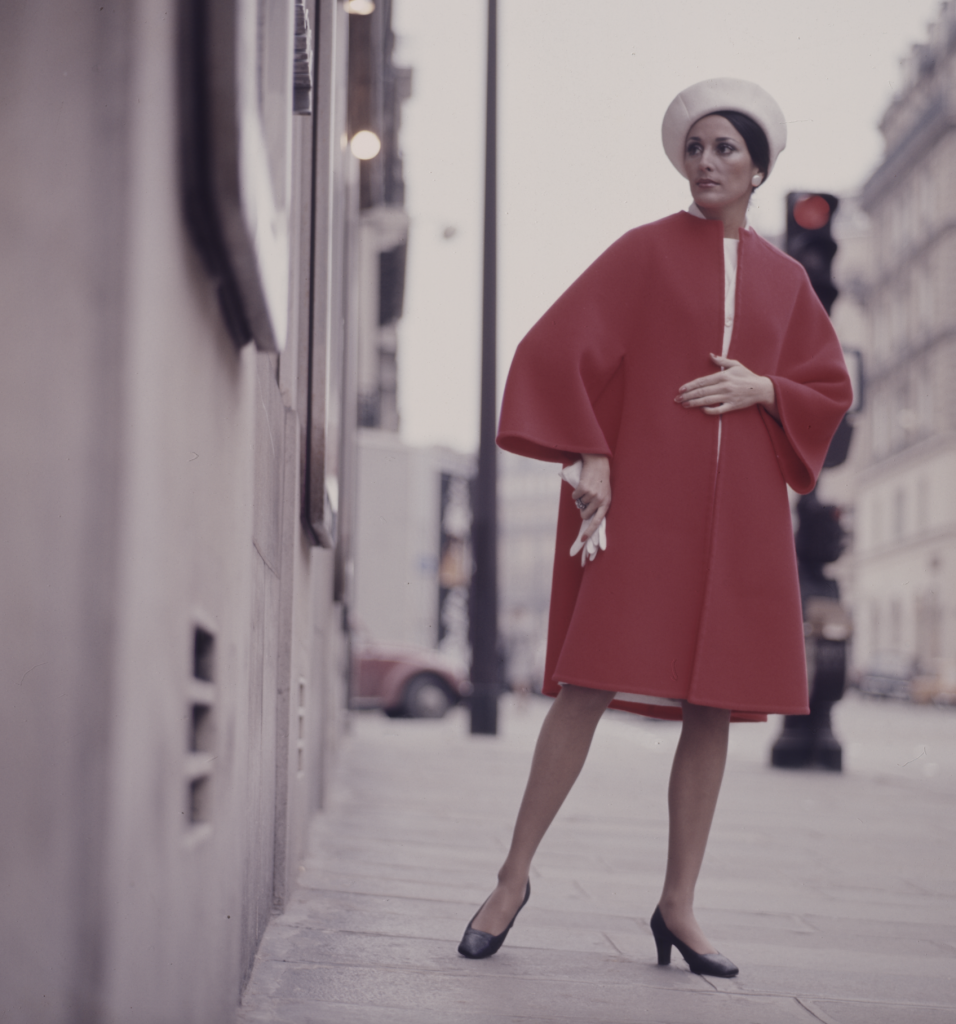
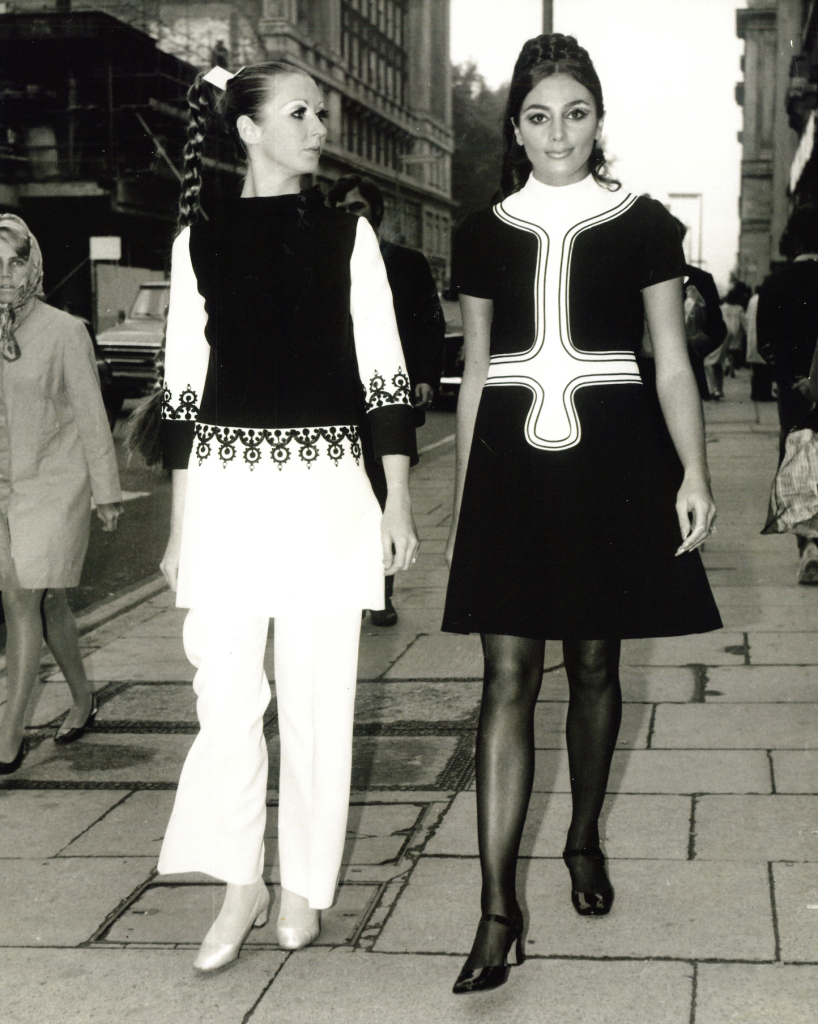
Beirut was becoming a fashion capital known for its style and glamour. Ross quickly became one of its defining faces. She became the ‘it’ girl of the 1970s and the face of Lebanon – immortalised on travel brochures of the time, she was the face of Lebanon’s national airline, MEA, and the glamorous face of the iconic Phoenicia Hotel, Holiday Inn, and even the Coral Beach hotel in Beirut.
But it was her collaboration with avant-garde Lebanese designer Jacques Cassia that truly cemented her place in fashion history. Cassia, known for his bold, space-age designs crafted from plastics, metals, and unconventional materials, found in Ross the perfect muse. Their partnership was electric – Beirut’s answer to Paris’ Yves Saint Laurent and Veruschka. Together, they created a vision of Arab modernity that was elegant, rebellious, and futuristic. While others experimented, Ross and Cassia defined the scene.
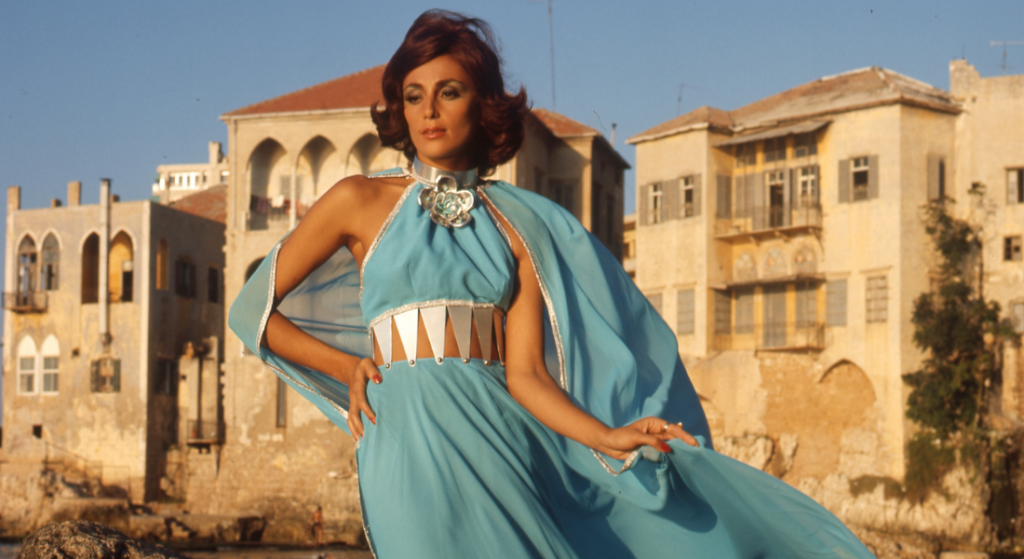
Ross’ modelling world wasn’t confined to Beirut alone. She worked with other Lebanese stars like Andrée Acouri and the inseparable sister duo Georgina Rizk (who would go on to become Miss Universe 1971) and Felicina Rossi.
Together, they were Beirut’s modelling elite, but Ross, with her striking and exotic looks, emerged as the international breakout star. In the ’70s, he signed contracts with Dior and Balmain in Paris, walked for Oscar de la Renta, and graced the catwalks in fashion capitals from Paris and Milan to Athens, New York, the Gulf, and even Yugoslavia.
She recalled being “always double-booked”, walking with confidence and never “staring blankly” – instead forging a connection with audiences. “I stood out everywhere I went,” she said. “Nothing ever resembled Lebanon during that period. We had everything – taste, luxury, intelligence, international standards. We were at the top.”
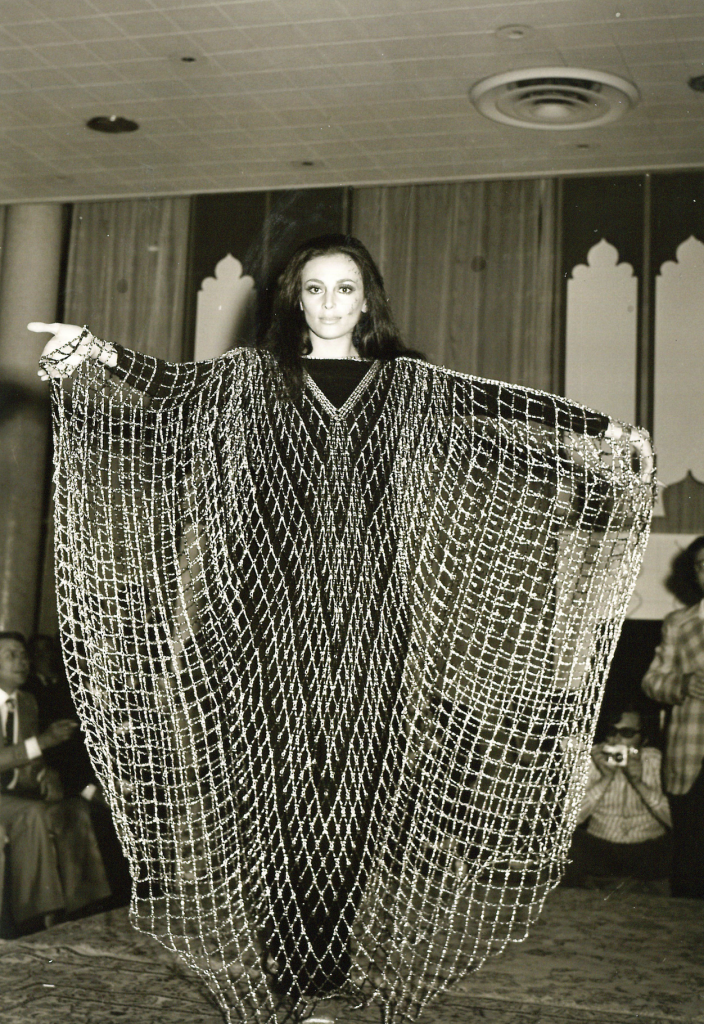
Alongside Felicina Rossi, she co-founded a modelling agency – Ross & Rossi, after their surnames – creating a platform to organise shows in Beirut and the Gulf, further shaping the fashion scene within Lebanon and beyond.
Ross’ career was a testament to Lebanon’s golden age, a time when the country’s creatives were at the height of their powers, sharing their talent with the world. But as Lebanon descended into civil war, glamour gave way to displacement and uncertainty. The model’s life, too, took a dramatic turn. She divorced Tom Ross – though she chose to keep the now-iconic name – and soon found love again with American businessman Raimond Craig. The outbreak of the 1975 civil war was a heavy blow to her dreams.
Her work later took her to Kuwait, yet she often looked back and said, “Lebanon, in those golden years, shone in a way that stayed with me forever.” In 1978, she moved with Craig to Abu Dhabi, where he served as General Manager of the Gibca Group until 1986.
While others might have faded from the spotlight, Ross embarked on a new mission, concocting a fashion scene in the UAE. She organised some of Abu Dhabi’s earliest structured fashion shows, including landmark events at the Sheraton in 1982, as well as memorable shows at Holiday Inn and Le Méridien.
One of her standout achievements was in 1980, when she collaborated with Al Masaood Jewellery, one of Abu Dhabi’s oldest and most prestigious jewellers, to present their latest summer collection. Held at Le Méridien, the show was described as spectacular, blending fine jewellery with choreographed elegance in a way that had not been seen before in the city.
The Gulf media raved about her shows – not only for their glamour, but for her remarkable choreography and flawless organisation. Across reviews, one thread stood out – Ross’ “eye for the slightest detail.” In one of her interviews for Khaleej Times with Javed Ansari, she said, “I make sure mistakes don’t happen because I’m watching all the time… I’m watching the lights, I’m watching the sound, the screen, the systems, the whole works…”
It became clear that her success wasn’t accidental – it was built on precision and perfectionism.
Audiences and the press alike could see that every show bore her personal signature of refinement. These gatherings were not mere soirées – they were the Gulf’s forays into beautiful fashion showcases, spaces where designers, models, and audiences could engage meaningfully with contemporary style.
In the UAE’s creative journey in the 70s, Mona Yammine Ross played an integral role in the flourishing fashion scene. Her influence in Abu Dhabi remains an unsung chapter in fashion history, yet its legacy is visible today.
It can be felt in every regional fashion week, in the international rise of Arab designers, and in the global appetite for Gulf creativity. Ross’ work was cultural migration in action with the aesthetic codes of golden-era Beirut woven into the emerging fabric of the Gulf.
Now based in Geneva, she is retired at the age of 84 but still beams with beauty and glamour. Her legacy is far beyond just a modelling career... It forms a bridge between Beirut and Abu Dhabi, between the Arab past and its global fashion future.
It’s time her name took its rightful place in that narrative – not only as a nostalgic tribute to Lebanon’s golden era, but as the untold beginning of the Gulf’s modern fashion story.
Follow Us

The Latest
-

Wellness
The science behind peptide injections
All the risks behind the so-called miracle treatments
-

Travel
Detox hotels to book for your next getaway
Check in, to check out at these beautiful resorts
-

Travel
Discovering Singapore’s green allure
Exotic, diverse, lush. The garden city of Singapore nurtures culture, fine dining, and an environmentally oriented plan for the future
-
Travel
Inside The Royal Diriyah Opera House in Riyadh
Saudi Arabia’s first dedicated opera house opening soon
Subscribe to our newsletter and receive a selection of cool articles every weeks
You can unsubscribe at any time. To find out more, please visit our privacy policy.