

Sophie Claudel: Making it Count
Priyanka Pradhan
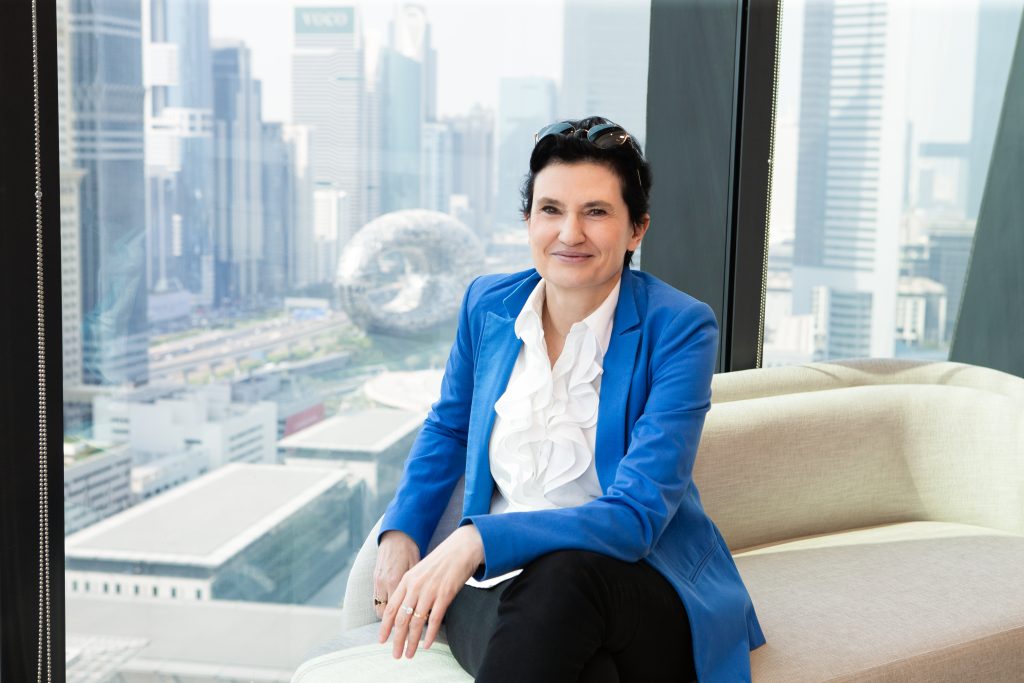
Sophie Claudel, Director of L’ECOLE Middle East, on jewelry as a universal language, radical accessibility, and why culture is the most powerful tool we have.
Before Sophie Claudel ever held a gemstone, she understood what it truly meant. A former Cultural Attaché at the French Embassy in London and director of one of France’s ten National Art Schools, Claudel has always worked at the point where art earns its place in the world. Founded in Paris in 2012 with the support of Van Cleef & Arpels, L’ECOLE landed in Dubai in 2024 with a radical proposition: that one of the world’s most storied art forms belongs to everyone. MADAME Arabia in conversation with Claudel, on jewelry, poetry, access, and what Dubai’s cultural landscape still has space to grow.
Jewelry is seldom the obvious next chapter for a cultural diplomat. What was the moment that made you say yes?
It was, in fact, the obvious next chapter. Jewelry is an art form, and my entire career has been about art and design — from the French Embassy in London to directing a national art school in France. When I was approached to open L’ECOLE in the Middle East, something clicked. Jewelry carries thousands of years of human meaning: science, desire, spirituality, trade, identity. The chance to contribute to its transmission here, through lasting relationships with local audiences and institutions, felt entirely right.
L’ECOLE comes from a very French institutional tradition, yet you’ve described jewelry as intrinsic to Middle Eastern heritage. How do you hold those two sensibilities in balance?
Jewelry is a universal language with deep roots here. In the Middle East, it carries lineage, protection, and cultural meaning that runs across generations. Our courses do not focus solely on French jewellery-making traditions — we bring in historical cultures, gemstones, and savoir-faire from across the world. The region’s openness to cultural exchange, and its own extraordinary jewelry history, provide a natural fertile ground. That dialogue between traditions is what enriches visitors when they leave.
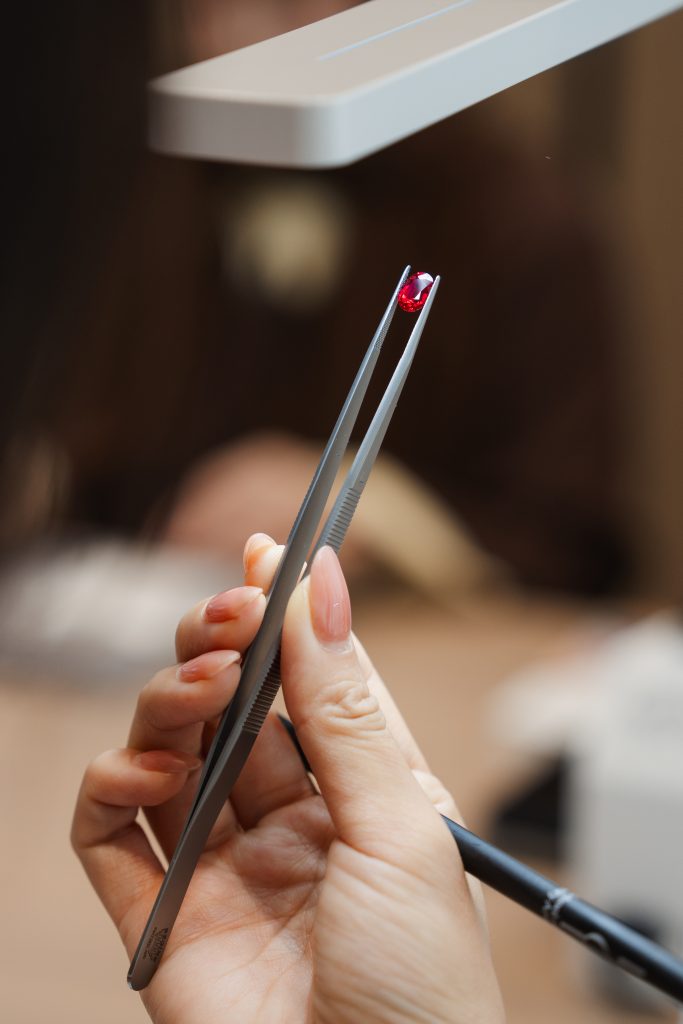
L’ECOLE is supported by Van Cleef & Arpels, one of the most rarefied names in fine jewelry, yet your stated mission is radical accessibility, donating all course proceeds to Dubai Cares. How do you navigate that tension?
Van Cleef & Arpels was built on the conviction that jewelry is an art form — and art belongs to everyone. At L’ECOLE, we speak about all jewelry Maisons and about the art of jewelry at large. The support structure makes the mission possible: every proceed raised from our public courses and talks is donated to Dubai Cares’ youth education programmes. It’s a full circle, from education to education. Through that model, we hope to inspire the wider world — jewelry lovers, children, amateurs, experts — to approach jewelry arts in new and creative ways.
Your last exhibition, ‘Poetry of Birds’, was structured around The Conference of the Birds by Sufi poet Farid al-Din Attar. That is a profound curatorial choice. What does it mean to you personally?
The Conference of the Birds is a foundational work of world literature. At its heart it is a story about the necessity of the journey, and the transformation that happens along the way. Living with that text daily, through the exhibition, was deeply inspiring. I had read it in adolescence; returning to it captivated me even more than it did the first time. The exhibition created an immersive dialogue between 19th and 20th-century jewelry and other artistic fields — jewels from Van Cleef & Arpels, Cartier, and Boucheron alongside Islamic art, carpets, and manuscripts from the Sharjah Museum of Islamic Civilization, contemporary photography by Emirati photographer Faisal Al Rais, and a poem by Mahmoud Darwish illustrated by calligraphy artist Diaa Allam. Visitors who arrived without any knowledge of Sufi literature left with a feeling they couldn’t quite name, but didn’t want to let go of.
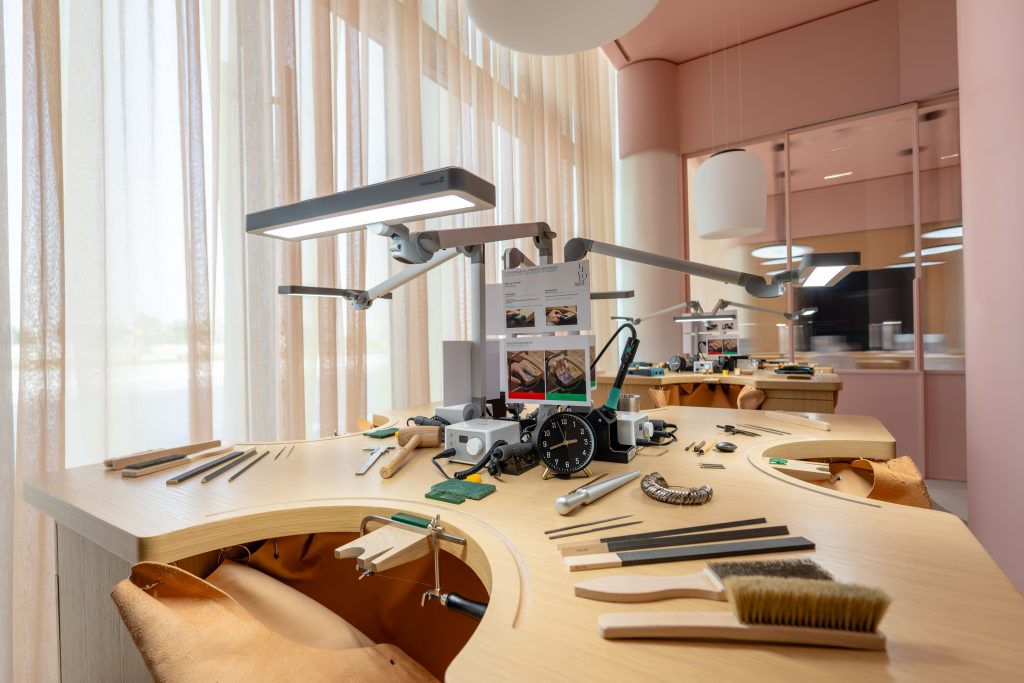
‘Poetry of Birds’ was listed as a flagship element of Dubai Art Season 2026, under the patronage of Sheikha Latifa, on the same calendar as Art Dubai and Sikka. What does that mean for jewelry as an art form?
It was an honour. It proves that jewelry arts can speak to a very wide audience and hold its place within the broader cultural conversation — not as a luxury footnote, but as an influential art form in its own right. Our exhibition created a genuine cross-cultural dialogue between jewelry and the visual arts, and for it to be recognised alongside Art Dubai and Sikka reflects the growing appetite in this region for that kind of depth.
The second edition of Talent Atelier concluded in Paris in late 2025. What shift have you witnessed in how the Emirati designers who completed it now relate to jewelry as a language?
The beauty of the Talent Atelier programme lies in the diversity of the designers who join it — they come from entirely different backgrounds, yet share the same appetite for knowledge and a desire to think beyond conventional boundaries. When they complete the programme, they leave with a tenfold boost in creativity and the feeling that their potential is limitless. They stay in touch, which builds a strong professional community around the school — one that remains open to them, like a second home.
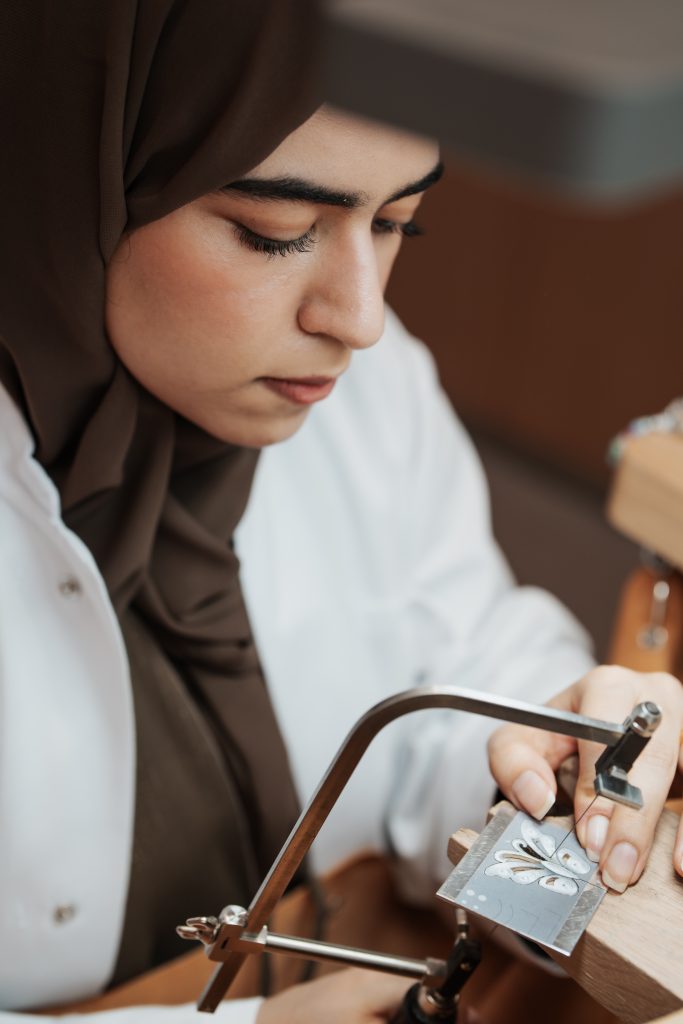
You’ve established the Library Corner at Al Safa Art & Design Library, with plans to expand it regionally. In an age of reels and virtual tours, why does the physical book still matter to how jewelry is understood?
You cannot scroll past a chapter the way you swipe past a feed. There is a quality of attention that a book demands, and that quality of attention is exactly what jewelry deserves. We find the book and the digital experience are not in competition — our online programme includes live reading sessions where a lecturer reads from a book connected to that week’s gemstone topic. The book anchors the whole ecosystem. It is where the thinking goes deepest, and where people often find themselves returning long after a course or talk has ended. If you put the right book in front of the right person, something lasting happens.
What does the next chapter of L’ECOLE Middle East look like?
Our next chapter brings a new campus in Sharjah, within the Sharjah Creative Quarter, with a focus on research, alongside bespoke activities in Abu Dhabi, other emirates, and across the region. We plan to expand the Library Corner beyond Dubai, continue to foster creatives through professional development programmes, and bring audiences closer to jewelry arts through a new exhibition. Our ambition is to go deeper in our research, foster cross-cultural dialogues, and trigger interest — if not passion — in the beautiful and rich world of jewelry. As for what Dubai’s cultural landscape still needs: it already has what matters most. A world of tolerance. That is what culture is about.
Follow Us

The Latest
-

Wellness
The science behind peptide injections
All the risks behind the so-called miracle treatments
-

Travel
Detox hotels to book for your next getaway
Check in, to check out at these beautiful resorts
-

Travel
Discovering Singapore’s green allure
Exotic, diverse, lush. The garden city of Singapore nurtures culture, fine dining, and an environmentally oriented plan for the future
-
Travel
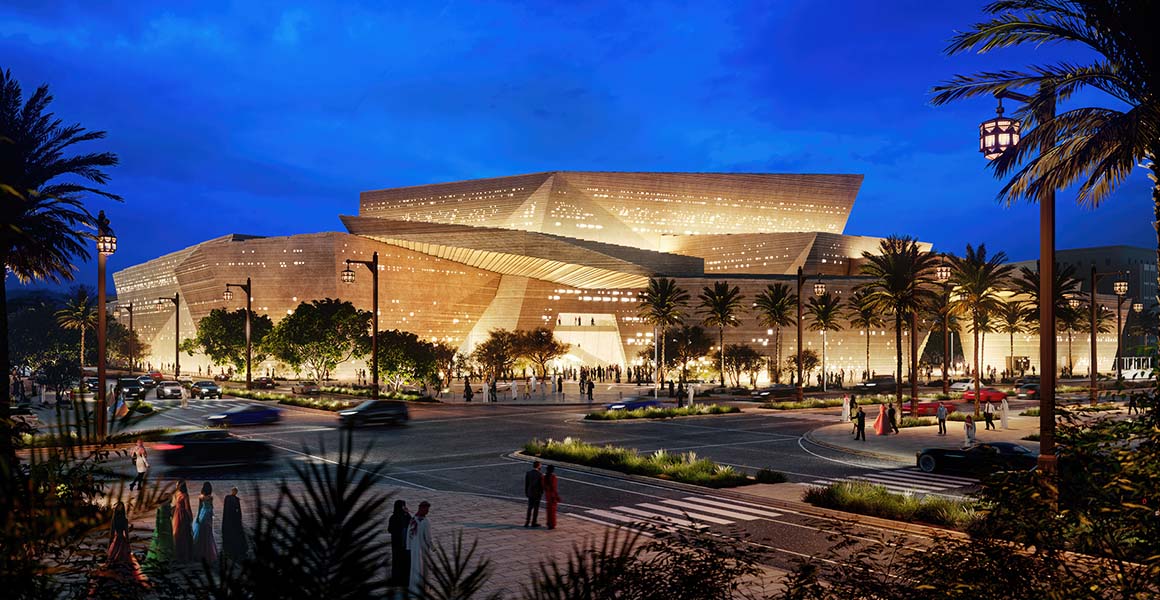
Inside The Royal Diriyah Opera House in Riyadh
Saudi Arabia’s first dedicated opera house opening soon
Subscribe to our newsletter and receive a selection of cool articles every weeks
You can unsubscribe at any time. To find out more, please visit our privacy policy.