

Beyond Sustainable Claims: Why Longevity Matters More

Words by Clarisse Mar, Founder of Rawform
As World Environment Day approaches, the fashion industry undergoes a sudden, temporary makeover. The annual spectacle arrives each June with the precision of a seasonal trend cycle. Brands that spent the rest of the year driving hyper-consumption and dropping endless new arrivals, both online and off, suddenly wrap themselves in shades of green For a fleeting moment, the industry seems to be reckoning with its conscience. Then, the summer sales hit, the visual merchandising resets, and the relentless machinery of "newness" resumes. Yet, amidst this, an essential question remains unaddressed: what does sustainability truly mean if a garment cannot survive a single season?
For too long, the regional fashion dialogue has prioritized the front-end narrative, which is celebrating organic origins, certifications, and the poetic language of hangtags. But the modern shopper is discerning; they are no longer swayed by superficial marketing. We have come to realize that the term "sustainable" has often been weaponized as an aesthetic category rather than a metric of true utility. The charm of an organic linen dress or a consciously sourced blouse dissolves the moment it loses its structure after a handful of washes, inevitably destined for a landfill before the year's end. The broader picture is no less stark, as McKinsey's research on fashion's environmental footprint notes customers miss out on up to $460 billion each year by throwing away clothes they could still wear. Across the GCC, billions of dirhams are discarded annually in the form of prematurely ruined clothing.
To combat this, the UAE launched Naseej, a nationwide initiative designed to revolutionize textile recycling, innovate business models, and build a truly sustainable fashion ecosystem. For this initiative to succeed, however, its principles must be applied where garments experience the greatest wear and degradation. This is especially evident in the foundational pieces of our everyday wardrobe, including innerwear and base layers. In the unique microclimate of the Gulf, where intense summer heat and soaring humidity dictate our daily styling choices, our garments endure unparalleled physical stress. They exist in constant contact with moisture and undergo rigorous, frequent laundering cycles that rapidly degrade inferior fabrics. So how do we choose fabrics we know will stand for longer than a season with such conditions in mind?
The answer lies in construction as much as origin. TENCEL™ Lyocell and bamboo lyocell are both produced through closed-loop processes that recapture water and solvents, maintaining structural integrity across repeated washes while avoiding the microplastic shedding associated with many synthetic fibres. Organic Pima cotton, with its longer staple fibre, resists pilling and breakdown far beyond what standard cotton can offer. Hemp and European flax linen have also earned renewed attention for their durability, requiring relatively few resources to grow while remaining wearable for years rather than seasons. These plant-based materials demonstrate that sustainability is not simply about what a garment is made from, but how well it performs over time. Increasingly, brands are also looking beyond fibres alone, incorporating measures such as OEKO-TEX® Standard 100 certified materials, closed-loop production systems, and construction techniques designed to extend a garment's lifespan. At Rawform, for example, Lenzing™ Modal is used not only because it is derived from sustainably sourced beech trees and produced through a closed-loop process, but because it offers the shape retention and durability required for garments that are worn and washed frequently. The idea is simple: a garment that holds its form after fifty washes stays out of landfill in a way that a softly labelled "organic" piece, which loses its shape in ten, never will.
That distinction feels especially relevant on occasions like World Environment Day. While the day is worth marking, it deserves a more honest conversation than it typically receives. One that asks not just what a garment is made of at the moment of its creation, but how long it will genuinely last, how well it will perform across its full life, and whether a year from now it will still be earning its place in a wardrobe. A garment that reaches landfill before the year is out has failed on every measure that matters, regardless of its certifications, its hangtag, or the campaign behind it. The most honest definition of sustainable fashion is also the simplest - make something that lasts.
Follow Us

The Latest
-

Wellness
The science behind peptide injections
All the risks behind the so-called miracle treatments
-

Travel
Detox hotels to book for your next getaway
Check in, to check out at these beautiful resorts
-

Travel
Discovering Singapore’s green allure
Exotic, diverse, lush. The garden city of Singapore nurtures culture, fine dining, and an environmentally oriented plan for the future
-
Travel
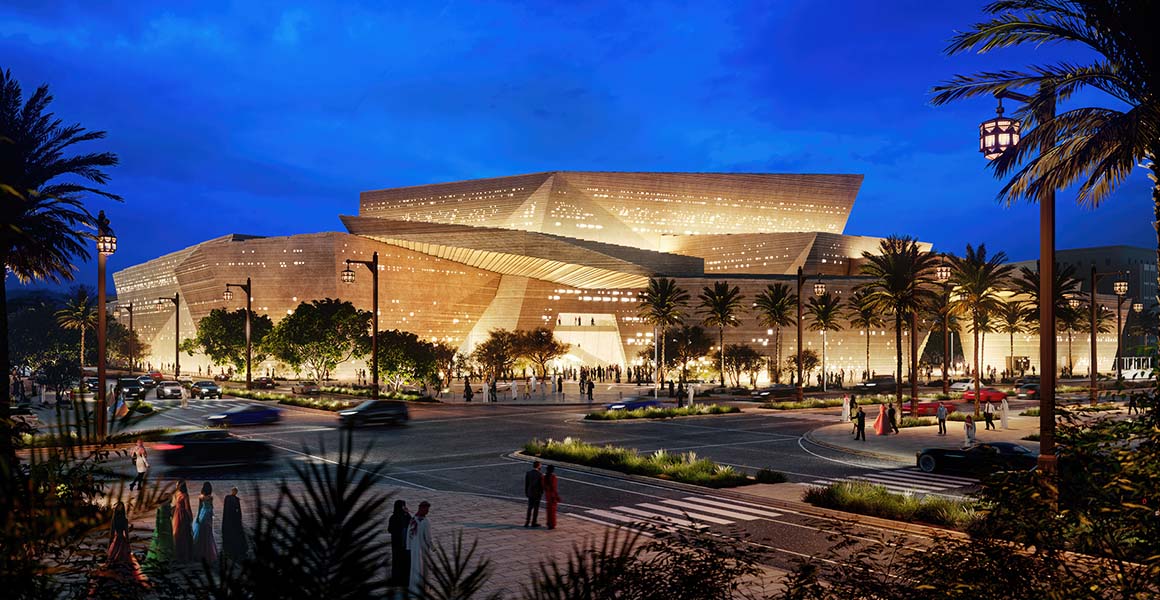
Inside The Royal Diriyah Opera House in Riyadh
Saudi Arabia’s first dedicated opera house opening soon
Subscribe to our newsletter and receive a selection of cool articles every weeks
You can unsubscribe at any time. To find out more, please visit our privacy policy.