

Princess Karma bint Abbas on the art of storytelling through art
Sondos Elgebaly
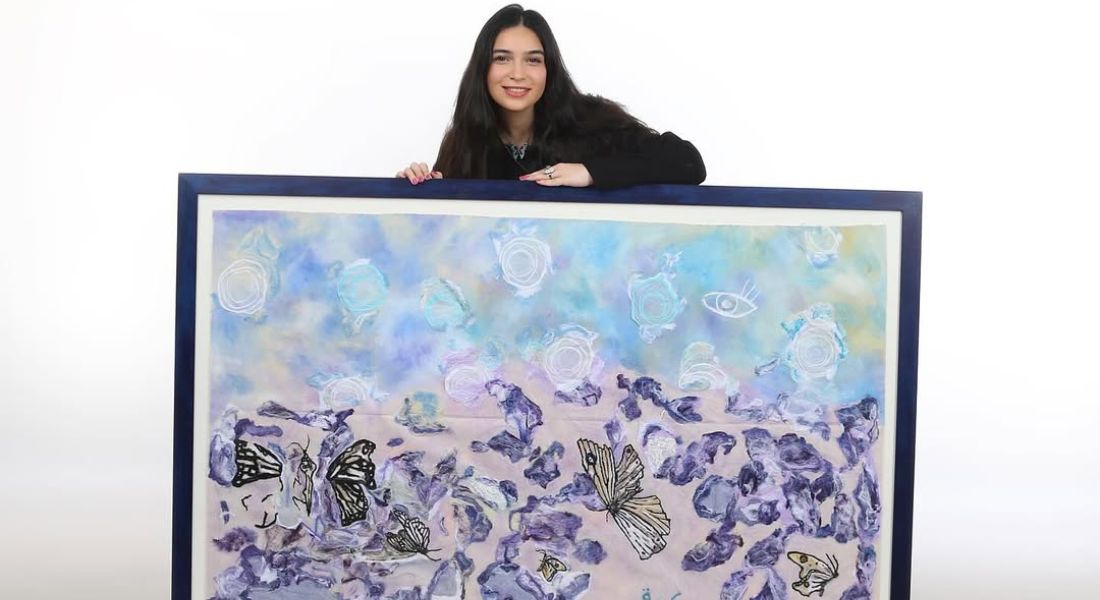
Rooted in Jordanian traditions, her tactile works turns fabric into stories
HRH Princess Karma bint Abbas of Jordan, a young Jordanian artist, is making waves with her unique take on textiles and storytelling in global art.
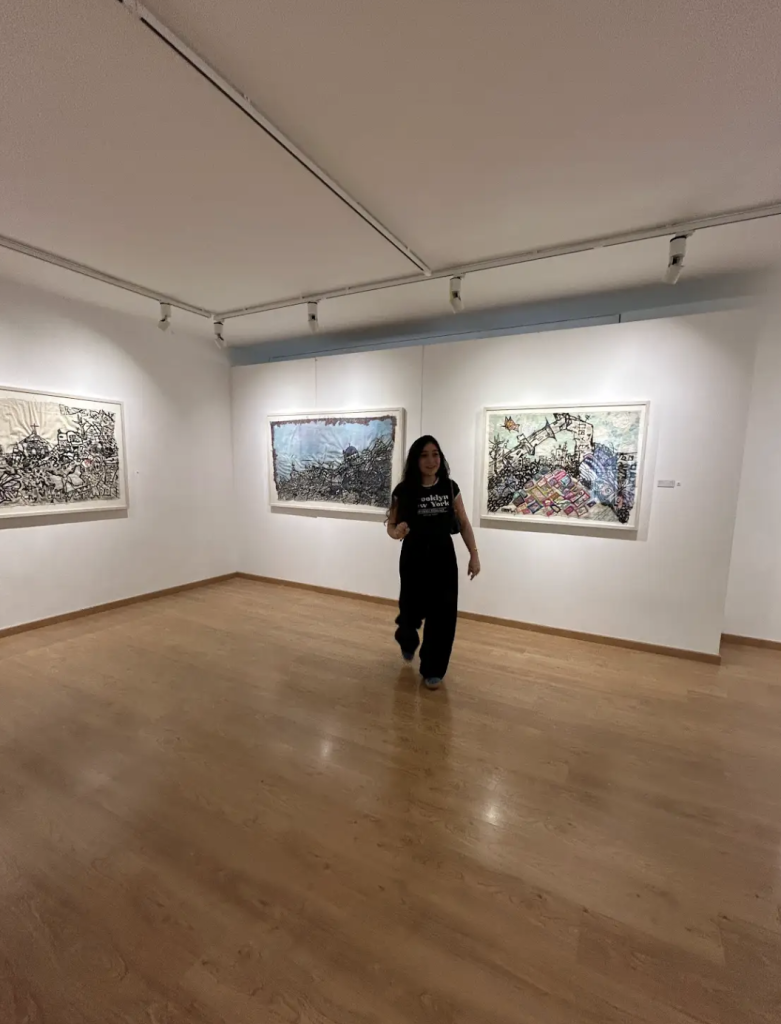
At just 21, she held her first solo exhibition in New York City — the same city where she graduated from the Pratt Institute. Then, in Mayinthis past May 2025, she showcased her work in her home city of Amman. “Exhibiting at the Jordan National Gallery of Fine Arts was an incredible experience — especially because it was in my home country, in the city where I grew up,” she shares.
It was as a child that sheasLong before, she found a sanctuaryahe finds in art a sanctuary and a way of coping through art. “Growing up, I faced some learning difficulties and found it hard to focus in school. Although I did all right, I often questioned the educational system because it didn’t seem to suit every personality — especially mine,” she shares.
She then began learning art under Jordanian artist Aziz Amoura. “I used to visit his studio on weekends, where he taught me how to draw. Those moments were therapeutic; his studio was a space where I felt real growth — not in a traditional school environment, but in that intimate, creative space.” This experience, she recalls, became a turning point — the moment she realised art was her path, one she would pursue with intention and dedication.
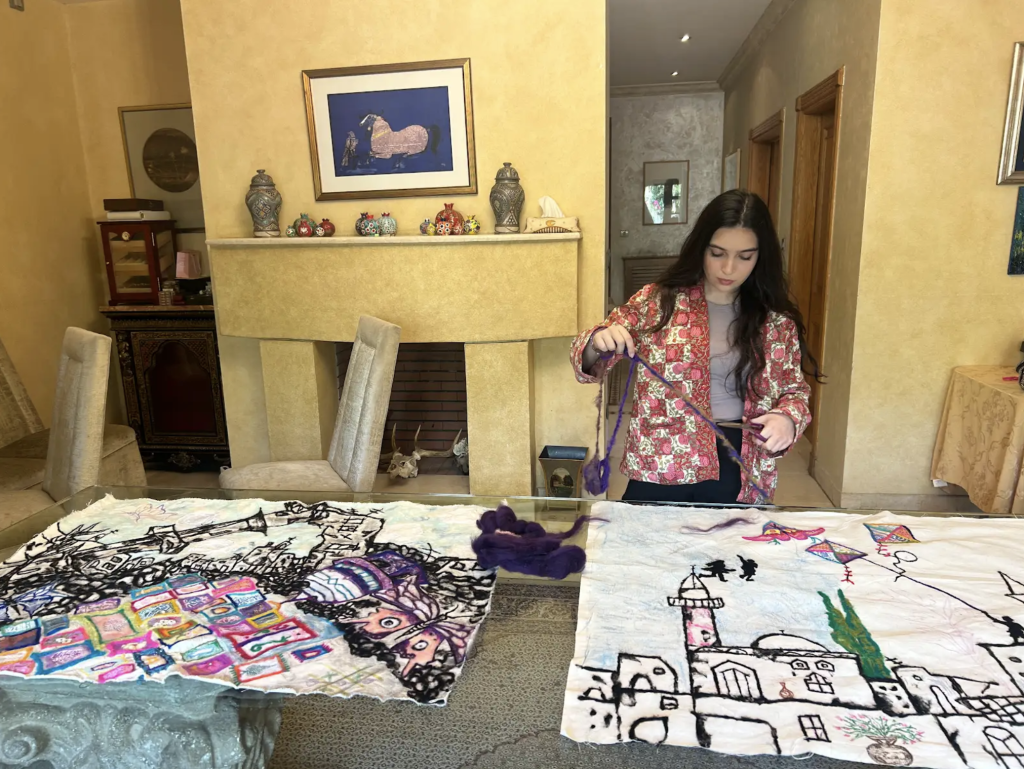
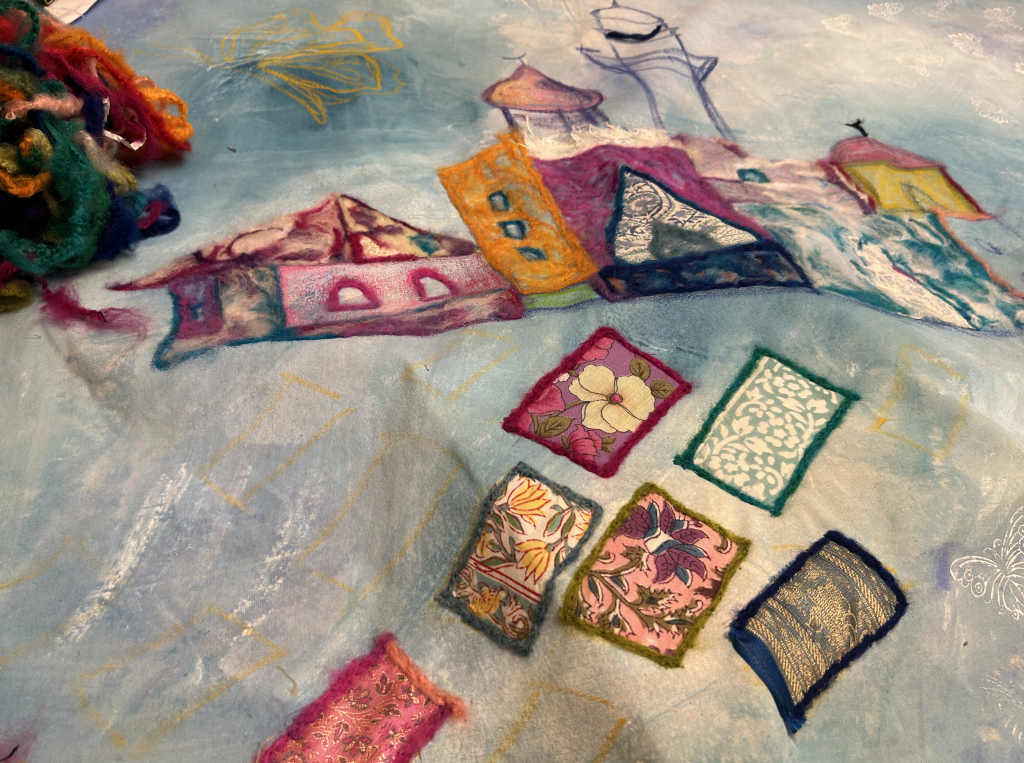
“Growing up, I was surrounded by the different elements of my Jordanian, Turkish, and Palestinian heritage,” she says with pride. “Fabric and textiles have always been part of my life, and they became one of the strongest threads connecting these different parts of my identity.” For Princess Karma, every motif tells a story: the hand-woven patterns of Bedouin women carrying tribal histories, or the intricate Turkish gold and silver embroidery adorning pillows.
These traditions have all left their mark on Princess Karma. Rooted in generational memory and the act of making, women gathering to weave, embroider, and share — they have shaped her artistic vision. “These textile traditions have shaped the way I see and create,” she explains. “They taught me to value texture, symbolism, and storytelling — and they gave me a visual language to express the layered nature of my identity.’
Princess Karma’s grandmother, HRH Princess Wijdan Al Hashemi, is a pioneering figure in Islamic and contemporary Arab art. Princess Karma fondly recalls her earliest memory of realising her grandmother’s artistic influence: “When my grandmother was living in Rome, I visited one of her exhibitions in 2010 as a little girl. I remember seeing her completely immersed in her work, walking beneath her pieces with the confidence of a woman in charge.” “I wanted to be like her,” she stated. “My grandmother has a strong personality and is incredibly smart. She continues to inspire me every day. Even now, as I work on my felted pieces, I enjoy sitting beside her — often in silence— but her presence alone empowers me.”
Beyond her grandmother, three artists deeply inspire Princess Karma: Palestinian artist Laila Shawwa, admired for her bold, risk-taking style and fearless approach to painting beyond the canvas; and Huda Baroudi and Maria Hibri of Bokja, whose work merges art, design, and storytelling while engaging their community. “All three took risks to tell stories of the region’s pain while capturing its vibrant beauty,” Karma reflects. “The Middle East holds so much beauty yet so much pain — and the blend of both in art is, to me, the most powerful truth.”
Princess Karma’s artistic approach blends storytelling with texture that is deeply rooted in her cultural heritage. Working primarily with textiles — especially felted wool and stitching — she uses needle felting on canvas, a rare technique where wool is applied like paint to create layered, tactile compositions. “Textiles feel alive,” she explains. “The process of cutting, stitching, and felting becomes an emotional expression, allowing me to explore identity, memory, and hope in a way that makes my stories not just seen, but felt.”
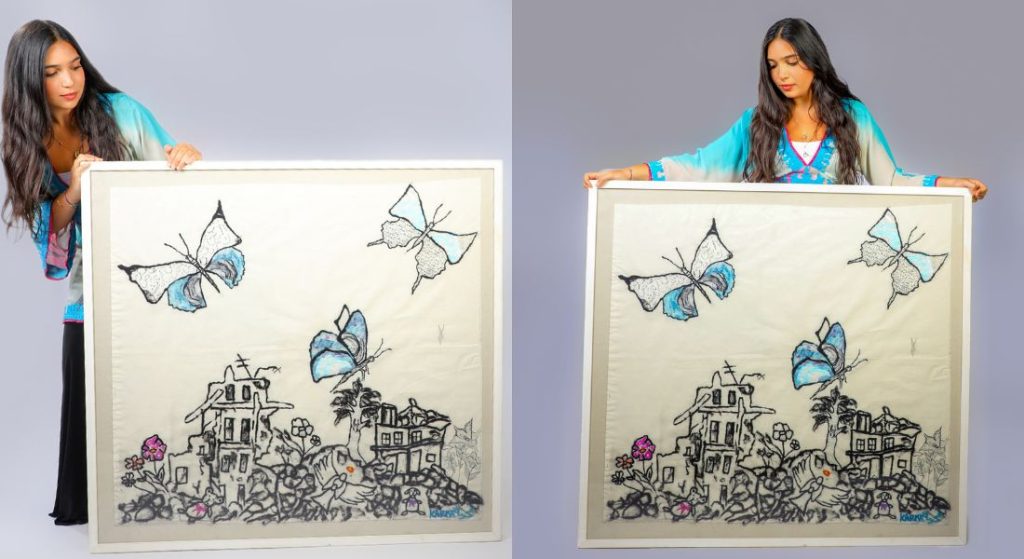
Karma’s journey is still in its early chapters, yet she already stands out as a voice of the young generation in the Jordanian royal family. She credits her success to her supportive parents — especially her mother, HRH Princess Sima — whose encouragement led to her very first exhibition in Jordan, a show close to her heart where she shared her work with friends, family, and her community. “My mother’s push and voice are always in the back of my mind,” Princess Karma reflects, “urging me to keep going, to move forward, and to do more.”
Looking ahead, Princess Karma is preparing for her upcoming exhibition in London this November. In the coming months, she will be developing a new collection while working on a series of exciting international commissions. As her journey continues to unfold, her dream remains simple — to create art that resonates with people on a deeply emotional level. “I hope to exhibit across the Arab world and continue broadening my horizons,” she says.
Photos courtesy of Princess Karma
Follow Us

The Latest
-

Wellness
The science behind peptide injections
All the risks behind the so-called miracle treatments
-

Travel
Detox hotels to book for your next getaway
Check in, to check out at these beautiful resorts
-

Travel
Discovering Singapore’s green allure
Exotic, diverse, lush. The garden city of Singapore nurtures culture, fine dining, and an environmentally oriented plan for the future
-

Travel
Inside The Royal Diriyah Opera House in Riyadh
Saudi Arabia’s first dedicated opera house opening soon
Subscribe to our newsletter and receive a selection of cool articles every weeks
You can unsubscribe at any time. To find out more, please visit our privacy policy.