

Meet MADAME: Milla Novo
Lindsay Judge
A story of culture and creativity that led to the Mleiha Desert
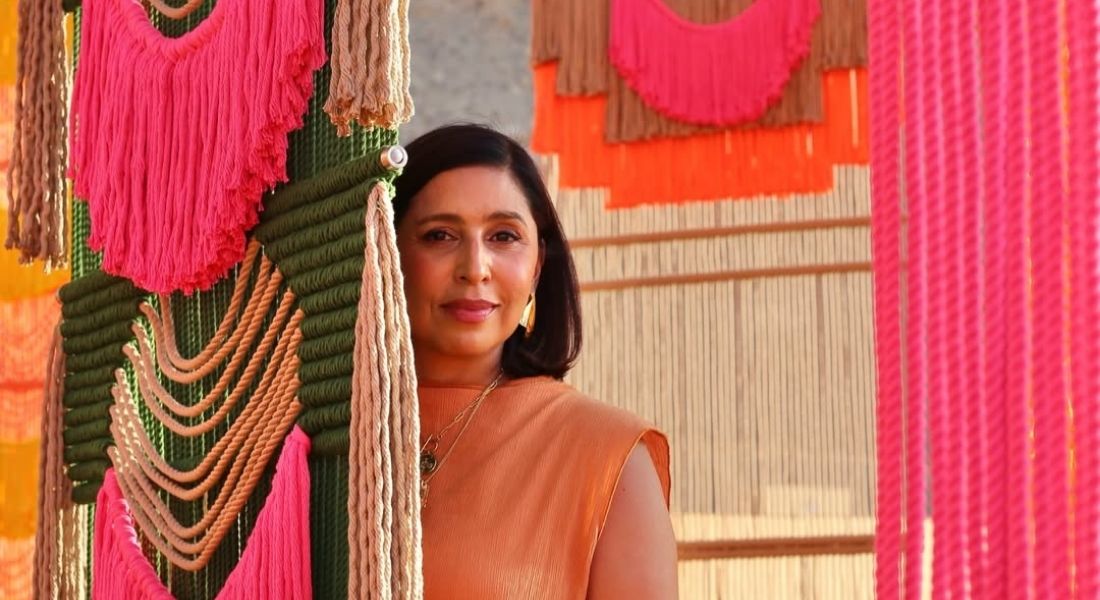
Milla Novo’s creative work tells a story of culture, language and memory. The Netherlands-based fibre artist has built an international practice around hand-knotted textiles inspired by her Chilean heritage. She creates large-scale wall hangings and immersive installations that blur the boundaries between art, design and architecture. Most recently, her work took on a new dimension in the Mleiha Desert in Sharjah, where Novo presented an outdoor installation as part of Tanweer Festival, marking a defining moment in her evolving relationship with the Middle East.
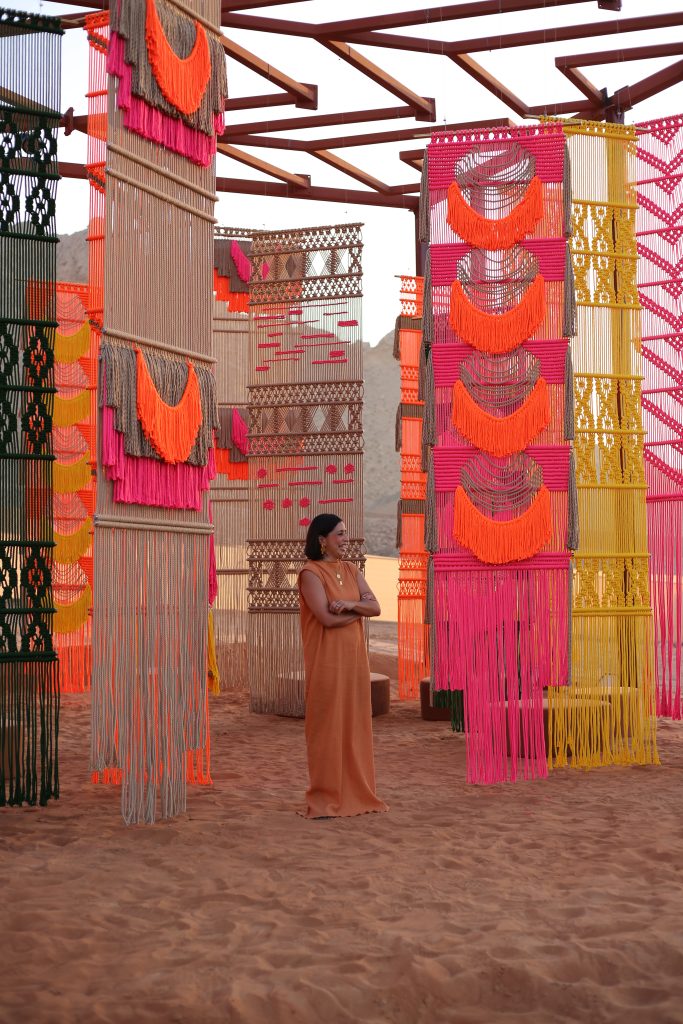
Novo is based near Amsterdam, where all of her works are designed and hand-made, yet she spends significant time in the region. “The level of appreciation for craft here is different,” she tells MADAME Arabia. “In Europe, people recognise the skill and beauty, but in the UAE and across the GCC, there’s a stronger emotional connection to tradition and making.” That connection became especially tangible during her recent Sharjah project, which brought her signature knotted design DNA into an expansive desert landscape.
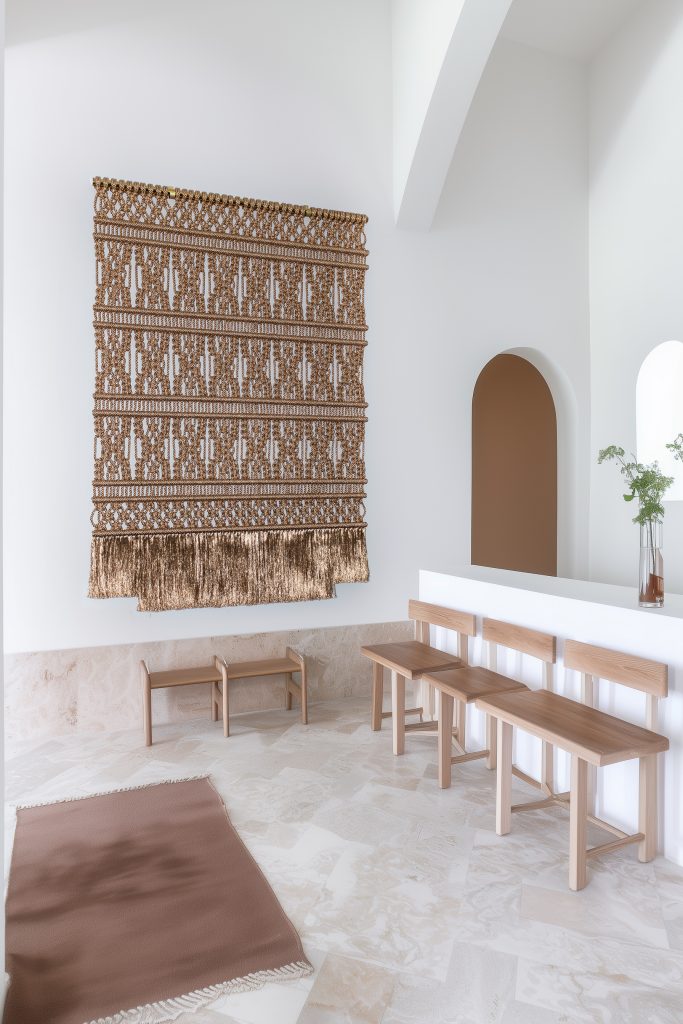
“I’m a fibre artist. I work with rope and fibre rather than designing textiles or fabrics,” Novo explains. “My love for making began early because I grew up with crafts. My mother taught my sisters and me how to make things, and where I’m from in South America, that kind of hands-on creativity is part of everyday life.” Born to Chilean parents, Novo draws deep inspiration from her Mapuche Indigenous heritage, where weaving and pattern carry cultural meaning and history. Rather than replicating traditional forms, she translates that ancestral knowledge into a contemporary visual language.
Before her career in art and design fully emerged, Novo worked as a flight attendant. “I loved it, but even then, I was always making things on the side, small bracelets for friends, little projects that kept my creativity alive.” Over time, the pace of flying took its toll. “The intensity of that career caught up with me. I burned out, struggled with sleep, and had to step back to recover.” That period of recovery proved pivotal. “It forced me to slow down. During that time, I could only do a few things: make simple pieces, craft, and practice yoga. Craft became part of my healing,” she says. “As I regained energy and mental space, the work naturally started to grow. The bracelets became thicker ropes, then larger pieces. The more I healed, the bigger the work became.” She soon realised that this could be something more than just a hobby or healing practice.
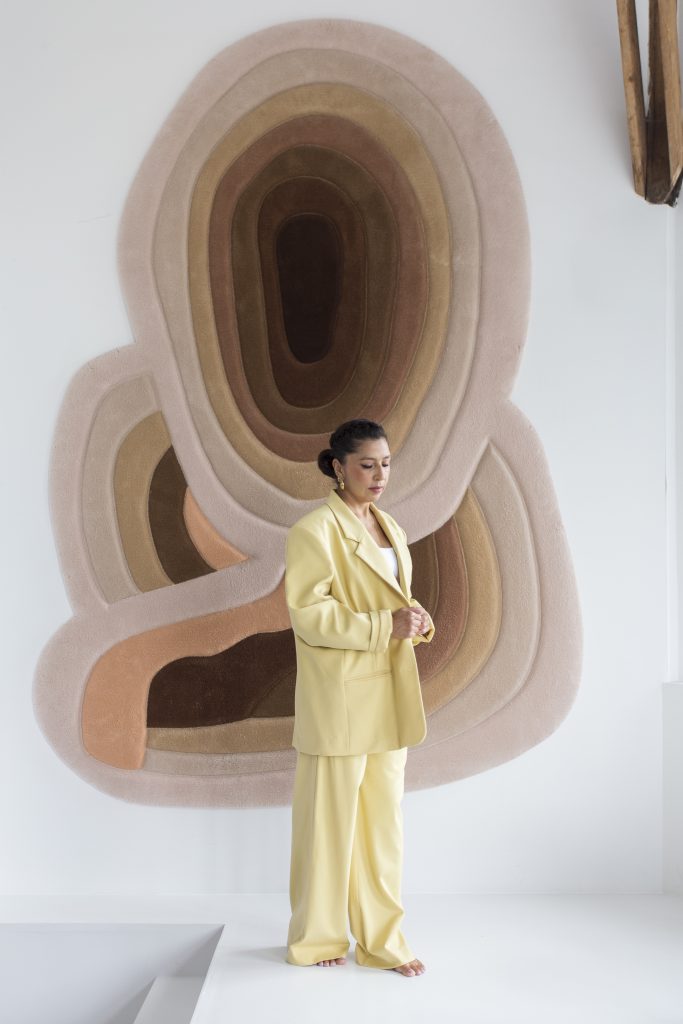
Novo’s first major breakthrough came via social media at a time when Instagram was still relatively new. “I posted one of my early wall hangings, a small black piece. It sold immediately,” she recalls. “I was very present and mindful in that period, and I could feel people responding to the scale and boldness.” That reaction encouraged her to push further, and commissions followed quickly. Dutch interior designers began selecting her work, and she was invited to present as an emerging talent at Milan Design Week. “It felt surreal because I didn’t come from the design world at all,” she says.
Over time, Novo has intentionally refined a recognisable visual signature, believing that repetition is essential to building identity. “I kept refining and repeating my language even when I personally felt bored.” That commitment to a clear aesthetic later proved crucial when she began experimenting with digital tools to visualise her ideas at scale. During the period when NFTs and crypto culture surged, Novo’s curiosity led her to AI tool Midjourney. “It opened an entirely new dimension,” she explains. “I can’t draw, honestly, but suddenly I could visualise what was in my head. I could place my work in imagined environments and explore ideas at scale.” She began creating AI-generated visuals of her installations in festivals, hotel lobbies and vast outdoor landscapes, posting them alongside her physical work. Some of these images went viral, revealing a strong appetite for seeing her practice move into immersive environments.
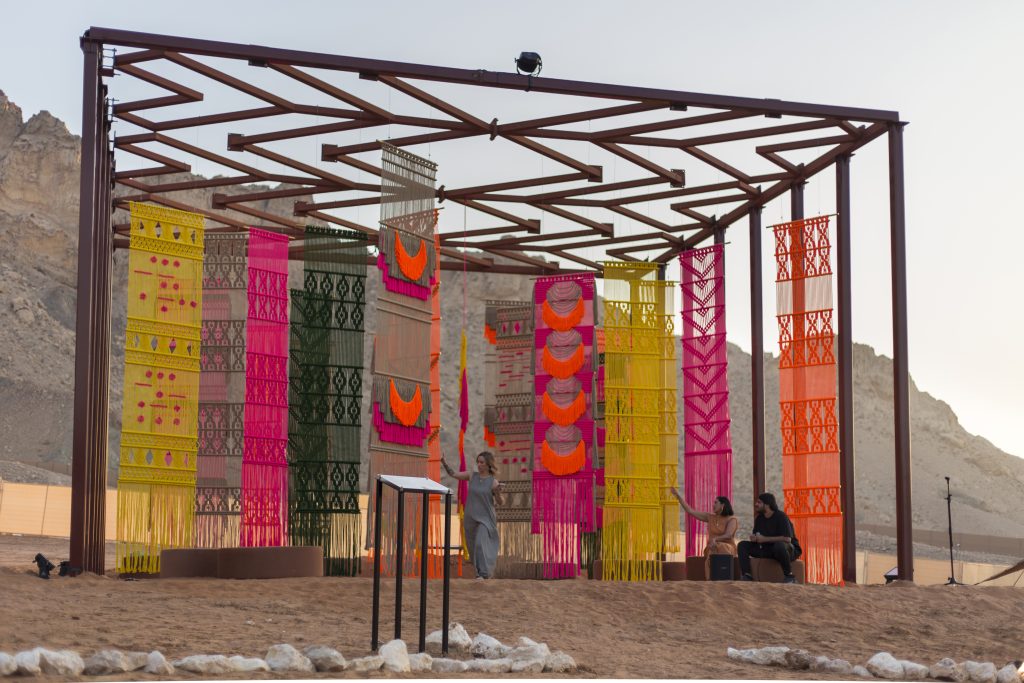
Those digital experiments directly led to her Sharjah commission. “I’d been trying to build my presence in Dubai and the wider region for years, and I kept returning because there’s a deeper appreciation for craft here,” Novo says. “I began prompting desert installation concepts, and the response online was strong.” Then came an unexpected email from Sheikha Bodour bint Sultan Al Qasimi’s team. “They asked where I envisioned the installation and whether I’d like to submit a proposal. That was the beginning of the project.”
The Sharjah installation marked Novo’s first major outdoor immersive work. Working in the desert meant developing weather-resistant approaches that could withstand heat, sun and wind. Colour also became a central consideration. “Originally, my visuals were more tonal and earthy, but the deadline was tight, and the material availability influenced the final choice,” she says. “What was accessible in time were these vibrant colours.” The shift proved transformative. “Many of my high-end clients choose neutrals, but I’ve always wanted the chance to go bold. Against the desert and the mountains, the colours created a powerful contrast.”
Production was intense and required rapid expansion of her working process. “Normally, one piece can take about a month, and I usually work alone,” she says. “For this project, the timeline demanded around 20 pieces in just a few months.” A new studio appeared at exactly the right moment. “I found an 80 square metre studio three minutes from my home and moved in within a week,” she recalls. She also assembled a small team of women who already worked with craft to assist her with the project. Despite the scale, Novo’s creative process remained instinctive. “My process is intuitive. The designs live in my head and heart.” She explains. Each piece was developed in the moment, guided by Novo’s hands and intuition. “Every piece became unique because it was created in the moment. Those women were incredible, and I truly couldn’t have done it without them.”
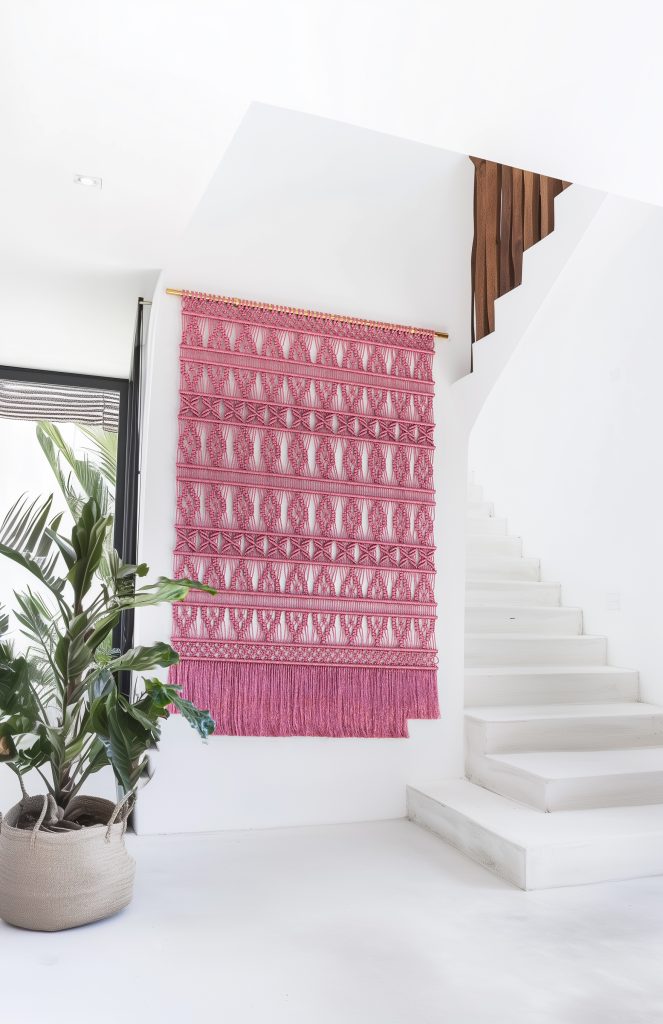
The installation now awaits its next chapter. “The work was commissioned and owned by the team behind the project, and they’ll decide where it lives next,” Novo says. “For now, it remains in the desert with viewings taking place, and then it will be dismantled and relocated. I believe it will become a longer-term installation.”
While Novo’s practice continues to grow internationally, the Middle East remains a place of particular resonance. A recent visit to Sharjah crystallised that feeling. “During a tour with Dr Nina at Maraya Art Centre, I felt that deeply,” she says. “It was a moment where I thought, now I understand why I’m here, because people don’t just see my work, they see the story inside it.”
Follow Us

The Latest
-

Wellness
The science behind peptide injections
All the risks behind the so-called miracle treatments
-

Travel
Detox hotels to book for your next getaway
Check in, to check out at these beautiful resorts
-

Travel
Discovering Singapore’s green allure
Exotic, diverse, lush. The garden city of Singapore nurtures culture, fine dining, and an environmentally oriented plan for the future
-
Travel
Inside The Royal Diriyah Opera House in Riyadh
Saudi Arabia’s first dedicated opera house opening soon
Subscribe to our newsletter and receive a selection of cool articles every weeks
You can unsubscribe at any time. To find out more, please visit our privacy policy.