

Meet Madame: Mina Abouzhara, Designer, Rug Maker, and Moroccan Crafts Specialist

Mina Abouzahra on protecting heritage, working with female cooperatives and reimagining Moroccan textiles for today’s interiors
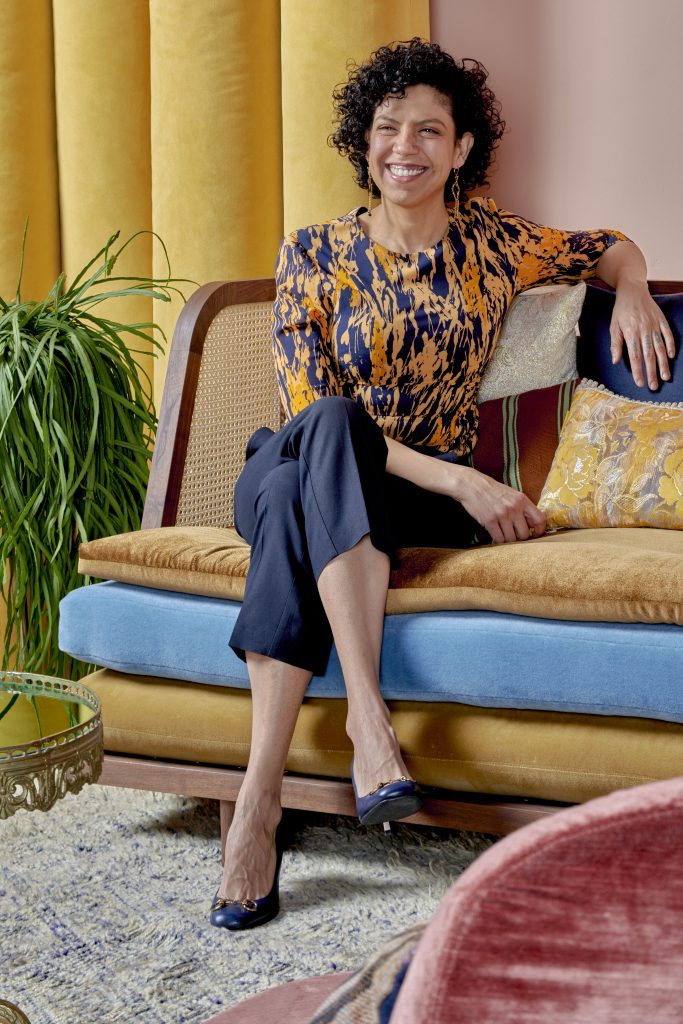
Mina Abouzahra’s work represents something more than just design. Growing up in Amsterdam with Moroccan parents, the designer found an innate curiosity to explore her heritage through her passion for making. It led her to build a practice that sits between art, craft and interior design, weaving together the two cultures that have shaped her life, but more importantly, giving back to women from her native country. Her pieces are instantly recognisable for their vivid colour and tactile richness, but even more so for the narrative depth. Abouzahra’s work goes beyond the material.
Working closely with female weaving cooperatives in Morocco, Abouzahra creates rugs, furniture and textile-based installations that honour ancestral knowledge while speaking to a contemporary design language. She uses craft to tell stories of identity, community, and memory, honouring the centuries-old skills of Moroccan rug-making while working with the women who have inherited these craft skills. She is not making rugs simply to sell, but to tell a greater story she feels has long been overlooked. In this interview, Abouzahra reflects on her journey of discovery, her desire to give back, and why a rug can be so much more than something to walk on.
To start, can you introduce yourself, your brand, and how you found your passion for creativity and design?
Mina Abouzhara: I started out in the food world. I’m a child of immigrants, born in the Netherlands to a Moroccan family, so I grew up moving between two worlds. Inside the house, everything felt Moroccan: the language, the food, the culture; outside, it was Dutch. As I got older, I began to ask myself where I belonged. My mother was a wonderful cook, so food became my first creative language. I studied at culinary school, worked in catering, food styling, and recipe writing, and travelled through Morocco to better understand regional dishes and my heritage.
When did design and interiors enter the picture for you?
Mina Abouzhara: Interiors were always a big love of mine. Anything that involved creating pulled me in. I studied interior styling and design at Artemis, and then I went to cabinet-making school because I wanted to learn how to actually make things. That experience taught me I was more of a designer than a maker. I had ideas and needed the skills, but I was always thinking beyond the usual way of building.
How did your relationship with Moroccan craft begin?
Mina Abouzhara: During my studies, I completed an internship in Essaouira, Morocco, known for its woodworking. That’s when the world of craft opened up for me. My focus had been food, so I hadn’t noticed the craft world in the same way. Then suddenly it was everywhere. I started bringing vintage textiles back with me, making things, and travelling around Morocco again, but this time through markets, workshops and craft spaces.
What drew you specifically to rugs?
Mina Abouzhara: Rugs truly touched my heart. It is a rural craft, female-led, and deeply regional. Every area, and sometimes even each tribe, has its own colours, symbols, knots and techniques. The more I learned, the more I realised it’s intimate and community-driven, filled with stories and spiritual gestures. It’s not just a product, it’s part of life, celebration, protection and identity. But so many people who buy rugs don’t know who made them, what the story is, how long it took, or the steps involved.
You created a project called “1 Square Meter.” What was it about?
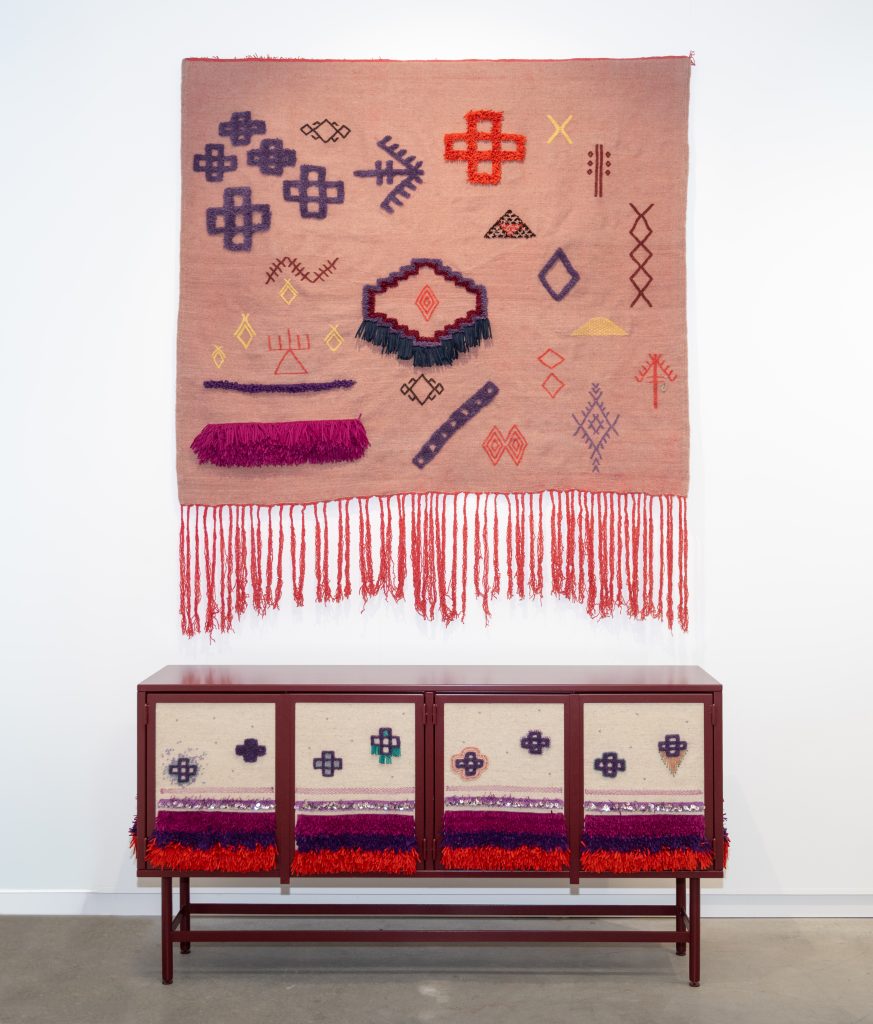
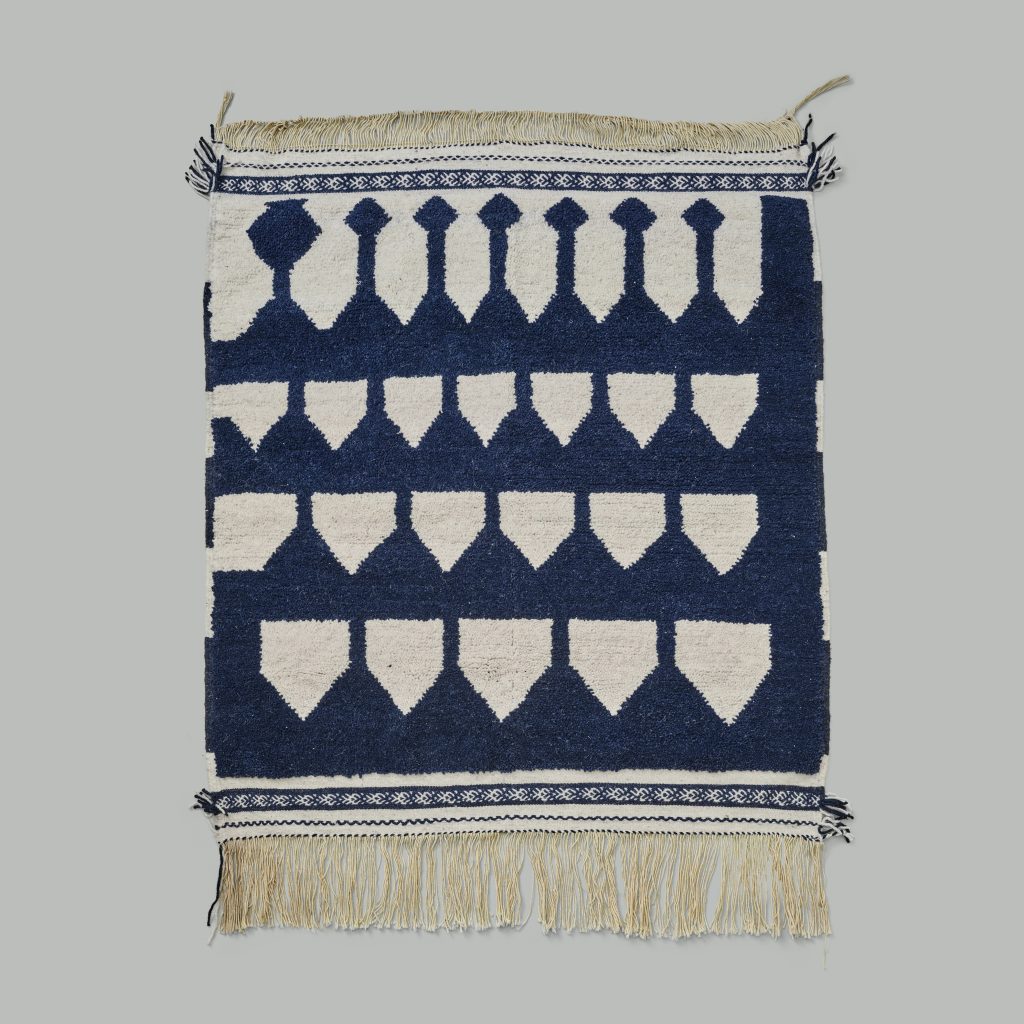
Mina Abouzhara: I reached out to cooperatives across Morocco and asked them to create a self-portrait measuring 1 square metre. They were free to interpret the work however they wanted. Then I invited four well-known Dutch designers and artists to travel with me to Morocco, sit with the women behind the loom, and create together. It was about bringing cultures together, like in my own life, but also about building awareness and fostering real exchange. The project led to an exhibition at Palais El Bahia in Marrakech during the contemporary African art fair 1-54, and we began discussions around a fair-trade rug collection.
You’ve spoken about the “soul” of the loom. What do you mean by that?
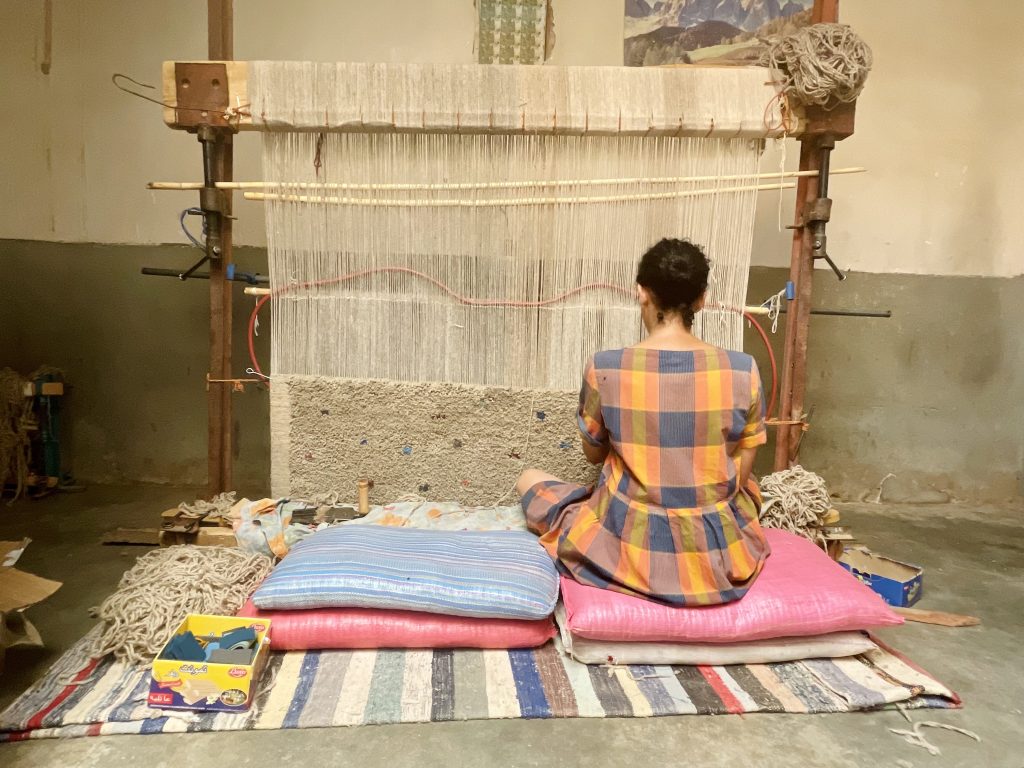
Mina Abouzhara: During a longer residency, I started noticing rituals around weaving. For example, women smash sugar when they set up a loom, because the rug should have a sweet soul. At night, they cover the loom with a dark cloth or place a knife in it to protect against the evil eye. If they don’t begin weaving the same day the loom is set up, they might put flour on it, so it doesn’t get hungry overnight. These details reveal how alive the loom is in their world. Weaving is self-expression, but it also connects to ritual textiles, marriage traditions, and community life.
Can you share an example of how textiles carry meaning in Moroccan life?
Mina Abouzhara: In the Middle Atlas, when a girl gets married, the women in her community weave a specific textile for her while singing and blessing the wool. They also bless her marriage and share wisdom about life. On her wedding day, she wears it on her shoulder as part of her bridal dress. It’s protection and community, carried with her into her new life. It’s so much more than a textile.
How did these experiences shape your brand and the work you make today?
Mina Abouzhara: I realised I needed to be there like a fly on the wall, to understand the stories as they unfolded. I lived with the women for a year and wove my own rug from beginning to end. That changed everything. During that time, I began creating wall tapestries with circular forms and dots, inspired by ideas around female lineage and inheritance. I also learned from my mother that her grandmothers were weavers. That was a shock because it had never been spoken about. That discovery helped me understand why I felt so deeply connected to this work.
How do you translate the craft into contemporary design pieces?
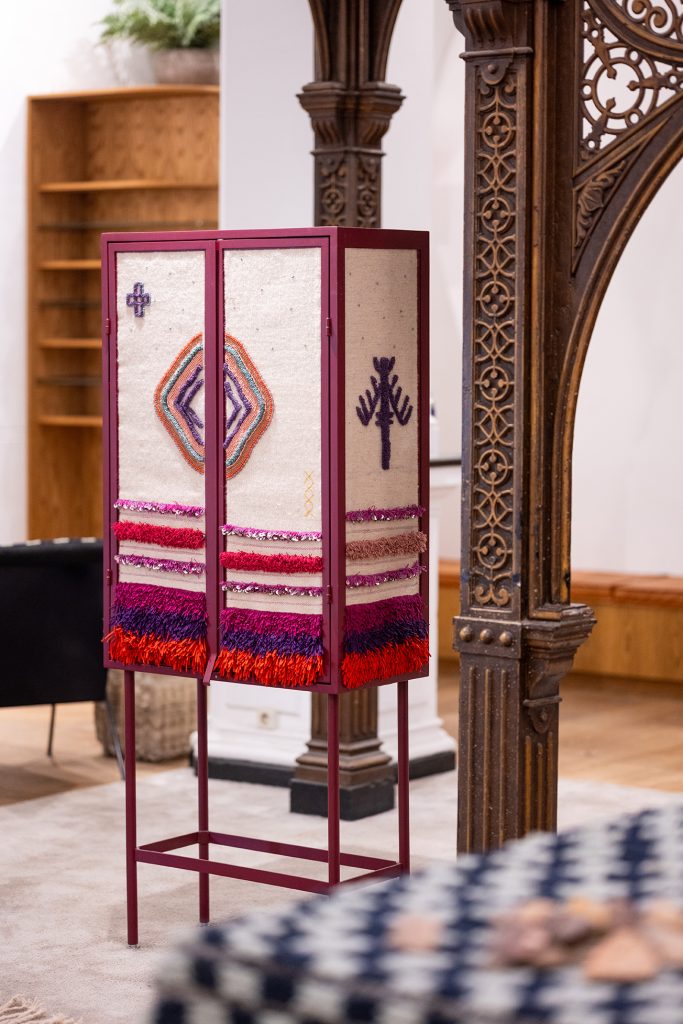
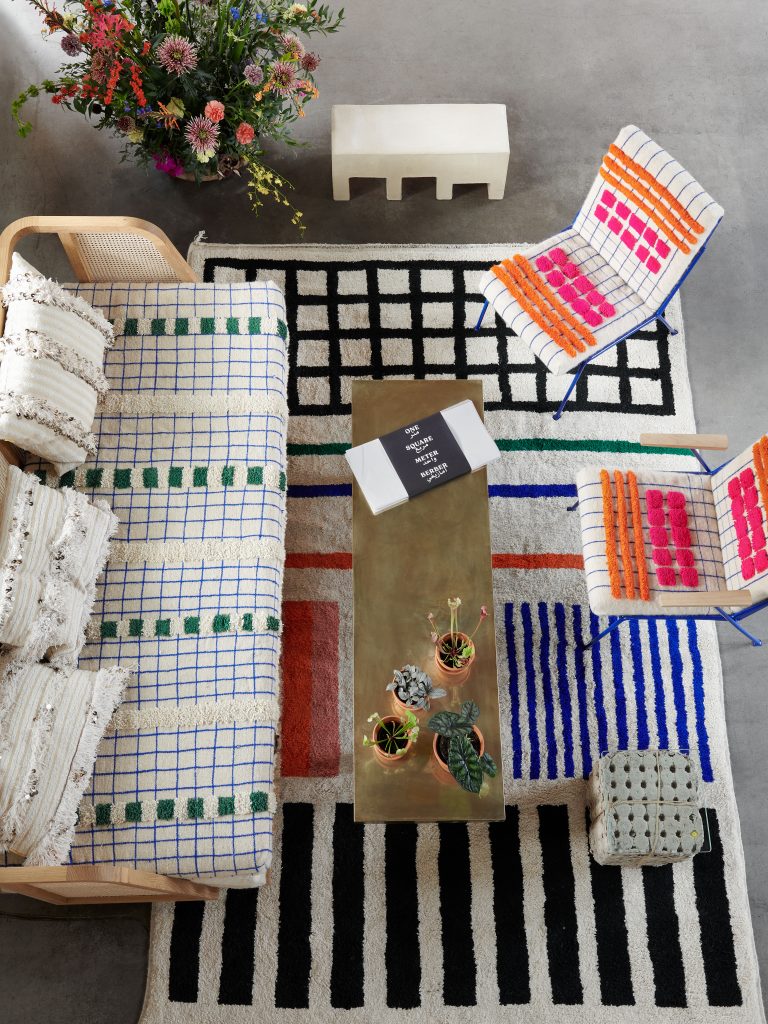
Mina Abouzhara: I began making wall works and textiles for furniture, including cabinets, and later expanded to broader collections. Museums in the Netherlands started acquiring my pieces because the work combines Dutch design with Moroccan craft and is rooted in storytelling. I never intended to become an activist or do museum work. I followed what felt true: making beautiful things with my hands and telling the stories behind them.
Do you work with women across Morocco or focus on one place?
Mina Abouzhara: I began with different regions because each has its own techniques, but it’s hard to maintain quality and ask artisans to change methods they’ve learned from childhood. In the end, I chose to work with one region and one village so I can build deep relationships and be present. Now I feel almost part of that village. It feels like coming home.
What has that community taught you personally?
Mina Abouzhara: Community itself. They help each other, share food, contribute money for someone’s operation, and show up for one another. It’s a kind of wealth. Craft also demands presence; you can’t rush it. I used to think wealth was money. But being present, surrendering to the moment, and living in community is also a wealth. And culturally, I’m concerned about losing this diversity. When we lose the craft, we also lose a whole way of living and thinking.
Who is your end customer, and how do you balance storytelling with being a business?
Mina Abouzhara: It’s not a non-profit, but I don’t make huge profits because I pay the women well, and I spend time there to do the work properly and tell the story. My audience often includes art collectors who value large, colourful, unique pieces, furniture and wall tapestries. I also see potential in the Middle East, as there is appreciation for Moroccan aesthetics, colour, and craft, as well as for pieces that sit between art and design.
Outside of work, what does your day-to-day look like?
A: I love cooking, it’s like meditation. I love hosting, feeding people, exploring restaurants, visiting museums and films, and walking. I’m a vegetarian and have been since I was a toddler. My husband is an architect, and we love travelling. When I’m home, I crave a simple routine: cooking, seeing friends and family, and exploring the city again. I have a ten-year-old nephew, and we cook together. Home life feels grounding after so much travel.
Finally, what message do you want women, especially in this region, to take from your work?
Mina: Better buy something that has soul. I want to create beautiful things with meaning and to share that.
Follow Us

The Latest
-

Wellness
The science behind peptide injections
All the risks behind the so-called miracle treatments
-

Travel
Detox hotels to book for your next getaway
Check in, to check out at these beautiful resorts
-

Travel
Discovering Singapore’s green allure
Exotic, diverse, lush. The garden city of Singapore nurtures culture, fine dining, and an environmentally oriented plan for the future
-
Travel
Inside The Royal Diriyah Opera House in Riyadh
Saudi Arabia’s first dedicated opera house opening soon
Subscribe to our newsletter and receive a selection of cool articles every weeks
You can unsubscribe at any time. To find out more, please visit our privacy policy.