

Samar Hejazi on Holding Space and Showing at MENART Paris
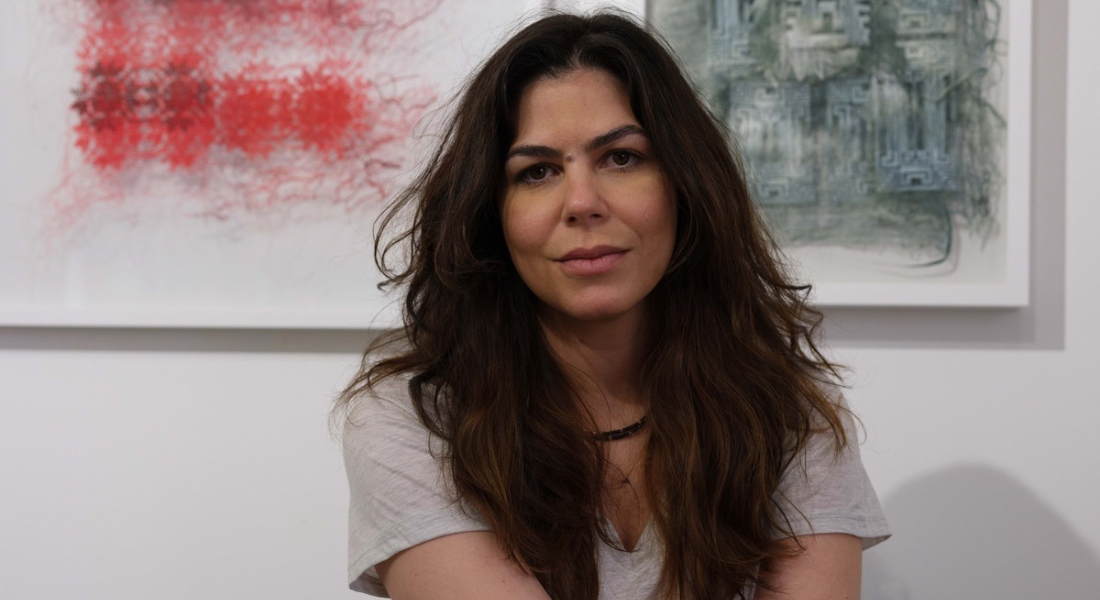
Art is meant to make room for questions rather than offer answers. It is this principle that guides Dubai-based Palestinian-Canadian artist Samar Hejazi. Working across thread, light, shadow, and movement, her works often invite us to take a closer look and reconsider what we think we know.
Even as her practice relies on careful construction, she is not afraid to let something unexpected take shape. The more time you spend with her work, the more there is to consider. In this conversation, she reflects on ideas, inspirations and her most recent appearance at the Paris Art Week: Menart Fair 2026 and what it means to her.
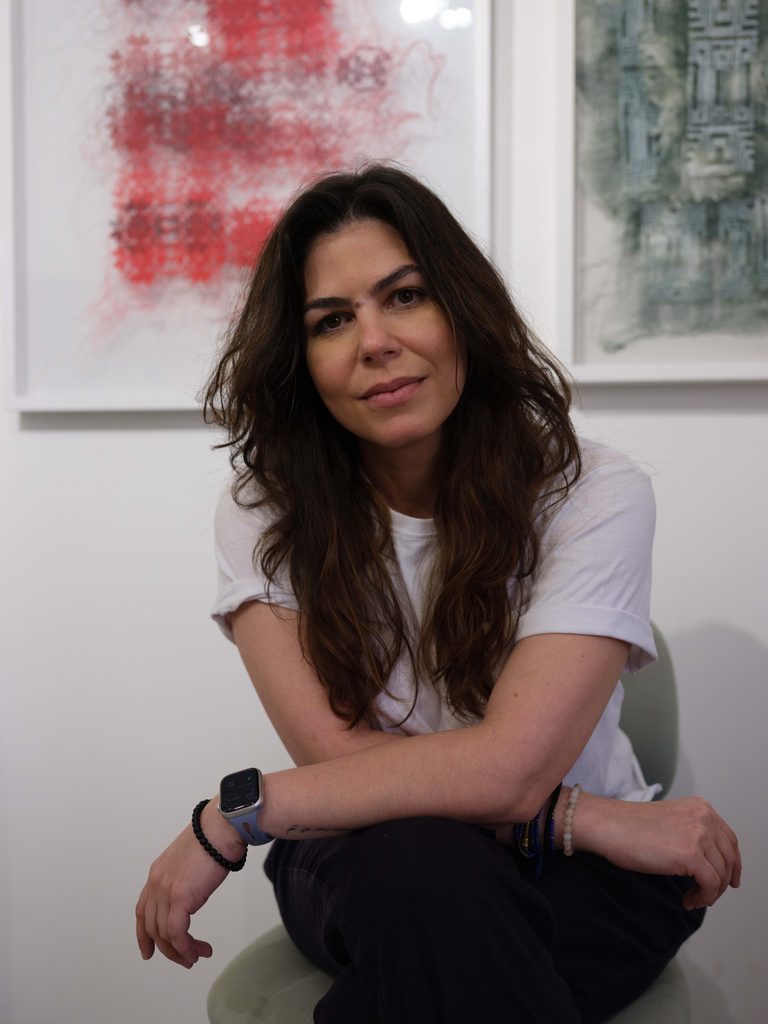
You live and work in Dubai. How has the city influenced you as an artist?
Dubai has given me the space and opportunity to develop my practice in ways I might not have anticipated. It's a city where people from so many different backgrounds, cultures, and experiences coexist, and I think that environment naturally encourages you to consider the different ways people understand and experience the world.
Being part of the artistic community here has also been incredibly valuable. There is a growing network of artists, curators, and cultural practitioners who are actively contributing to the city's creative landscape. The exchanges and conversations that come from being part of that community have helped me grow, both personally and professionally.
Your work often uses textiles, embroidery, light, shadow, and movement. Why are these materials and elements important to you?
I am drawn to materials that allow me to explore the relationship between what is visible and what is not, and how our perception of something can change depending on the conditions in which we encounter it.
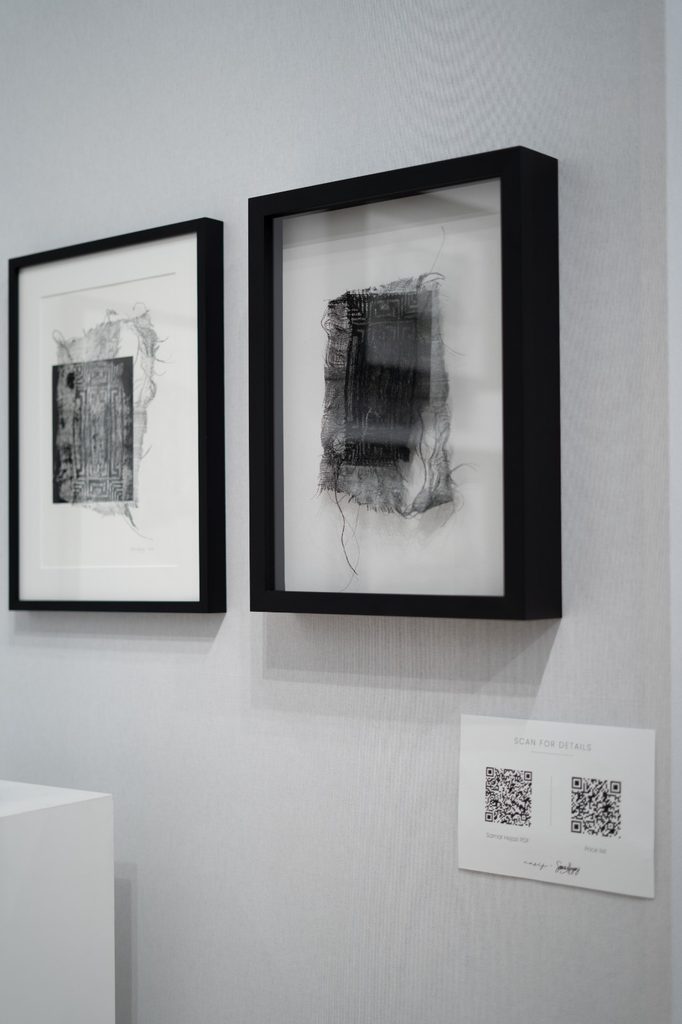
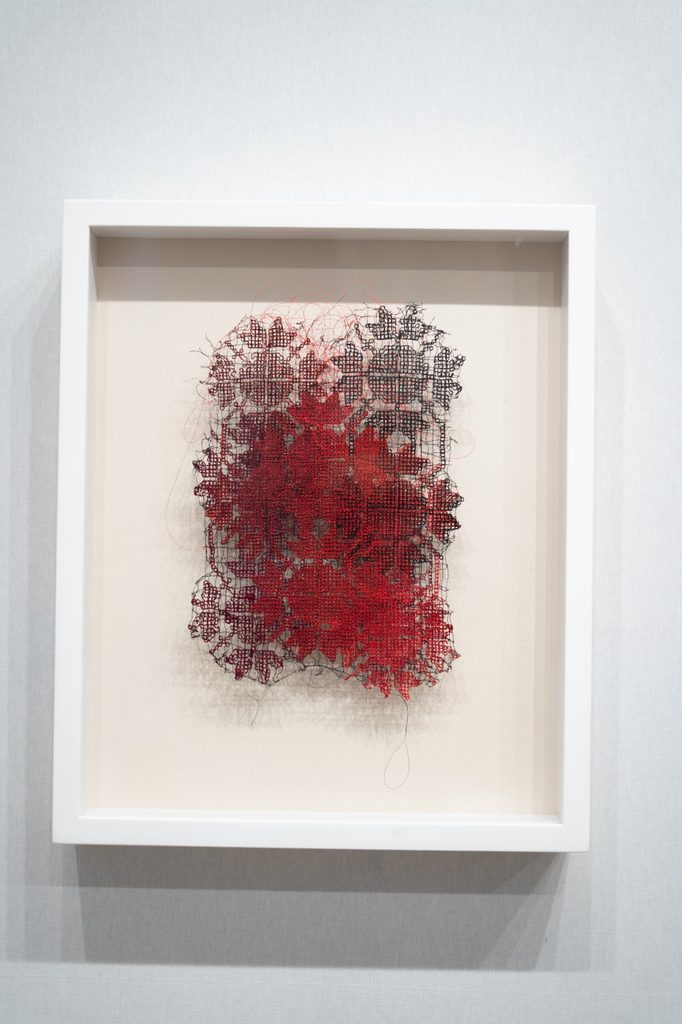
Embroidery, particularly Palestinian Tatreez, has become an important part of my visual language. Traditionally, embroidery relies on fabric as its foundation, but in much of my work, I remove that foundation entirely, allowing the threads to hold one another in place. I'm fascinated by the idea that something can maintain its structure through a network of relationships rather than a single supporting element.
Light and shadow extend these explorations. A shadow can reveal something that isn't immediately apparent in the physical object, or transform how we understand its form. Movement, whether through the artwork itself or the viewer moving around it, introduces another layer of possibility. The work is never entirely fixed; our experience of it changes depending on where we stand.
Identity, memory, and home are recurring themes in your art. How do you explore these ideas in your work?
I think a lot of my work begins with questioning the definitions we tend to take for granted, particularly when it comes to identity, culture, and belonging.
As someone who has grown up across different cultures and geographies, I've never experienced identity as something entirely fixed or easily defined. I'm more drawn to understanding it as something continuously shaped by our relationships, experiences, memories, and the environments we inhabit.
In my work, these questions often emerge through the materials themselves. By removing the fabric from embroidery, for example, I'm also removing what would traditionally be considered its foundation. Yet the structure remains, held together by the relationships between individual threads. For me, this becomes a way of thinking about identity beyond its attachment to a single place or territory.
I'm not necessarily trying to provide answers to these questions. I'm more interested in creating space for multiple interpretations to coexist.
What inspired you the most? Artists, Crafts, Family, Places?
Inspiration comes from many different places, but I think what has shaped me most is curiosity and a desire to understand how things work, both materially and conceptually.
Traditional crafts have had a significant influence on my practice, particularly the knowledge embedded within techniques that have been passed down through generations. I'm fascinated by the relationship between repetition, skill, memory, and the ways these practices evolve over time.
I'm also influenced by philosophy, architecture, literature, and conversations with people whose experiences differ from my own. Often, something seemingly unrelated to art will lead me toward a new way of thinking about a material or an idea.
I don't think inspiration always arrives as a clear moment. More often, it's an accumulation of experiences and observations that gradually begin to connect.
Can you describe how a new artwork usually begins for you?
There isn't really a fixed formula. Sometimes a work begins with a question or an idea that I can't quite resolve, and other times it begins with a material or a process that I want to explore.
I spend a lot of time experimenting in the studio, testing materials, making samples, and allowing unexpected outcomes to guide the direction of the work. I enjoy that process of discovery, particularly when a material behaves differently from what I had anticipated.
The relationship between concept and material is very important to me. I don't necessarily see the material as something used to illustrate an idea. Often, the process of working with it changes the idea itself.
I think some of the most meaningful developments in my practice have come from moments when things didn't go according to plan.
Is there a particular artwork of yours that feels especially personal to you?
One work that feels particularly personal to me is a monotype print called Taita's Breadbasket, which I made after my grandmother passed away. The print was created from a piece of embroidered fabric she used to keep bread warm in a breadbasket.
I used the textile to create a series of embossed and inked prints, translating its texture and patterns into another material form. For me, it was a way of preserving something of her presence, allowing an object that was part of her everyday life to continue existing in a different form.
I gave a couple of the prints to my cousins, which made the work even more meaningful. There's something quite special about how an ordinary object can hold so much memory, and how those memories can be carried forward and shared through something as simple as a piece of fabric.
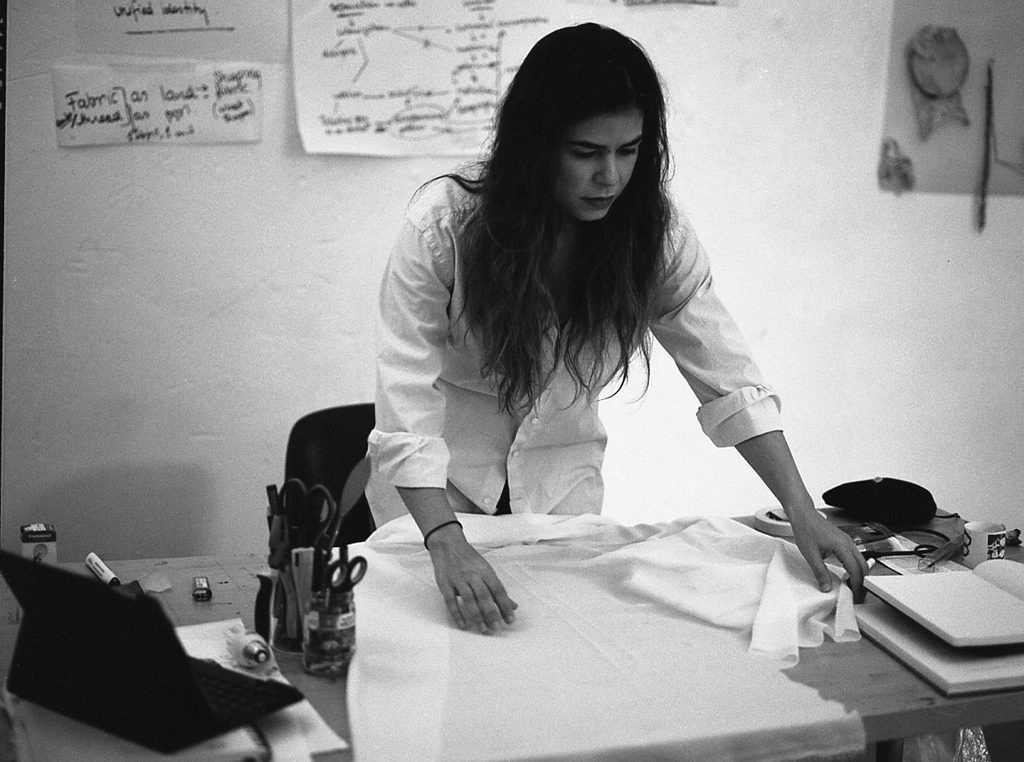
Your installation Maw6ini was shown at MENART Paris 2026. What is the story behind this work?
Maw6ini takes its name from Mawtini, a well-known Arabic song. The installation consists of the song's lyrics transliterated from Arabic into Latin letters, incorporating additional symbols to represent sounds that don't exist in the English alphabet.
Each letter is embroidered entirely from thread, without the use of fabric. Suspended in space, the letters appear to float, while their shadows extend across the surrounding surfaces, expanding the work beyond its physical form.
The work emerged from my experience of being Palestinian in the diaspora and the complexities of trying to communicate an identity that is so often understood through fixed political, geographical, or cultural definitions.
The act of transliteration is important because it allows the words to be sounded out by someone who may not read Arabic, but it also exposes the limitations of translation. Something is inevitably altered in the process.
For me, the installation becomes a way of questioning how our understanding of identity, nationhood, and belonging are shaped, and what happens when those definitions are no longer sufficient.
This year’s MENART theme is “Where Is Home?” How does Maw6ini speak to that question?
I think Maw6ini responds to that question by challenging the assumption that home, or identity, must be rooted in a single geographical location.
For Palestinians, particularly those living in the diaspora, questions of place, nationhood, and belonging are often complicated by displacement, inherited memory, and the realities of living across different cultures.
In the installation, the words of a Palestinian anthem exist without the fabric that would traditionally support them. They remain suspended through their connections to one another, while their shadows extend beyond their physical boundaries.
For me, this becomes a metaphor for how identity can persist, transform, and exist beyond the geographical or political structures through which we are accustomed to defining it.
There is a form of resistance in refusing a singular meaning. Rather than attempting to answer where home is, I hope the work encourages us to question why we feel the need to define it so precisely in the first place.
What do you enjoy doing outside the studio when you need to switch off and recharge?
Outside the studio, I enjoy playing tennis, reading, and spending time with family and friends. I also love exploring new places, having good conversations, or simply enjoying a quiet day. I think it's important to make space for experiences that aren't necessarily connected to producing something.
That said, I find it quite difficult to completely switch off from my practice. Even when I'm not actively working, I'm often observing things or making connections that eventually find their way back into the studio.
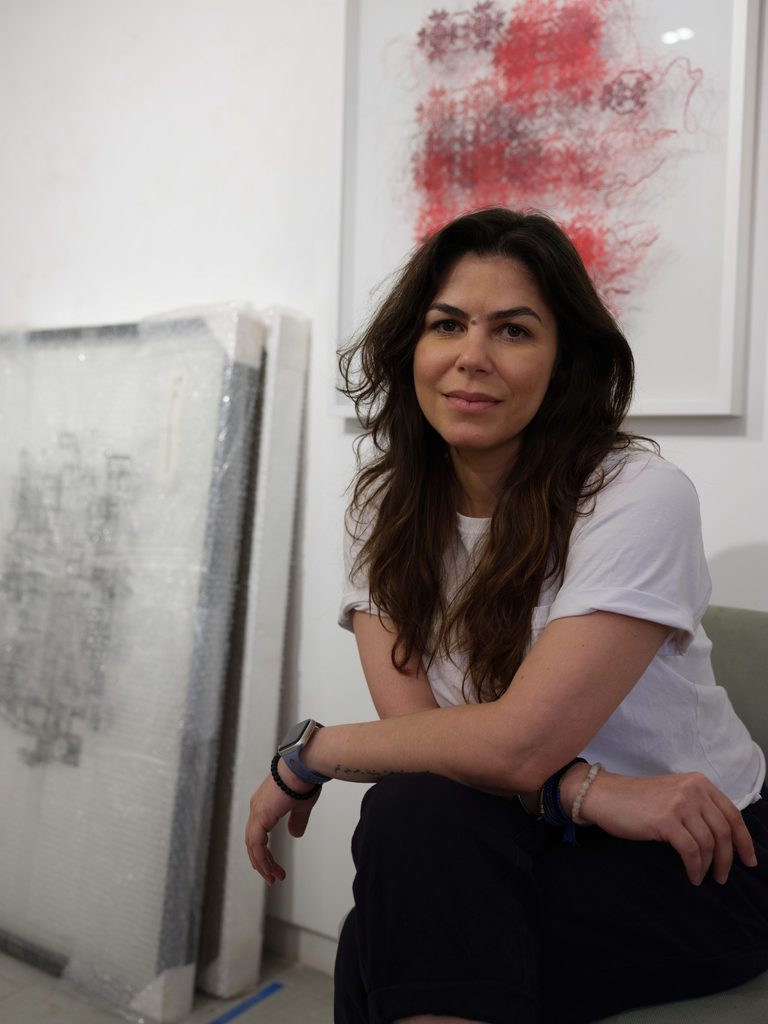
As a Palestinian-Canadian woman artist, what advice would you give to young women who are just starting their creative journey?
I would encourage them to remain curious, to experiment, and to give themselves permission to not have everything figured out from the beginning.
There can be a lot of pressure, particularly early in your career, to establish a recognizable style or define exactly what your work is about. But I think it's important to allow your practice to evolve, to follow questions even when you don't know where they'll lead, and to be open to changing your mind.
I would also encourage them to trust their own experiences and perspectives without feeling obligated to represent an entire culture or community. Our identities inevitably inform the way we see the world, but they don't have to determine the boundaries of what we are allowed to explore.
And perhaps most importantly, to keep making work. Experiment, make mistakes, learn from other people, and don't underestimate the value of the process itself.
Follow Us

The Latest
-

Wellness
The science behind peptide injections
All the risks behind the so-called miracle treatments
-

Travel
Detox hotels to book for your next getaway
Check in, to check out at these beautiful resorts
-

Travel
Discovering Singapore’s green allure
Exotic, diverse, lush. The garden city of Singapore nurtures culture, fine dining, and an environmentally oriented plan for the future
-
Travel
Inside The Royal Diriyah Opera House in Riyadh
Saudi Arabia’s first dedicated opera house opening soon
Subscribe to our newsletter and receive a selection of cool articles every weeks
You can unsubscribe at any time. To find out more, please visit our privacy policy.