

The new status symbol is sleep — but what if you can’t get it?
Nina Berendonk
As longevity culture idolises rest, one writer investigates why sleep disappears — and how to gently invite it back
Sleeping? One of my core competencies. Or so I thought for a long time. Until about a year ago, when something began to appear regularly in my life – a phenomenon I’ve dubbed “the floodlight.” In the middle of the night, it switches on inside my head. I’m wide awake, unable to get back to sleep for one or two hours.
Whether it’s the state of the world that jolts me, or my worries about my ageing parents, or the approaching menopause, I don’t know – probably a mix of all three. When my alarm rings the next morning, I feel like I’ve been run over (and look the part), dragging myself through the day with espresso, matcha, and chocolate, going to bed tired and not too late – only to wake again between 3 and 4 a.m. the next night. And this, in an age when good sleep has become a key asset in the promise of longevity.
“Sleep is essential for health,” writes Prof. Dr. Kneginja Richter in her German book, Well-Rested and Mentally Strong. Sleep relieves the heart, circulatory system, and intestines, strengthens the immune system, and helps skin regenerate.
“That also makes it an anti-ageing factor,” adds Dr. Richter when I reach her by phone. The sleep specialist and psychiatrist is the chief physician at the CuraMed Day Clinic in Nuremberg, which treats people with sleep disorders, among other things.
According to the Robert Koch Institute, 25 percent of people aged 40 to 49 sleep poorly – by age 50, it’s one in three. But knowing I’m not the only one whose mind turns into a floodlit stadium at night is small comfort. I worry not only about my physical health – I know how important sleep is for my emotional balance. And it’s not just a feeling, as Dr. Richter explains in her book. “Only by passing through the tunnel of sleep do all the day’s emotions reach the brain’s emotional memory,” she writes. “There, during deep sleep, when the brain receives no external stimuli, they are sorted and processed.”
Yet, pressure and worry about not getting enough sleep achieve exactly the opposite. When I ask Dr. Richter about this, she quotes Friedrich Nietzsche, “Sleep is like a bird.” It cannot be forced to land on your hand – if you reach for it, it flies away. An occasional bad night, she says, is no problem.
“But if you sleep poorly more than three times a week for years, it’s time to act,” she says. Her top three tips for better nights? “Exercise, nutrition – protein, vitamin B6, and magnesium – and enough time to unwind in the evening so you don’t take your worries to bed.”
In other words, no late-night overtime or endless Instagram scrolling. Instead, yin yoga, a warm bath, a good book.
But even before I read Dr. Richter’s book, I remembered how essential physical relaxation is for good sleep. Especially on vacation by the sea, I usually sleep like a baby. Which makes the Il Sentiero di Hypnos sleep programme at the Lefay Resort & SPA on Lake Garda sound particularly promising. The website describes it as “dedicated to all who wish to find deep peace, slow down their life rhythm, take a break, reflect, and relax body and mind.”
It sounded so much like what I longed for that I wanted to pack my suitcase immediately. A few weeks later, I’m sitting across from Dr. Carlo Barbieri.
The physician, who also practices in Milan, is one of four doctors who tailor individual Lefay programmes for guests. It begins with a detailed consultation, during which Dr. Barbieri asks everything. When exactly do I wake up at night? Menstrual cycle? Digestion? Muscle tension? Headaches? Medications? Work situation?
Toward the end of the nearly hour-long appointment, the doctor – with short grey hair and leather loafers on bare feet, looking exactly like one imagines an Italian dottore – comes around the table and places three fingers on my wrist. “I’m feeling your pulse,” he explains, listening intently as if to the inner rhythm of my body. Then he asks me to stick out my tongue. A quick look, a nod. “Your Qi is a little weak. We need to strengthen your spleen,” he concludes.
Like all doctors at Lefay, Dr. Barbieri is trained in both Western medicine and Traditional Chinese Medicine (TCM). Qi is the life energy that flows through the body. When it’s blocked, the theory goes, we fall out of rhythm and then we are tired during the day, restless at night. I’d had little experience with TCM before, but what he tells me about the connection between body, mind, nutrition, and the conscious balance between tension and relaxation makes so much sense that I dive eagerly into the programme for the coming days – and it’s extensive.
I’m treated with acupuncture to stimulate my internal organs, then I stand for three minutes in a –120ºC cryotherapy chamber until ice crystals form on my eyelashes, and, a few hours later, I float in body-temperature saltwater. A teacher introduces me to the Eight Brocades of Qi Gong, a series of exercises to strengthen the muscles and calm the mind. I meditate in the spa’s seasonal garden and receive an incredibly soothing foot reflexology treatment.
My favourite session, though, is the 75-minute massage aptly named Embrace of Morpheus. In Greek mythology, Morpheus is the son of the sleep god Hypnos, capable of taking human form and responsible for our dreams.
That afternoon, he seems to have taken the form of Ted, a kind, holistic masseur who kneads and strokes me with warm, herb-infused oil until I feel I might start purring.
After a cup of herbal tea – a custom blend of lemon balm, linden blossom, and passionflower – which is waiting for me in my room, I sink that night into deep sleep. I wake briefly at my usual time, but fall back into a deep sleep within minutes.
The stay at Lefay proves one thing – in the right setting, my body is perfectly capable of finding rest. Unfortunately, I can’t pack Ted into my suitcase, nor spend every day immersed in oil massages, cryotherapy, and meditation. But maybe I don’t have to. As I sip my farewell tea overlooking the lake, I realise it’s all about balance – the very principle symbolised by the overused yin-yang icon.
If you work hard and care for others often, you must also make space for rest and self-care. If you spend long days at a desk, you need physical activity and fresh air to stay balanced. The simple, yet elusive magic word is...balance.
Follow Us

The Latest
-

Wellness
The science behind peptide injections
All the risks behind the so-called miracle treatments
-

Travel
Detox hotels to book for your next getaway
Check in, to check out at these beautiful resorts
-

Travel
Discovering Singapore’s green allure
Exotic, diverse, lush. The garden city of Singapore nurtures culture, fine dining, and an environmentally oriented plan for the future
-
Travel
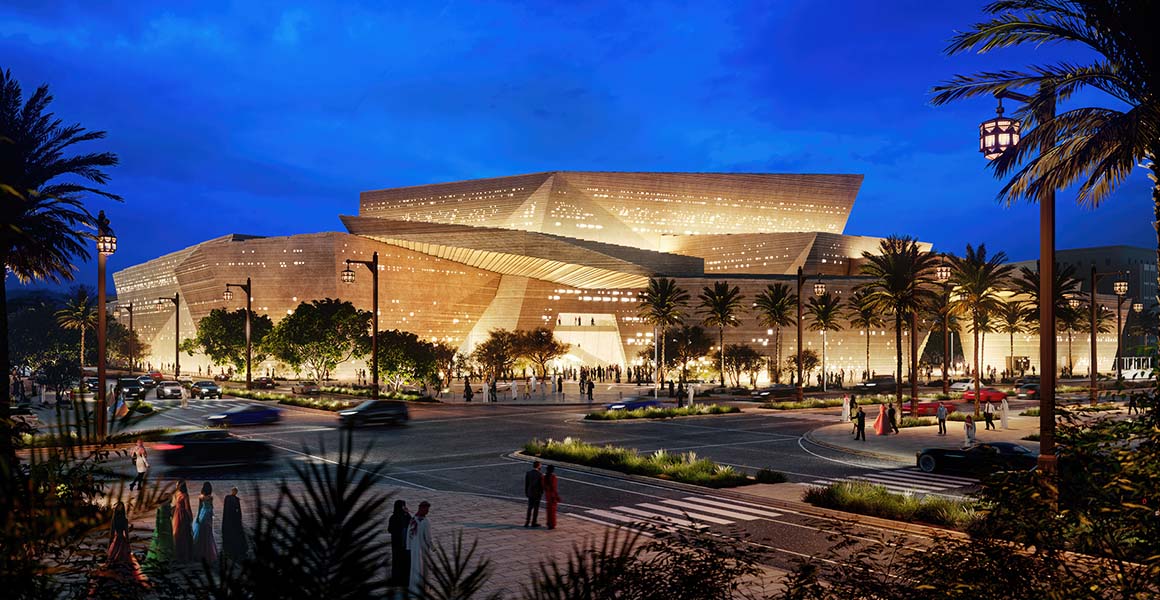
Inside The Royal Diriyah Opera House in Riyadh
Saudi Arabia’s first dedicated opera house opening soon
Subscribe to our newsletter and receive a selection of cool articles every weeks
You can unsubscribe at any time. To find out more, please visit our privacy policy.