

Through the Glass, Brightly
SIMONE HERRMANN
How the French crystal manufactory Saint Louis brought an ancient craft back to life with bold, untamed glassware.
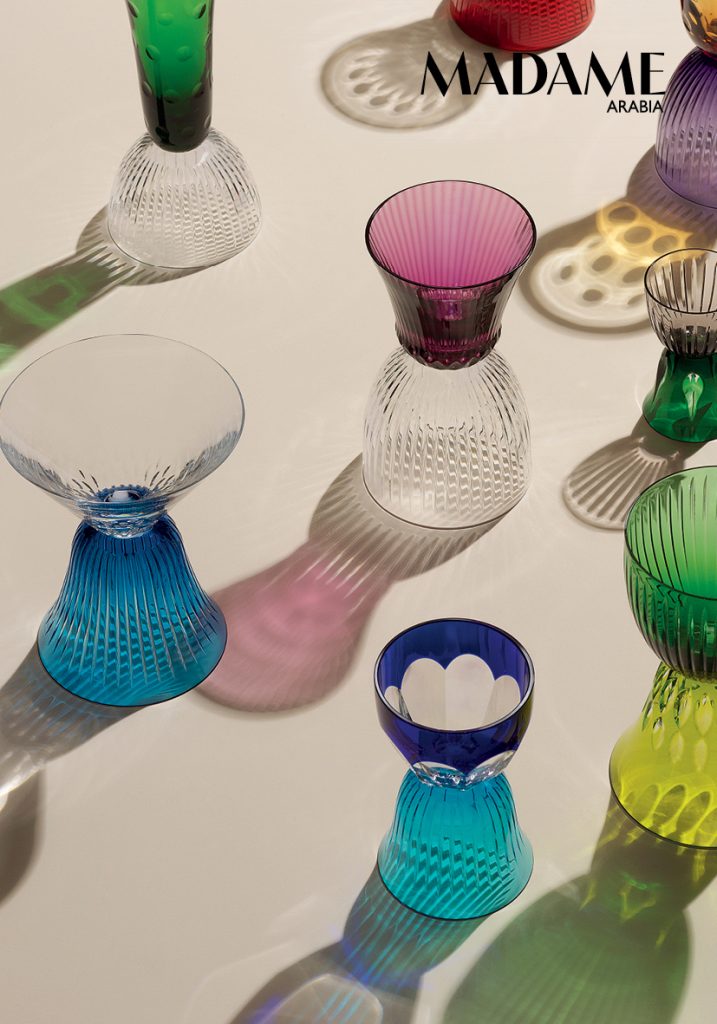
“Play!” says José Lévy, laughing. “Whatever I design, you have to be able to play with it!”
Lévy has designed furniture for Carpenters Workshop and Serax, porcelain objects for Sèvres, textiles for Lelièvre, accessories for Hermès, yet he is best known as a fashion designer. Hedi Slimane was one of his assistants; in the summer of 2025, as Directeur de la Création, Lévy designed the French pavilion for the World Expo in Osaka. So what is he really? Designer, scenographer, artist?
“Someone who refuses to be put in a box,” he says — just like his crystal-glass series Les Ennéades for Saint Louis. These “wild”, double-ended glasses, collaged from several classic glass collections, in 2011 liberated the most famous of all European crystal manufacturers from its overly classical image and from convention altogether.
“I was actually supposed to design four vases, but then I preferred to play…” says the man who grew up in the suburbs. As a schoolboy, he already inhaled “cinema, fashion, design, Paris” and has belonged to the inner circle of the French design scene since the 1990s. “Creativity is a muscle,” he says, a dialogue with time. This year, Lévy designed three new Ennéades, as nonchalantly baroque as the original gang of glasses that catapulted Saint Louis into a new present 15 years ago.
“Focused, precise, light, elegant” are words that come to mind when speaking about the Lorraine-based Cristallerie Saint Louis and its glassware. The clear, slender forms, the grace, but also the absolutism of the line, the cut, all of it is very French,” Lévy nods.
And precisely for that reason, it is so different from the glass of other famous crystal manufactories or regions — Murano, Bavaria, or Bohemia, for example.
A Saint Louis glass can always be recognised by the concentration of its form and colour. The blue is not just royal blue, it is as deep and concentrated as sapphire, the red is pigeon-blood red, like a rare ruby. Liquid like liqueur, sparkling and hard like a gemstone. It is no coincidence that diamond cutting is the house’s signature.
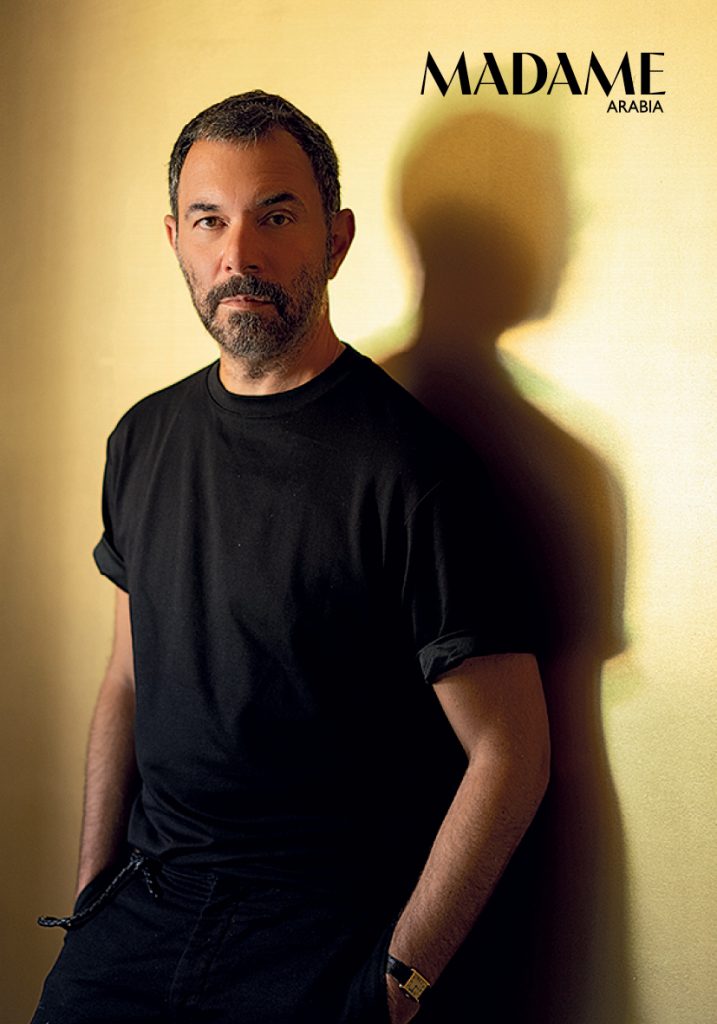
For several years now, the Lorraine manufactory has been part of the Hermès portfolio. Its patron, Pierre-Alexis Dumas, Lévy says, saved the region. Because the small town of Saint Louis-lès-Bitche, “six and a half hours from Paris,” Lévy sighs, a small world journey, has always been the Cristallerie.
It’s the corner of Lorraine people call the Bitcherland, or, because of the icy wind that sweeps across fields and villages, la petite Sibérie. Somewhere in the middle of nowhere, and yet a centre of French culture. Vauban, master builder to the Sun King, had one of his grand citadels erected in Bitche, perched like a tiara above the dreamy cluster of enchanted houses, giving the town both measure and centre, and the entire region a majesty.
And so it was by royal privilege, by the stroke of Louis XV’s pen in 1767, but above all through François de Beaufort’s formula for producing crystal glass from potash, the finest white sand, and lead, that Saint Louis-lès-Bitche became the Mecca of French glass-making.
To this day, Saint Louis is the region’s largest employer — some of France’s finest artisans, les Meilleurs Ouvriers de France, work here. Masters of their craft, highly specialised, often initiated into the secrets of glass-making over generations. Saint Louis, Lévy says, is part of people’s lives here — even the factory director recalls the glass he received for his first communion, “like all children in the area.” It was ruby red, and sparkled like a treasure.
“The Endiablés refuse to be pinned down. They can be glasses, vases, or egg cups.”
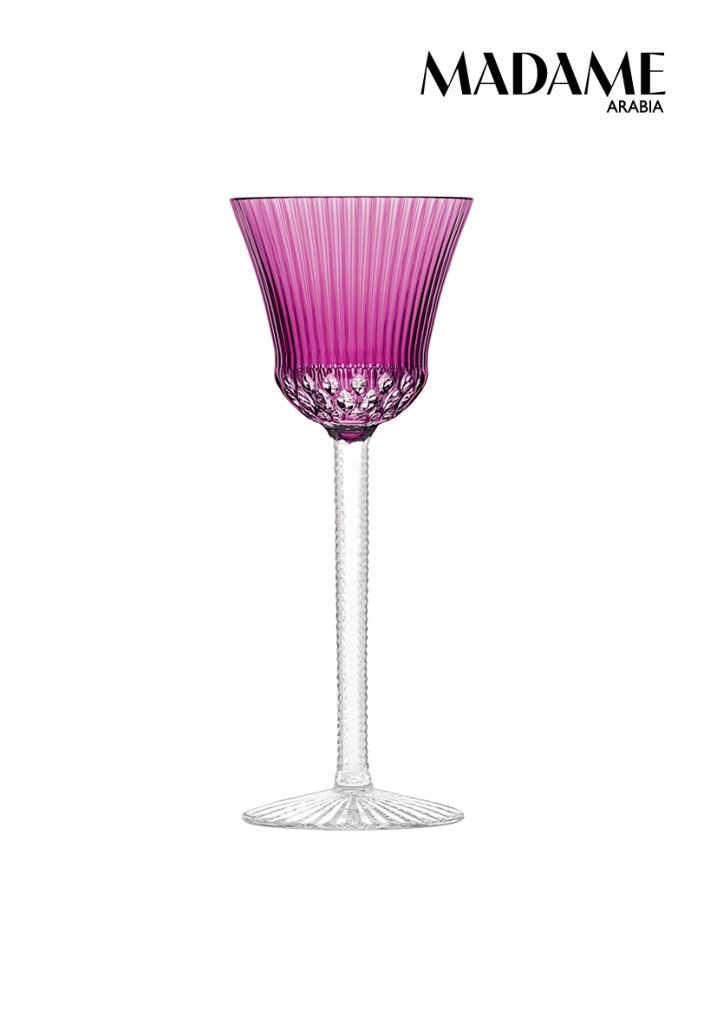
The road winds down through deciduous forests into a valley where the manufactory and the 19th century administrator’s house form the heart of the village. Each room there is dedicated to a glass collection – Louis Reyen’s “Thistle” tea service, for example, whose thistle motif on a gold ground is among the treasures of French Art Nouveau. Or Joseph Bleichner’s Art Deco Tommy glasses, whose engraving resembles bubbles, a surprisingly playful touch despite all their Art Deco rigour. It’s a classic that’s lost none of its modernity, just like Bubbles, Stella, or the pleated Apollo glasses, which connoisseurs consider among the most beautiful things Saint Louis has ever produced.
So light, so elegantly French, so concentrated – glassware for the Élysée Palace and the president’s table. Into this world burst José Lévy in 2011 with his Endiablés. Why not alter the conventional shape of a glass? Why must it always have a foot, and only one bowl? Why not two? Is it still a glass then, or can it be something else entirely? Lévy shrugs – he didn’t concern himself much with history or archives. Everything runs on instinct. On this game of “what if?” he rediscovered two forgotten glass series, Cerdagne and Chambord, and integrated them into his play.
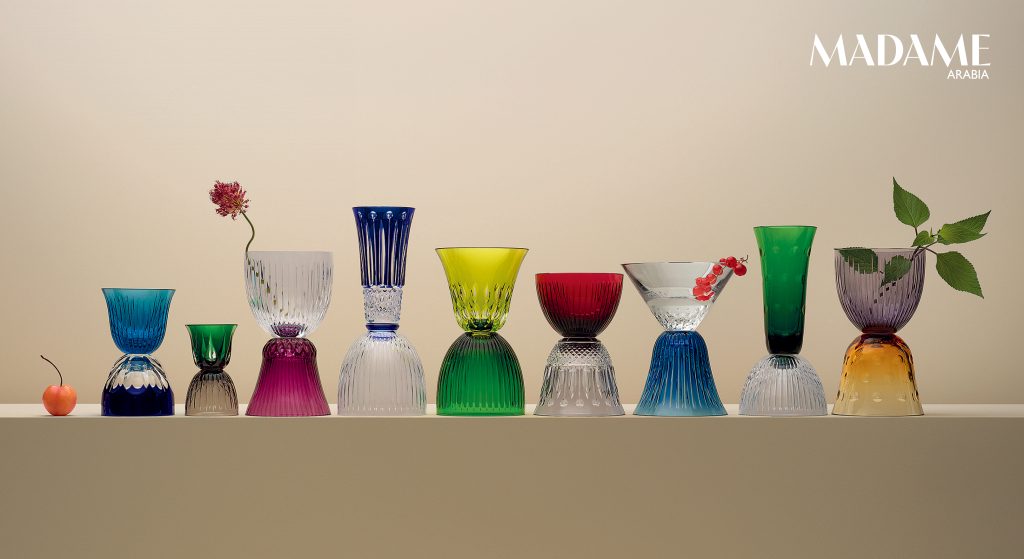
centrepieces. From Dhs2,531 to Dhs2,874
For him, “why not?” is never a question mark – it’s always an exclamation point. What if a green Bubbles flute were to enter into a ménage à trois with the engraved Tommy bowl and Apollo’s crystal pleated skirts? When the Endiablés were presented at the Paris trade fair Maison & Objet in 2012, the audience was astonished. “The success was instantaneous. And the best part,” says Lévy, “was that Saint Louis’ most conservative clients were just as enthusiastic as people from my own circle of friends.” That’s precisely because his objects strike at the very core of glass-making – uniqueness. Every crystal glass is a one-off. Its magic comes from the diffraction of light – but it’s the people who design it, and make it, who breathe charisma into it. In the manufactory, the furnaces glow
orange-red.
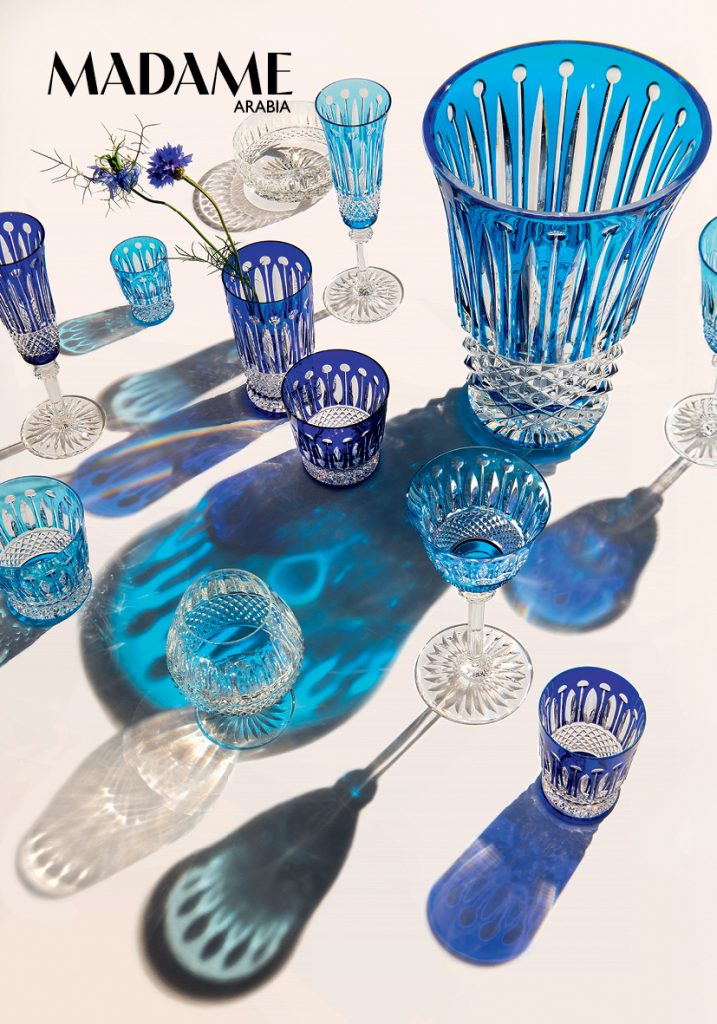
A mysterious choreography unfolds, movements flowing from one craftsman to the next, wordless, dreamlike, as if one person’s arm were growing into another’s hand. And then, the glowing red sphere at the tip of the rod comes alive, dips into the wooden mould, is shaped by the glassblower’s breath, spins and whirls until the bowl rounds, the neck stretches, and the glass has become a vase, even before cutters and engravers begin their work. “Glass is the solidified breath of man,” wrote the poet
Paul Claudel more than a hundred years ago. A great magic emanates from this art, celebrated all across Europe, in Theresienthal in Lower Bavaria, at Moser in Bohemian Karlovy Vary, in Vienna, in Murano. Like gazing into a crystal ball, one looks into Europe’s glassy heart in these manufactories.
At Saint Louis, Lévy has placed this catégorie humaine at the centre with his wild designs, showing that
hand-crafted glass isn’t something of the past – quite the opposite. His glasses have an eminently contemporary touch, refusing definition, resisting categorisation – they can be anything. And the
opposite of that. “Friends tell me they drink water from them, because it suddenly feels precious when you drink from an Endiablé goblet,” Lévy says. “Mine usually stay dry – I use them as bonbonnières, fruit bowls, the smaller ones even as egg cups. Or I arrange flowers in them, as if they were vases…” He smiles, as if to say, mission accomplished.
Each of these glasses is a counterpart – polyvalent, charismatic, a sculpture in which to observe the play of
light and, in doing so, forget time. Hourglasses in the truest sense of the word. A pleasure to roll them, to turn them, to let all their facets shine. “Aren’t possibilities the most beautiful thing in life?” No question, Monsieur Lévy.
Glass, globally
From Murano, Vienna, Bohemia, and Bavaria, crystal glass offers a glimpse into the very soul of Europe
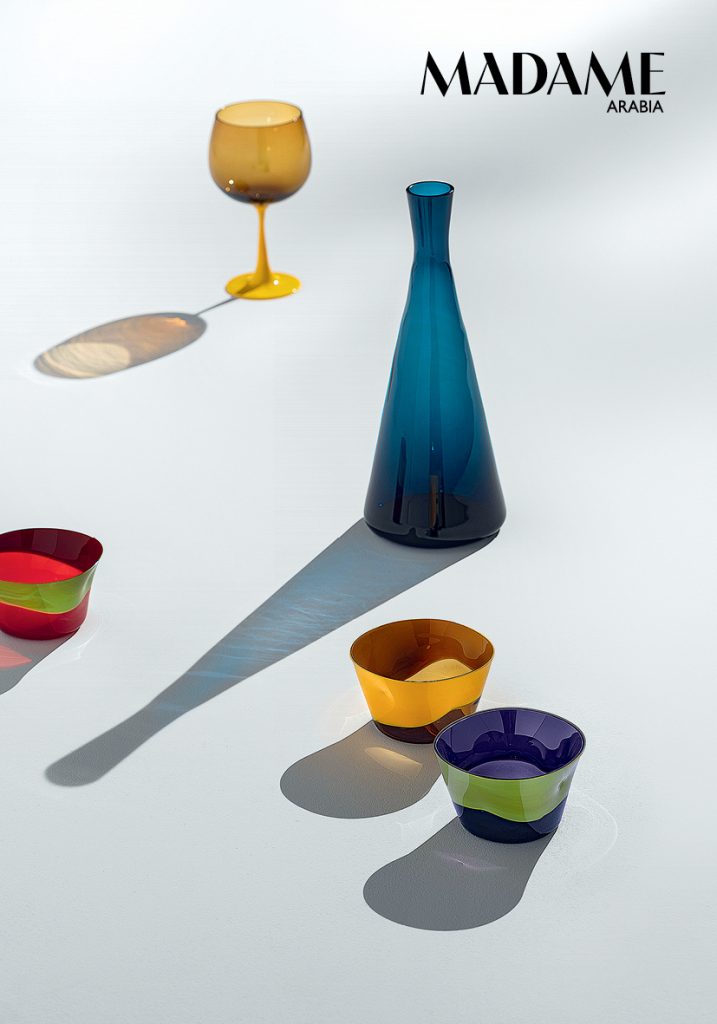
Nason Moretti
Dandy features a tipsy-looking dimple that makes the colourful tumblers and small bowls (Dhs408) easy to grip. The Burlesque Burgogna glasses shake up the classic goblet shape with opaline glass and a trumpet stem, in china yellow (Dhs537), ruby red, or mi-parti. The Cristalleria Nason Moretti from Murano was born in the 1920s, but was shaped by the mid-century era of great Italian designers such as Giò Ponti and Umberto Nason, who imagined a more colourful, optimistic world. In 1955, Nason developed the reversed incamiciato technique – milky, opaque glass on the outside, colour on the inside, a specialty to this day. How else can you recognise a Nason Moretti glass? “Twisted torsé motifs, geometric, understated bowls, trumpet bases, and colour,” say the heads of the house, Giorgio, Marco, and Piero Nason. Cheers!
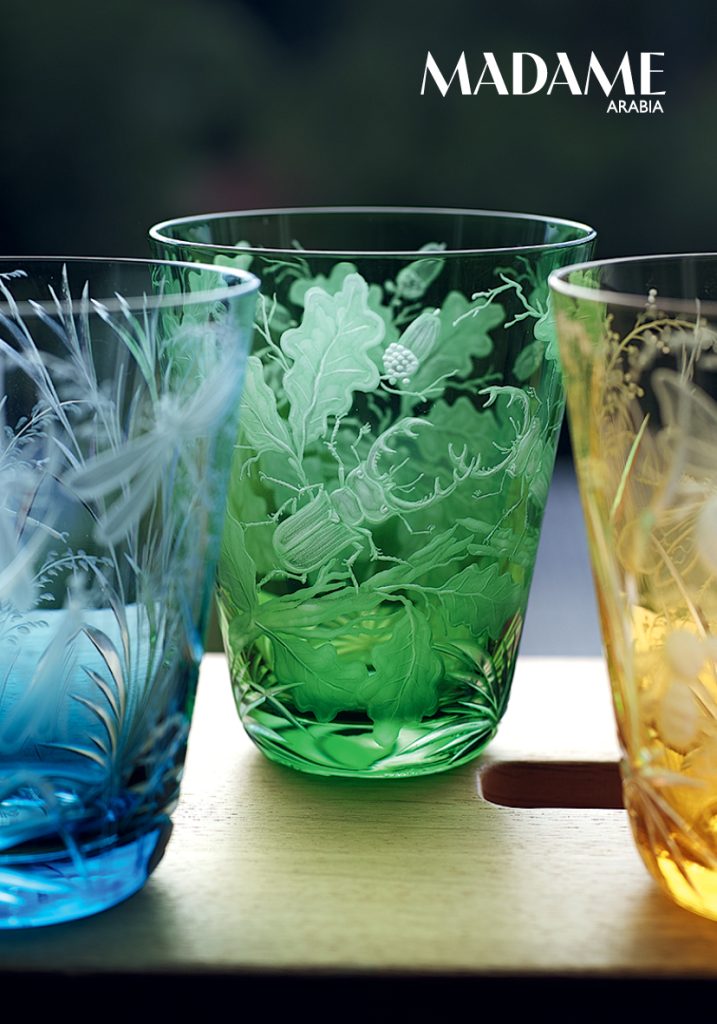
Theresienthal
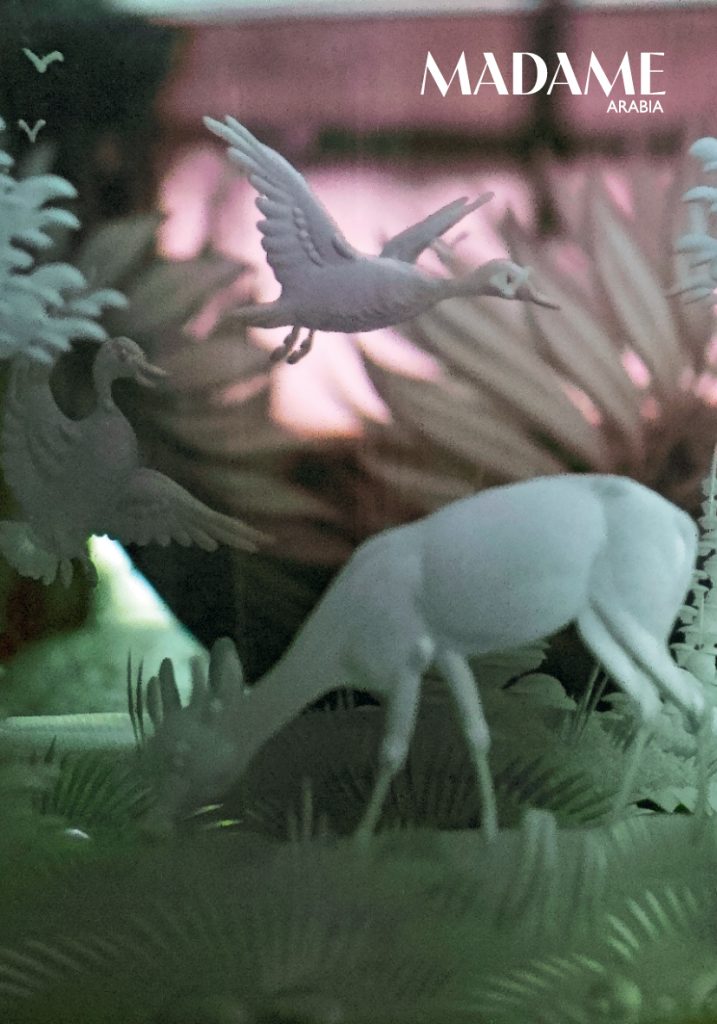
A forest clearing opens up, deep and luminous. A deer grazes, wild ducks burst through the undergrowth… The Schliersee glass (Dhs1,051) and the animal and plant motifs of the new Insects series (tumblers, around Dhs1,395) celebrate the artistry of the Bavarian manufactory in particularly striking fashion. These are engravings on cased glass that, when caught by a ray of sunlight, become painterly, almost sculptural. The colours, too – amber, aquamarine, reseda green, an enchanted violet – seem drawn straight from a fairy tale. Little wonder, then, that the manufactory, founded in 1836 in Zwiesel, gained worldwide prestige during the era of the fairy tale king, Ludwig II, and under the von Poschinger family. The aura of the “Kini” and his fantasy castles still resonates even in contemporary designs. A magical legacy.
J. & L. Lobmeyr
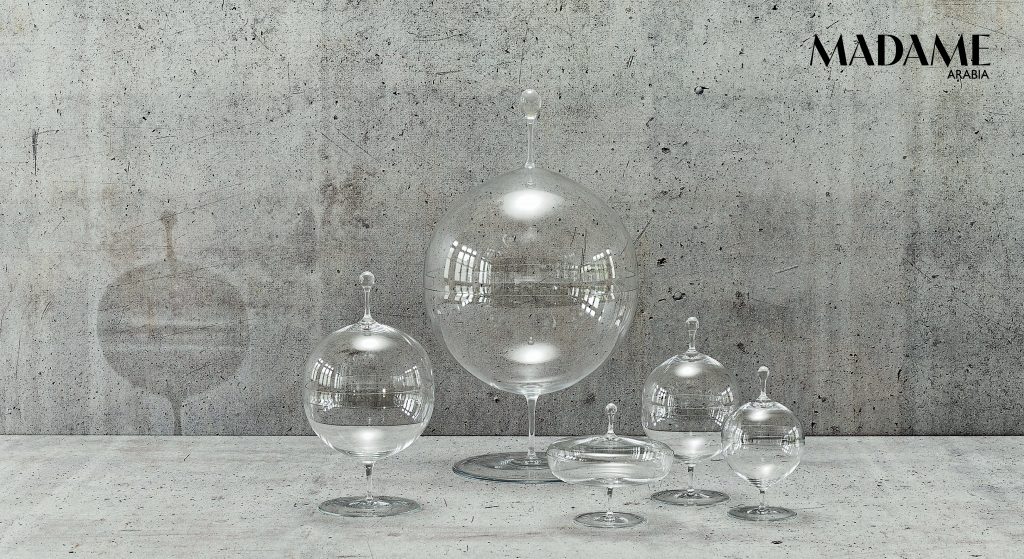
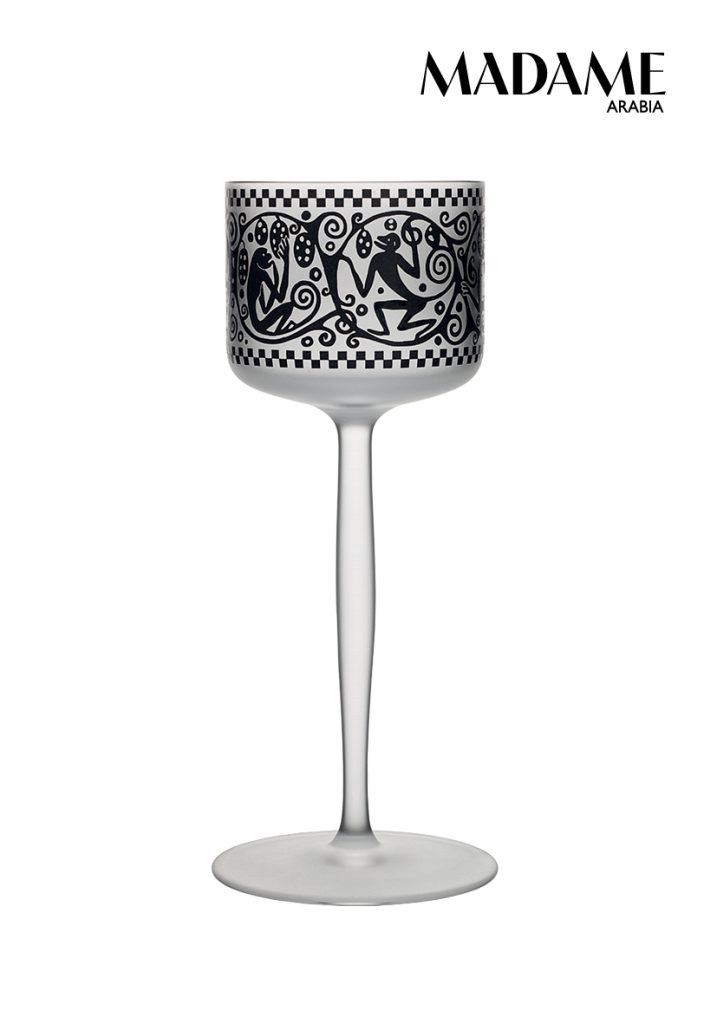
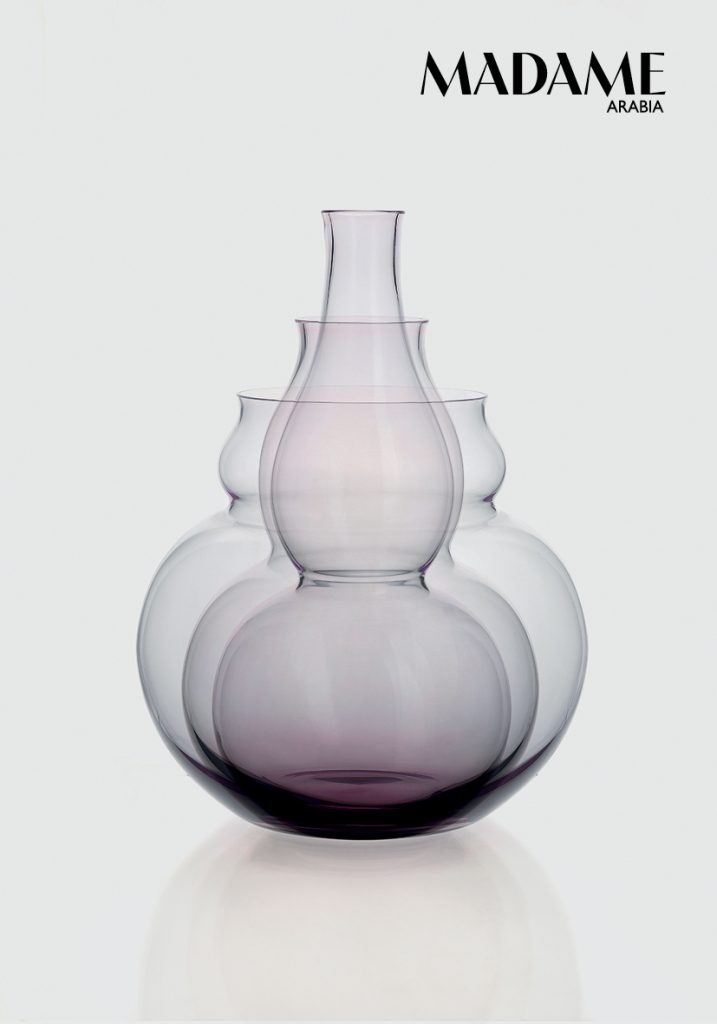
“The old inspires the new, and traditional knowledge fosters innovation.” This is the conviction of cousins Leonid, Andreas, and Johannes Rath, owners of the Viennese glass institution Lobmeyr. Take Lobmeyr’s signature Musselin glass, for instance – feather light and delicate, it turns Oswald Haerdtl’s spherical boxes (above, around Dhs5,577) from 1925 into extraterrestrial yet functional objects, as modern as Sebastian Menschhorn’s Kalebassen trio (top left, 2016) in soap-bubble pink. On equal footing with the great figures of Viennese Modernism, Lobmeyr not only reissues masterpieces by Haerdtl or Adolf Loos, but also revives Josef Hoffmann’s strokes of genius. Less well known than his famous linear Bronzit series is the graceful Monkey Frieze Goblet (Dhs1,480), resurrected from a 1911 sketch.
These are national treasures, and, at the same time, Lobmeyr remains a place where avant-garde designs are still created today, by designers such as Formafantasma or Michael Anastassiades. And one more thing – before a Lobmeyr glass is sold, it passes through 24 pairs of hands and four quality inspections, the final one always carried out by a family member. Trust is good – family is better.
Moser
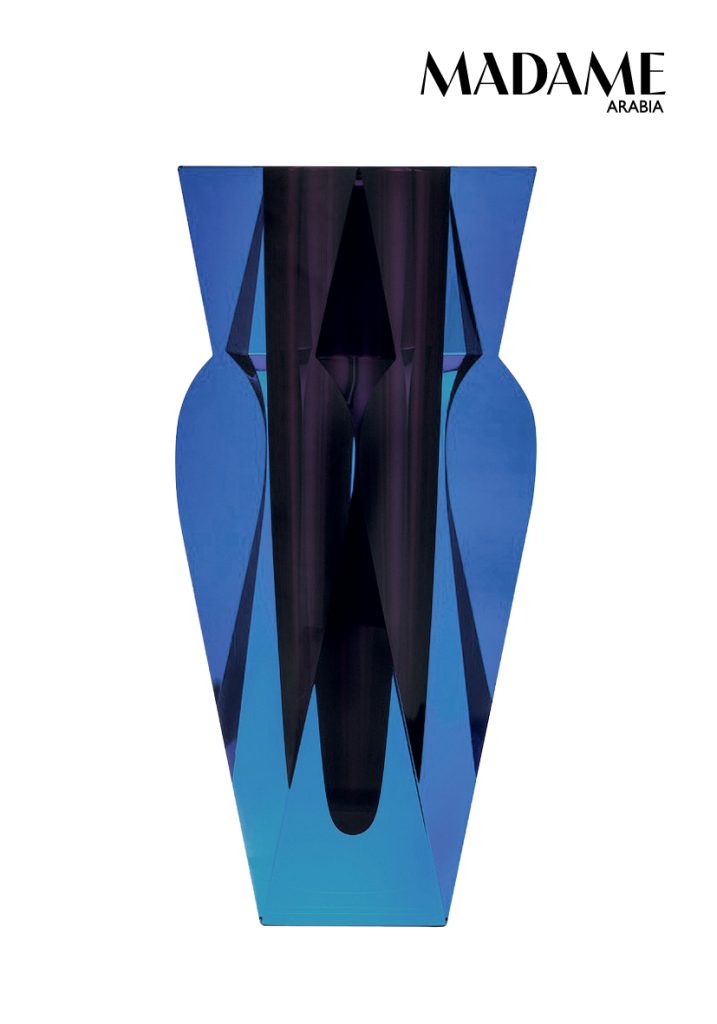
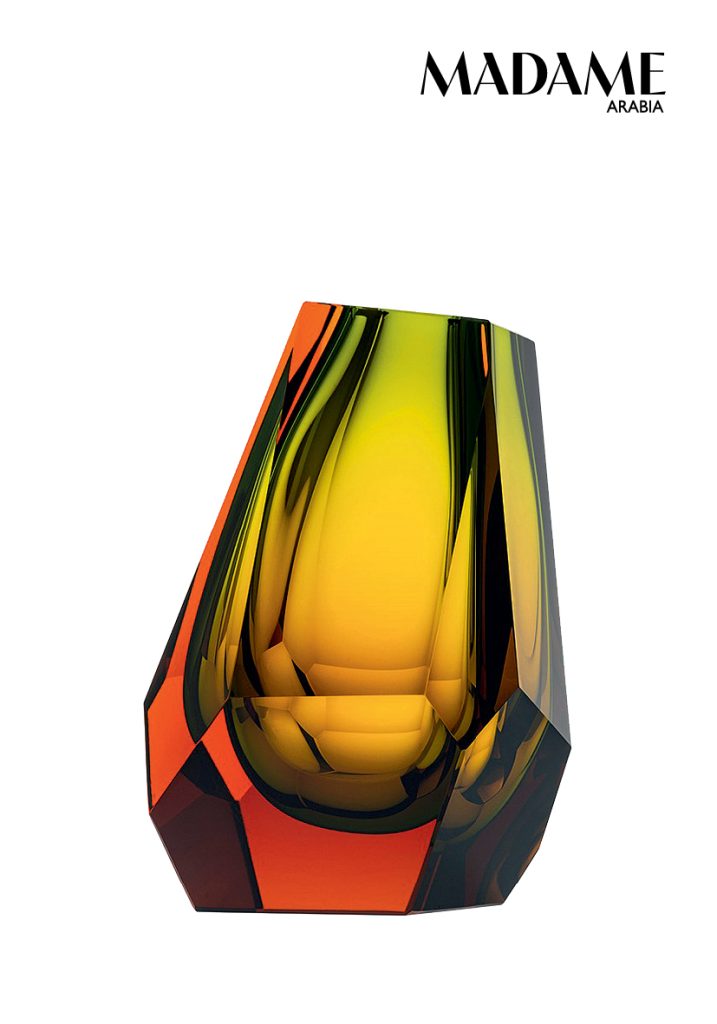
Breaking objects and people down into their geometric basic forms, viewing them from multiple perspectives – this is how Picasso and Braque saw the world in their paintings. And since the 1920s, Moser has shown in Karlovy Vary (Carlsbad), in the Czech Republic, what Cubism can mean for the art of glass. Take vases such as Cool Velvet (around Dhs18,790) by
Katerina Doušova, where velvety depths seem to open up, or the slanted Pear (far right, 13 cm,
around Dhs3,690) – the gaze plunges deeper and deeper as Bohemian glass artists build entire
architectures cubistically into the depths, in gemstone colours and in those green hues, nephrite and uranium, that Moser is currently showcasing in its Prague store to celebrate its 100th anniversary. Across eras, Moser has managed to preserve the distinct character of the house. “Only bold things leave a deep impression,” says creative director Jan Plechác.
Follow Us

The Latest
-

Wellness
The science behind peptide injections
All the risks behind the so-called miracle treatments
-

Travel
Detox hotels to book for your next getaway
Check in, to check out at these beautiful resorts
-

Travel
Discovering Singapore’s green allure
Exotic, diverse, lush. The garden city of Singapore nurtures culture, fine dining, and an environmentally oriented plan for the future
-
Travel
Inside The Royal Diriyah Opera House in Riyadh
Saudi Arabia’s first dedicated opera house opening soon
Subscribe to our newsletter and receive a selection of cool articles every weeks
You can unsubscribe at any time. To find out more, please visit our privacy policy.